

Kodi (XBMC)
About Kodi (XBMC)
Kodi is a media centre that turns a PC into the living-room screen’s brain. It scans your films, series and music, dresses them in posters, fan art and plot summaries fetched from online databases, and presents everything in a big, remote-friendly interface designed to be read from the sofa. Playback covers almost every format, live TV arrives through tuner backends, and an add-on system extends it in any direction you want.
What distinguishes it from a plain video player is the library. Instead of browsing folders, you browse your collection by genre, actor, year or unwatched status, resume where you stopped, and let the software keep track of what you have seen across every device in the house.
It is the approach streaming services use for their catalogues, applied to files you own.
The library and its scrapers
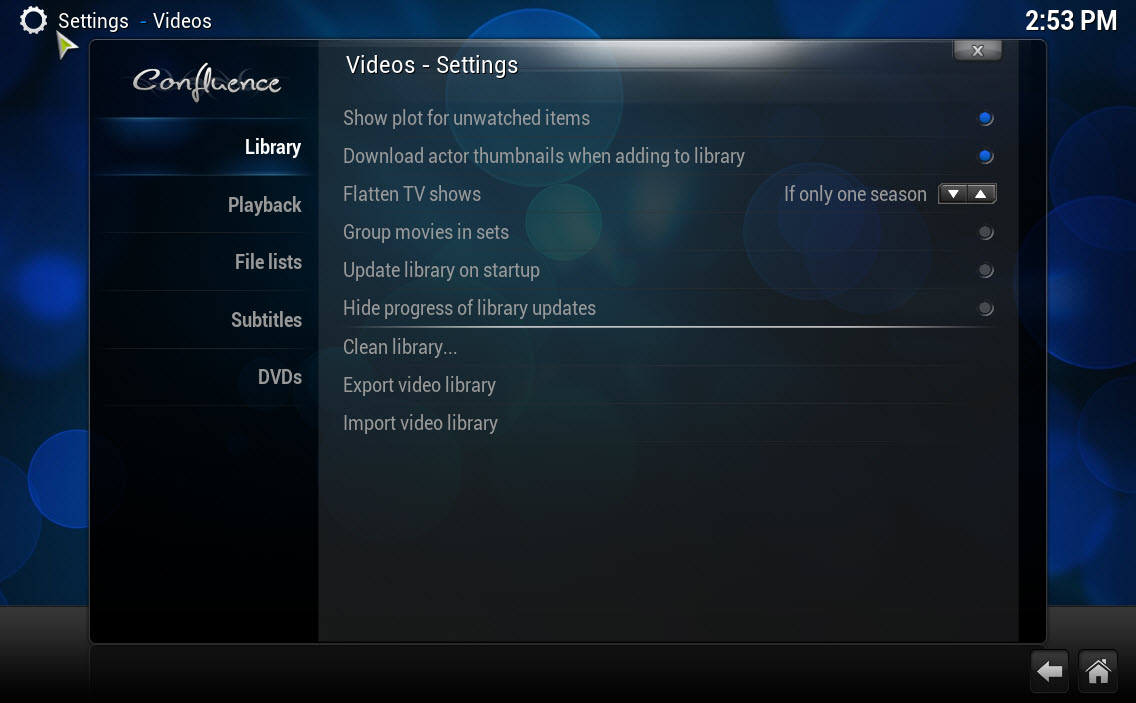
Everything starts with sources, the folders or network shares where your media lives. Point Kodi at a movies folder and a TV folder, assign a scraper to each, and the scan fetches metadata and artwork from online databases. The result is a wall of posters with ratings and plot text, browsable by any field the database provides.
The scrapers rely on file names. A film named with its title and year is matched reliably, while a series needs a season and episode pattern such as S01E03 for the scraper to recognise it. Most “my library is empty” complaints trace back to naming.
Renaming a messy collection by hand is tedious, and FileBot automates the job, so the scan succeeds first time. Local .nfo files and your own artwork are honoured too, which lets collectors of obscure material fill the gaps themselves.
Playback that handles almost anything
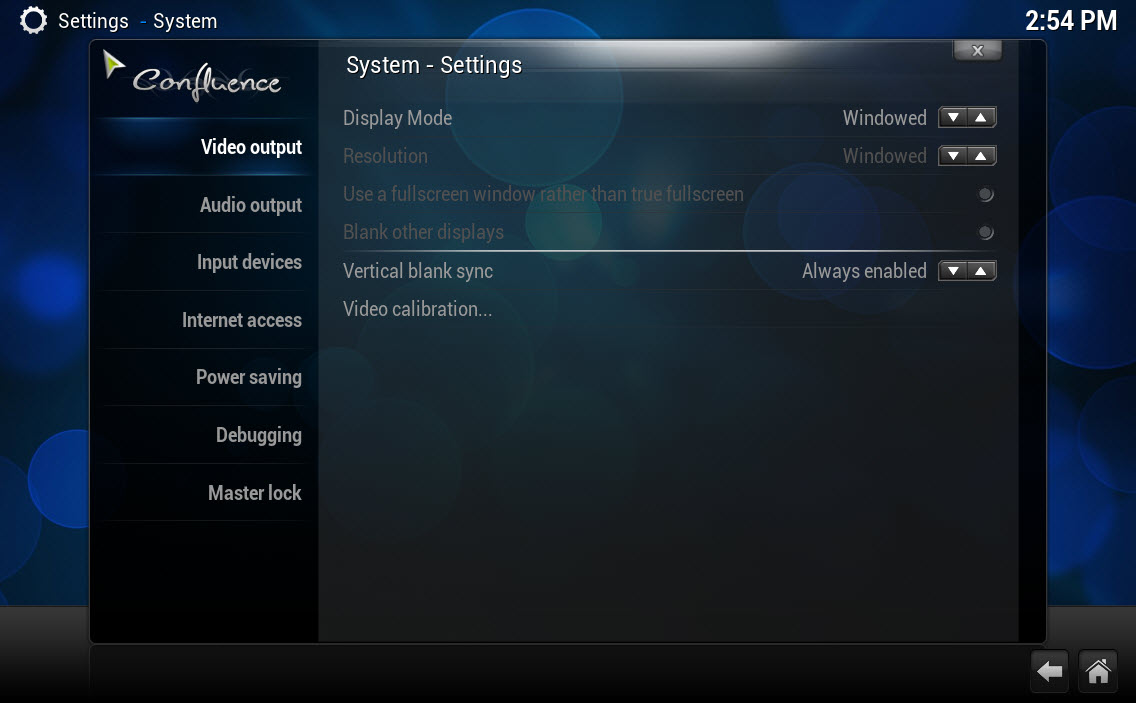
The player underneath decodes the usual video and audio formats without extra codecs, plays discs and ISO images, and reads from local drives, network shares, UPnP servers and internet streams. Kodi offloads high-resolution video to the graphics chip through hardware decoding, which keeps 4K playable on modest machines when it is enabled in the player settings.
Audio deserves a moment, because this is where home theatre users spend their setup time. Kodi can pass surround formats through untouched to a receiver, or decode them itself, and the choice depends on whether an amplifier sits between the PC and the speakers.
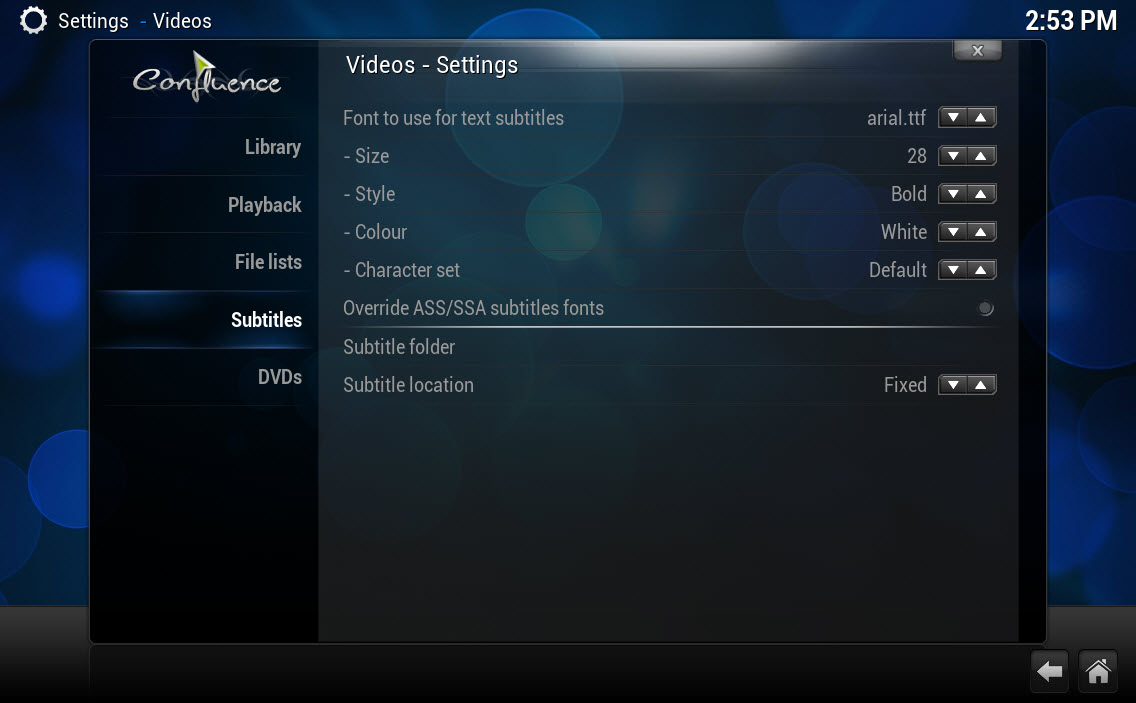
Subtitles load from files alongside the video or from subtitle add-ons that search online services by hash, and timing offsets can be nudged during playback.
Live TV through PVR backends
Live television is a front end rather than a tuner. Kodi connects to a PVR backend, software that controls a TV tuner or an IPTV source, and presents its channels in a full programme guide with recording and timeshift controls. Backends such as Tvheadend, NextPVR and MythTV each have a client add-on, and network tuners plug in through the same route.
That split is powerful and slightly awkward. Powerful, because one backend on a server can feed several front ends around the house, and because recordings, channel lists and guide data live in one place.
Awkward, because setting up the backend is a separate project with its own learning curve. Expect an evening of configuration before the first recording.
Add-ons and the official repository
Add-ons work like apps on a phone. The official repository offers subtitle providers, scrapers, visualisations, weather services, web interfaces and streaming plugins for legitimate services, all installable from inside the program. Skins change the entire look, from minimal grids to posters-on-black designs, and most ship with their own layout options.
A word about third-party repositories. Unofficial add-ons that promise films and live channels for nothing are the source of most problems people blame on the program, from broken streams and malware to legal trouble.
They are not part of the project and are not endorsed by it. Stick to the official repository and the software is stable. Stray outside it and you are on your own.
Music and games
The music library in Kodi applies the same treatment as video. Tags drive the organisation, artist and album information is fetched from online databases, and album art fills the screen while music plays alongside artist biographies and visualisations. Party mode queues random tracks indefinitely, and playlists can be smart, built from rules such as “unplayed jazz from the last five years”.
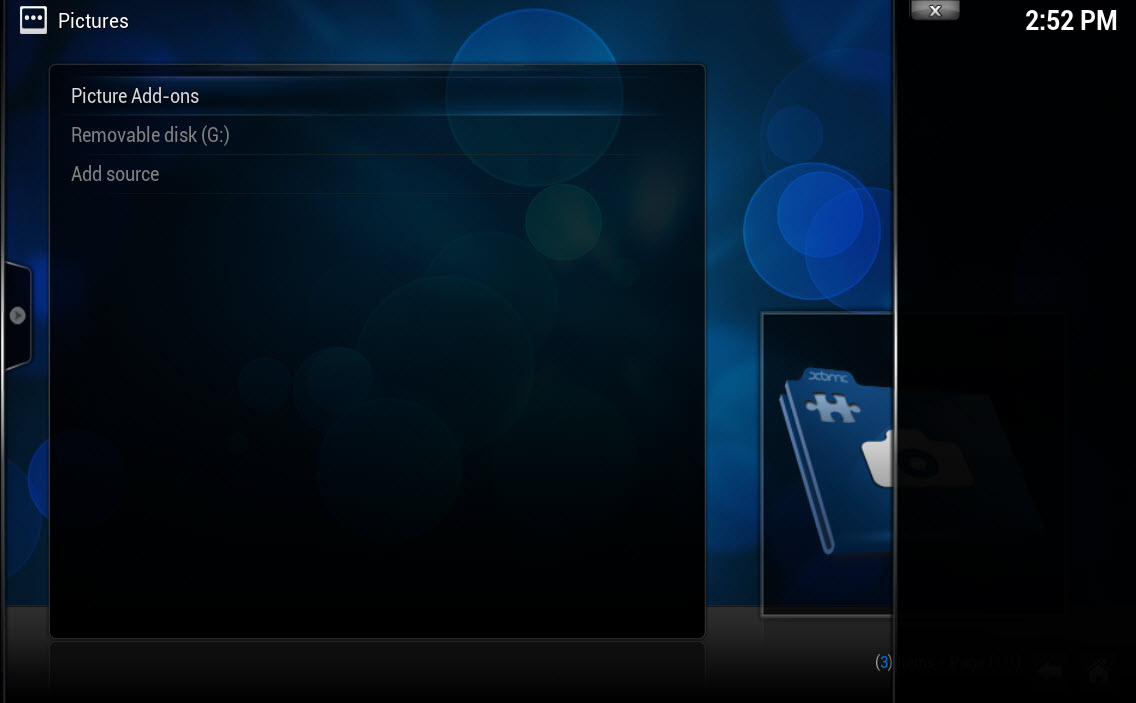
Pictures get slideshows with pan-and-zoom effects and Exif information. A weather add-on puts the forecast on the home screen, and screensavers and visualisations round out the idle-time furniture of a living-room PC. Playback can also be sent to or received from other UPnP devices on the network, so another device on the network can hand a video to the TV screen.
Games are the least known section. A built-in game player runs emulator cores as add-ons, so classic console titles play from the same interface as films, with gamepad support and save states. For serious retro gaming it lacks the depth of a dedicated front end, but having a quick round of a classic between episodes is a pleasant extra.
Control from the sofa and from other rooms
The interface is built for a remote control, with large text and ten-foot navigation, and it responds to infrared remotes and gamepads as well as the HDMI-CEC commands from a TV remote where the hardware supports them. A built-in web interface turns any browser on the network into a remote and library browser, and a JSON-RPC interface lets home automation systems start playback or pause for a doorbell.
Profiles give each household member their own library view and watched status, with optional lock codes for children. Several installations can also share one database on a network server, so pausing a film in the living room and resuming it in the bedroom works without any cloud involvement.
For streaming to many devices with transcoding, Jellyfin is the server-based route, and it even has a client add-on for this interface.
What to expect in daily use
The first week with Kodi is setup. Sources, scrapers, audio passthrough, remote mapping and perhaps a PVR backend all need attention, and the settings menus are deep enough to lose an afternoon in. Once configured, the system tends to run for months without complaint, and updates rarely break the official add-ons.
Two frustrations recur on the forums. Playback stutter usually means hardware decoding is off or a refresh-rate switch is missing, both fixed in the player settings. And a library that looks wrong after a rescan almost always comes back to file naming or a scraper that picked the wrong title, which the Refresh option on a film fixes by letting you choose the correct match.
For checking what codec and resolution a troublesome file actually contains, a media metadata inspector answers in seconds.
Conclusion
Kodi suits anyone with a media collection they want to enjoy from the sofa, from film collectors and music archivists to households that want live TV, recordings and streaming add-ons behind one remote. The library, the playback engine and the add-on system together give it a reach that no plain player matches.
It demands setup time and sensible choices about add-ons, and its live TV depends on a backend you must run yourself. Give it a properly named library and a weekend of configuration, and it becomes the quiet centre of the living room for years.
Pros & Cons
- Scraped library with artwork and watched status across devices
- Plays nearly every format with hardware decoding and surround passthrough
- Live TV with programme guide and recording through PVR backends
- Official add-ons for subtitles, skins and legitimate streaming services
- Profiles, shared databases and a web interface for multi-room households
- Music and emulated games in the same interface
- Initial setup takes real time and the settings are deep
- Live TV requires a separate backend with its own configuration
- Library accuracy depends on consistent file naming
- Unofficial add-ons cause most reliability and legal problems
Frequently asked questions
Almost always file naming. Films need a title and year, series need a season and episode pattern like S01E03, and the folder must be set as a source with a scraper assigned. Rename the files and rescan.
Yes, through a PVR backend such as Tvheadend or NextPVR that controls your tuner or IPTV source. Install the backend, add its client add-on, and the channels appear with a programme guide.
Enable the web interface in the services settings, then open the PC's address in any browser on the network. Infrared remotes, gamepads and TV remotes over HDMI-CEC also work.
Check that hardware decoding is enabled in the player settings and that the display refresh rate is set to match the video. Both options fix most stutter without changing hardware.
Those in the official repository are. Third-party repositories offering paid content for nothing are neither part of the project nor endorsed by it, and they are the usual cause of malware and broken streams.


