

WinToUSB
About WinToUSB
WinToUSB is a Windows-to-Go style utility that turns a USB stick, external SSD, or portable hard drive into a fully bootable Windows installation. Not an installer USB you use once and discard, but a real working OS that lives on the drive and boots on whatever computer you plug it into. Same desktop, same settings, same installed programs, traveling with you in your pocket.
The tool, developed by Hasleo Software, started out as a free workaround for Microsoft’s enterprise-only Windows To Go feature and has grown into a more capable utility than the official one ever was.
It now handles Windows 7 through Windows 11, supports Linux deployments, and can build portable systems from ISO, WIM, ESD, SWM, VHD, or VHDX images, or clone a live Windows installation directly onto a USB drive.
Why this is different from making an installer USB
This is the part that confuses people coming from Rufus or Ventoy. Those tools build a USB you boot from to install Windows onto a normal internal drive. WinToUSB does something else entirely. It writes the actual operating system onto the USB, configures the boot loader so the system can run from removable storage, and leaves you with a portable Windows that uses the host computer’s hardware but stores everything (your files, your apps, your registry) on the USB itself.
The practical result is that you can carry your work environment to any compatible PC, plug in, boot from USB, and pick up where you left off. Tech support people use it for repair and diagnostics.
Developers use it to keep an isolated work setup separate from their daily machines. Some people use it just to run a parallel Windows install without partitioning anything.
Three ways to build the portable system
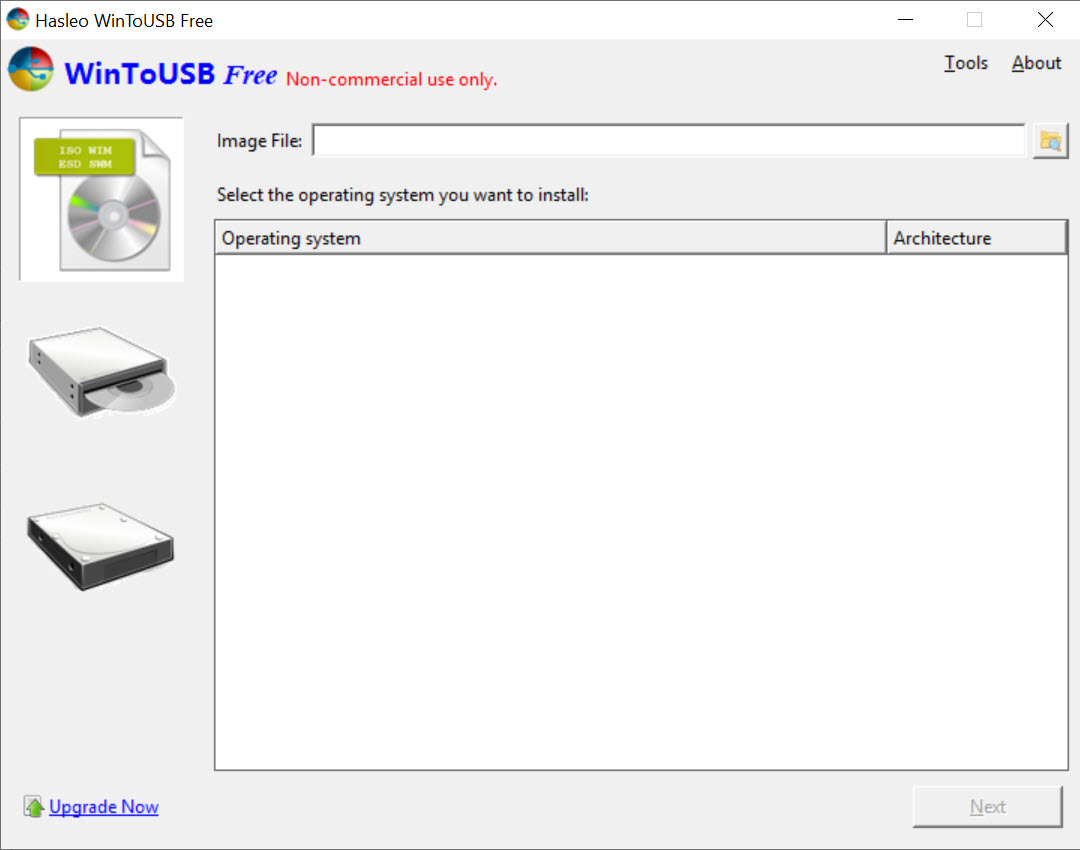
The first method is installing from an ISO or WIM file. You point WinToUSB at the image, pick the destination USB, choose between Legacy and UEFI boot modes, and the program handles the rest. The interface is wizard-style and walks through partition formatting, boot loader installation, and file extraction in clear steps.
The second method is cloning. If you’ve already got a Windows installation you like, you can clone the current system to a USB drive without reinstalling. This is the killer feature for anyone who’s spent weeks setting up software, drivers, and preferences. WinToUSB copies it all over, adjusts the boot configuration for portable use, and produces a USB that boots into the same environment.
The third method is using a virtual hard disk image. VHD and VHDX files can be deployed directly, which matters if you’re working with system images from Hyper-V or other virtualization platforms.
The tool can also create the VHD container on the USB itself, which is sometimes more reliable on flash drives that struggle with running Windows directly.
What the editions actually unlock
The free version covers the basics. You can install non-Enterprise editions of Windows from ISO, clone Windows 11 Home or Windows 10 Home installations, and write to USB flash drives. That’s enough for casual use, but it leaves out the most useful capabilities.
The Professional edition adds support for Enterprise editions of Windows, the ability to use VHD and VHDX images, BitLocker encryption for the portable drive, and cloning of Pro and Enterprise installations.
The Enterprise edition adds creation of Windows PE rescue USBs and dynamic resizing of VHD files. The Technician edition is licensed per technician rather than per computer, which is the form most repair shops end up buying.
The free-to-paid jump is worth thinking through. A lot of what makes this tool genuinely useful (BitLocker, Enterprise images, VHD support) lives behind the paywall. Casual users can get by with the free version, but anyone doing serious work with portable Windows will hit the limit fast.
USB drive choice matters more than you’d think
This is something the documentation underplays. A cheap USB flash drive technically works, but the result is so slow that the portable Windows feels broken. Random write speeds on the typical $10 thumb drive are terrible, and Windows hammers the boot drive with small writes constantly.
The tool itself doesn’t care what you plug in, but in practice you want either a USB 3.0+ flash drive rated for high random IOPS, or an external SSD over USB 3.1 or higher. A portable NVMe SSD in a USB-C enclosure is the configuration that actually feels like running Windows normally. Anything slower, and you’ll be staring at a spinner for thirty seconds every time you open an app.
Boot compatibility and the UEFI question
Modern PCs default to UEFI boot with Secure Boot enabled, and WinToUSB handles both UEFI and Legacy BIOS targets. You pick the partition scheme during setup (MBR for Legacy, GPT for UEFI, or MBR for both for maximum compatibility). The tool can configure the USB to boot on multiple machine types, but Secure Boot can still trip you up on some systems and you may need to disable it temporarily to boot the portable Windows.
For drive imaging and backup workflows that complement this, AOMEI Backupper covers the system imaging side, and EasyBCD is useful if you want to add the portable Windows as a boot entry on a host machine rather than pressing F12 every time.
Where it shows its rough edges
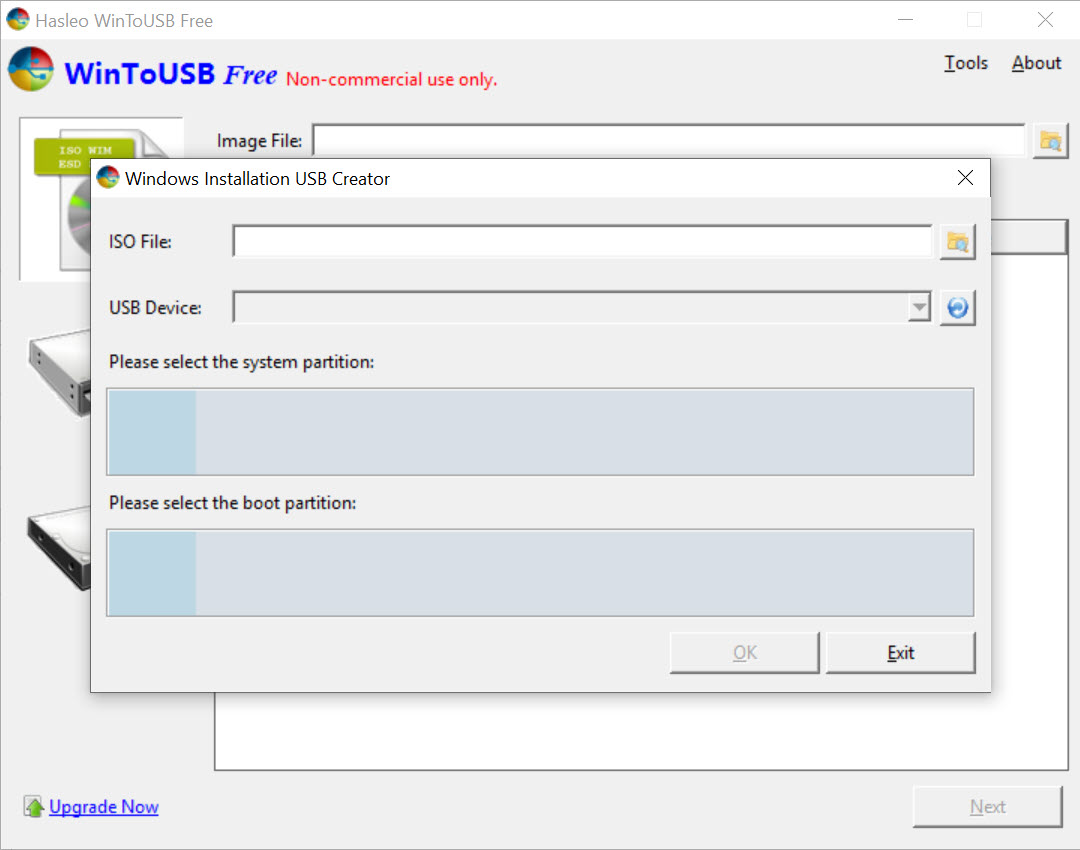
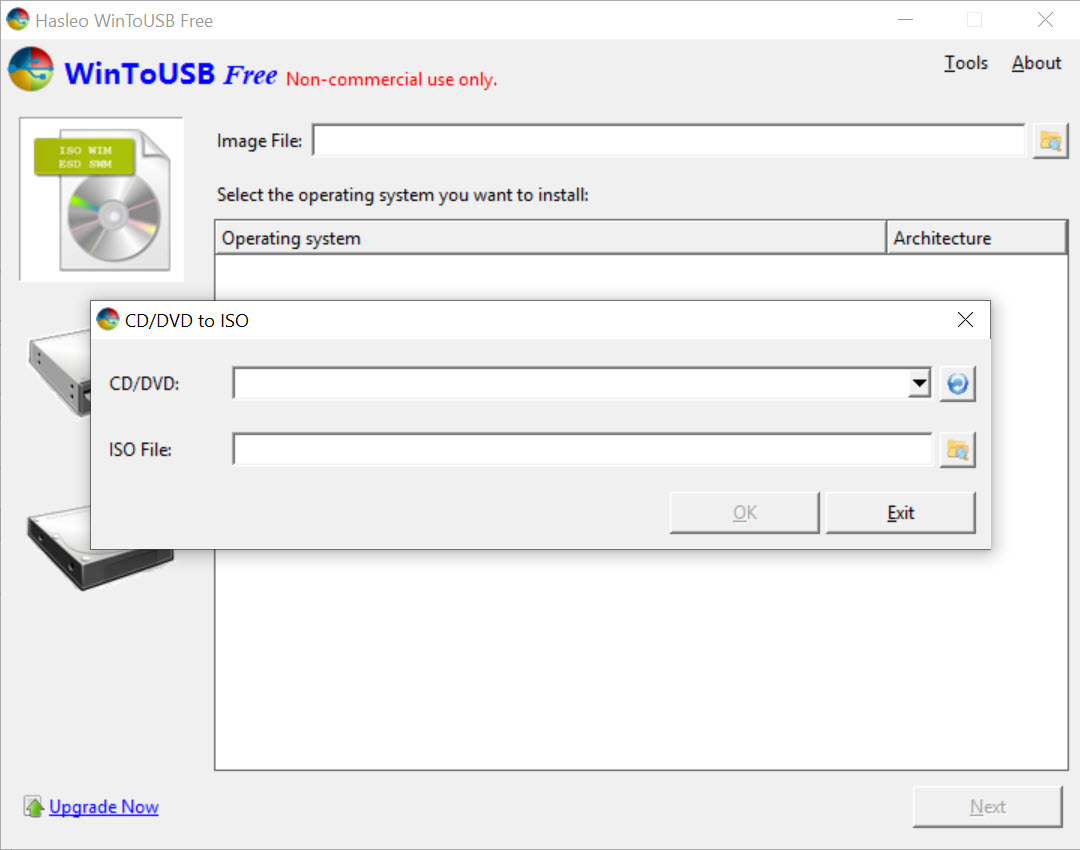
The interface is functional and not pretty. Buttons, wizards, and dialog boxes that haven’t seen a real redesign in years. You’ll find yourself using the same three or four screens repeatedly, and they get the job done, but the visual style is firmly stuck in the early 2010s.
The cloning process can take a long time on slower drives, sometimes several hours for a fully loaded installation. There’s a progress bar but limited information about what’s happening, and the temptation to think the program has frozen is real. Letting it run uninterrupted is the right call.
Driver issues on the host PC are also worth flagging. Windows To Go installations include a hardware abstraction layer, but specialized drivers (especially for laptop touchpads, fingerprint readers, and proprietary peripherals) don’t always survive the move. You may need to reinstall some drivers the first time you boot on a new machine.
Conclusion
WinToUSB fills a specific niche that most other USB tools don’t touch. The portable Windows use case (carrying a working OS in your pocket, running it on borrowed hardware, keeping a clean repair environment ready) is real, and this tool does it better than any free or low-cost alternative currently available. Microsoft abandoned official Windows To Go years ago, and the gap has been filled almost entirely by this one application.
The reasonable approach is to test the free version with a non-Enterprise Windows ISO and a decent USB 3.0 drive first, see whether the portable workflow fits your use case, then decide whether the Pro features are worth paying for. For repair technicians, developers who hop between machines, and anyone who needs a consistent Windows environment on the road, the answer usually leans yes.
For one-time installs or simple bootable USB needs, Rufus is the better tool and this one is overkill.
Pros & Cons
- Creates a real portable Windows OS, not just an installer USB
- Supports ISO, WIM, ESD, SWM, VHD, and VHDX source images out of the box
- Direct cloning of a running Windows installation saves hours of setup time
- Handles UEFI and Legacy BIOS targets with flexible partition schemes
- BitLocker support in paid editions for encrypting the portable drive
- Free version is genuinely usable for non-Enterprise Windows deployments
- Active development with regular updates for new Windows builds
- The free edition holds back the most useful features (Enterprise images, BitLocker, VHD)
- USB drive choice has a huge impact on usability, and cheap flash drives feel unusable
- Interface design is dated and could use a real overhaul
- Cloning operations can run for hours with minimal feedback
- Some drivers don't transfer well between host machines
- Linux support exists but is less polished than the Windows side
Frequently asked questions
The tool creates a portable Windows installation on a USB drive that can boot and run on any compatible computer, with the OS, applications, and user files all stored on the USB itself.
Those tools create installer USBs that you use once to install Windows onto an internal drive. This software writes a working, bootable Windows OS directly onto the USB so you can run Windows from the drive on any PC.
A USB 3.0+ flash drive rated for high random IOPS, or better yet an external SSD over USB-C. Cheap flash drives technically work but the performance is too slow for daily use.
Yes. The cloning feature copies a live Windows installation to a USB drive and adjusts the boot configuration so the cloned system can run portably.


