

WindowsSpyBlocker
About WindowsSpyBlocker
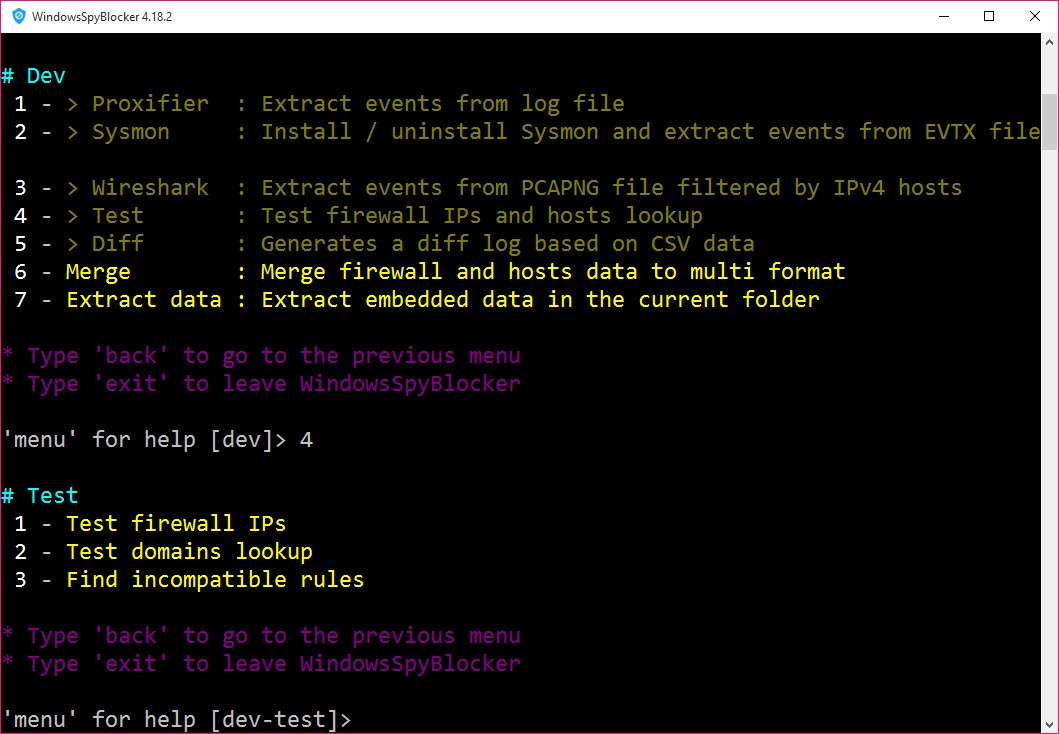
WindowsSpyBlocker is a single executable that adds firewall rules blocking the addresses your system phones home to. No installer, no service running in the background, no settings panel with two hundred toggles. Run it as administrator, pick a category from a numbered menu, and several hundred rules appear in the built-in firewall. Remove them from the same menu and the machine is back where it started.
What separates it from the privacy tweakers is where the block list comes from. The addresses are not copied from a forum post or guessed from domain names. They are captured, by running clean systems inside virtual machines with automatic updates enabled, recording every outbound connection with packet capture and process monitoring, and comparing the daily dumps against the existing rules.
Addresses that stop appearing are removed. New ones are added. The logs of those captures ship with the tool in CSV form, so you can read what was seen and decide for yourself.
That evidence-first approach is also why this is not a beginner’s tool. It blocks by address, it does not explain what each address does, and nothing stops you cutting off something you needed.
Three categories, and knowing which to apply
The WindowsSpyBlocker rules split into three sets. Spy covers telemetry and diagnostic reporting, and it is the one almost everybody wants. Update blocks the update servers entirely, which is a deliberate choice with obvious consequences and belongs only on a machine you patch by hand. Extra blocks first-party applications that report separately, among them the search and mail services, the office suite and the messenger, plus the connectivity check the system uses to decide whether it has internet.
Apply Spy on its own and most people notice nothing except a quieter network. Apply Extra and things start breaking in ways you may not connect to this tool a week later, because a mail client that cannot sync does not announce why.
Apply Update and you have opted out of patches. Anyone wanting per-program control instead should look at a rule-based firewall front end. The documentation says as much and warns that no support exists for those two sets, which is honest and worth taking seriously.
The rules are also separated by system release, since the addresses differ between them, so the tool applies the set matching what you are running.
Fixing the false offline indicator
Applying and removing the rules
The WindowsSpyBlocker firewall section adds rules, removes them, and resolves the domain names into current IP addresses before writing, which matters because a rule against a stale address blocks nothing. Everything lands in the standard firewall as named outbound rules, where you can see them and delete them by hand if you ever lose the executable.
NCSI is the other menu entry, and it solves a specific annoyance. The system tests whether it has internet by fetching a small file from its maker’s server, so blocking that address makes the network icon claim there is no connection even while everything works. This option repoints the test at a different server, and the tray icon starts telling the truth again. It is the sort of detail that only turns up after someone has lived with their own tool for a month.
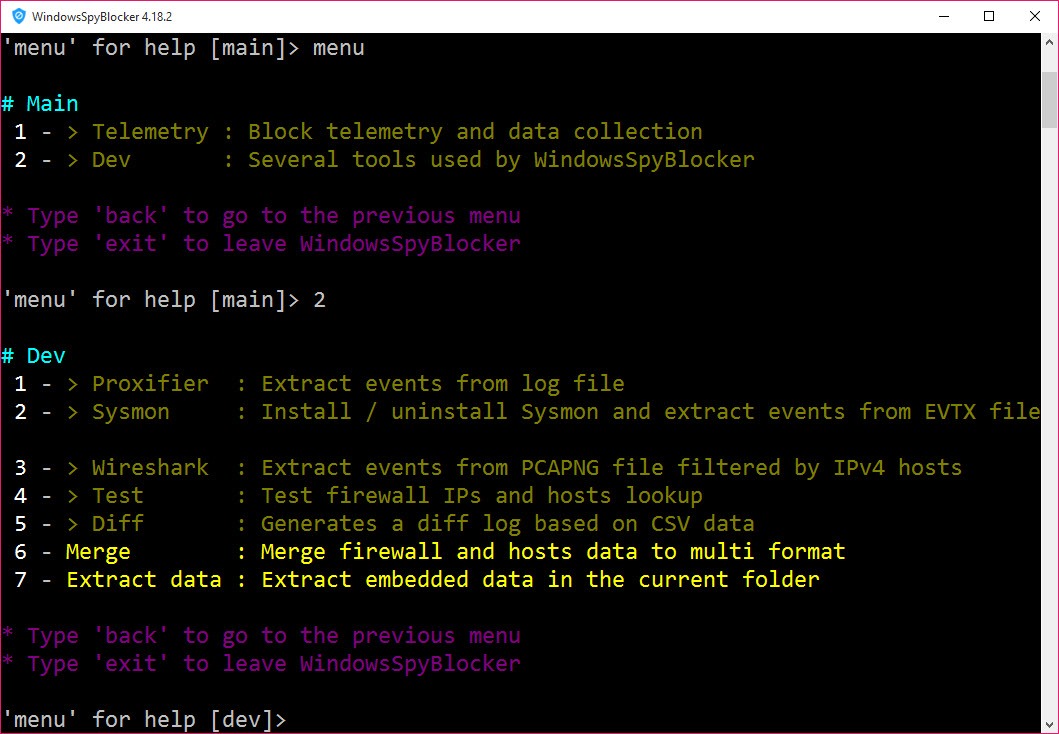
The Dev section exposes the capture side, with helpers for the packet analyser, the process monitor and the proxy client used to build the rules. Most people never open it. Anyone who wants to verify a claim rather than trust it will find Wireshark and the same methodology waiting.
Hosts, DNS and the other output formats
Firewall rules are the main path in WindowsSpyBlocker, but the same data ships in other shapes. The hosts file version is a plain list you paste into the system hosts file, useful on a machine where you would rather not touch the firewall, and easier to manage with a dedicated hosts file editor than with Notepad. A DNSCrypt blocklist applies the same addresses at the resolver instead, so the block happens before a connection is attempted at all.
There are also formats for third-party firewalls, a router version for applying the list network-wide so every device behind it is covered, and a plaintext IP list that other rule-based firewalls can import.
That router option is the most interesting of the lot, because it moves the blocking off the machine entirely and out of reach of anything running on it.
What it will not do
WindowsSpyBlocker is a blocklist, not a settings manager. It does not turn off the advertising identifier, disable activity history, change diagnostic data levels or stop the lock screen suggestions. Those are system settings, and a tweaker such as ShutUp10 handles them from the other direction. The two approaches complement each other rather than competing, and the thorough approach is to set the switches with one and block the addresses with the other.
It also has no backup. Rules can be removed through the menu, but nothing captures the firewall’s previous state first, so a machine with a carefully built rule set deserves an export before you start.
And the blocking is coarse by nature. If an address serves both telemetry and something you use, it goes, and you find out by noticing the something you use has stopped.
Conclusion
WindowsSpyBlocker is for the person who wants to see the evidence before blocking anything, and who is comfortable in a text menu that assumes you know what a firewall rule is. Administrators, privacy-minded users who already read packet captures, and anyone deploying a blocklist to a router will find the methodology behind it more valuable than the convenience of a graphical alternative.
It is the wrong choice for someone who wants one button and a promise. The extra and update sets can break things quietly, there is no undo beyond removing the rules, and understanding what you turned off is left entirely to you. Start with the telemetry set, read the logs if you are curious, and leave the rest alone until you have a reason.
Pros & Cons
- Block lists built from captured traffic, with the capture logs included
- Rules split into telemetry, update and application sets
- NCSI option fixes the false "no internet" indicator that blocking causes
- Output available as firewall rules, hosts entries, DNS blocklists and router lists
- Single portable executable that adds and removes its own rules
- No backup of the firewall state before rules are applied
- Extra and update rule sets break services with no warning at the time
- Nothing explains what an individual blocked address actually does
- Changes no system privacy settings, only network destinations
- Command-line menu with no graphical interface
Frequently asked questions
Only if you apply the update rule set, which is separate and optional. The telemetry set leaves updates working normally.
The connectivity test address is blocked. Use the NCSI option in the menu to point that test at a different server and the indicator corrects itself.
Yes. The firewall menu removes the rules it added. Export your firewall configuration beforehand anyway, since the tool takes no backup of its own.
No. It blocks network addresses and changes no settings. Pair it with a settings tweaker for full coverage.
The spy set. It covers telemetry and diagnostics and rarely breaks anything. Leave extra and update alone until you understand what they cut off.


