

WinContig
About WinContig
WinContig defragments files and folders, not whole drives. You pick the items that matter, such as a mail database, a game archive or a virtual machine image, and the tool rewrites only those into one contiguous piece. A drive-wide pass that would take hours shrinks to a job measured in seconds or minutes.
It runs from a single folder with no installation and writes nothing to the registry. Settings live next to the executable, so it travels on a USB stick as easily as it sits on a desktop.
It is also its own engine, not a front end for the older command-line Contig utility, despite the similar name.
Pick the files, skip the drive
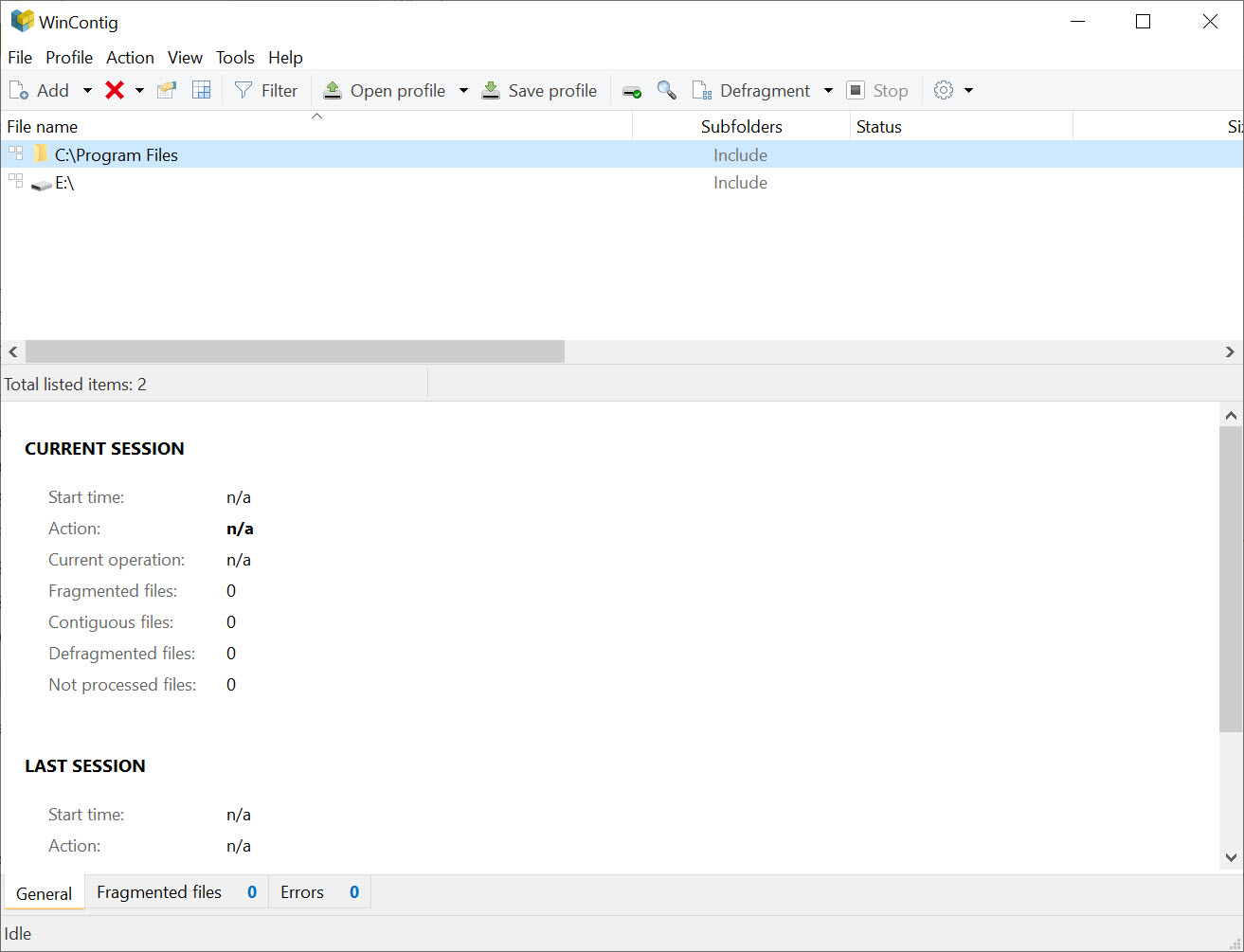
The main window is a list. Drag in files or folders, or add them through the menus, and WinContig analyses each one and shows how many fragments it is split into. Folders can be scanned recursively, and filters narrow the selection by criteria such as size, date or extension. A folder of ten thousand files can be trimmed down to the few hundred that actually need work.
That targeting is the whole point. Files that grow constantly, like mailbox stores, databases, log files and large downloads, fragment again within days of a full defrag. Defragmenting just those files on a regular basis keeps them fast without touching the rest of the disk.
When you do want a full overhaul of a hard drive, Auslogics Disk Defrag handles the whole-disk job with system file placement.
Quick or Smart defragmentation
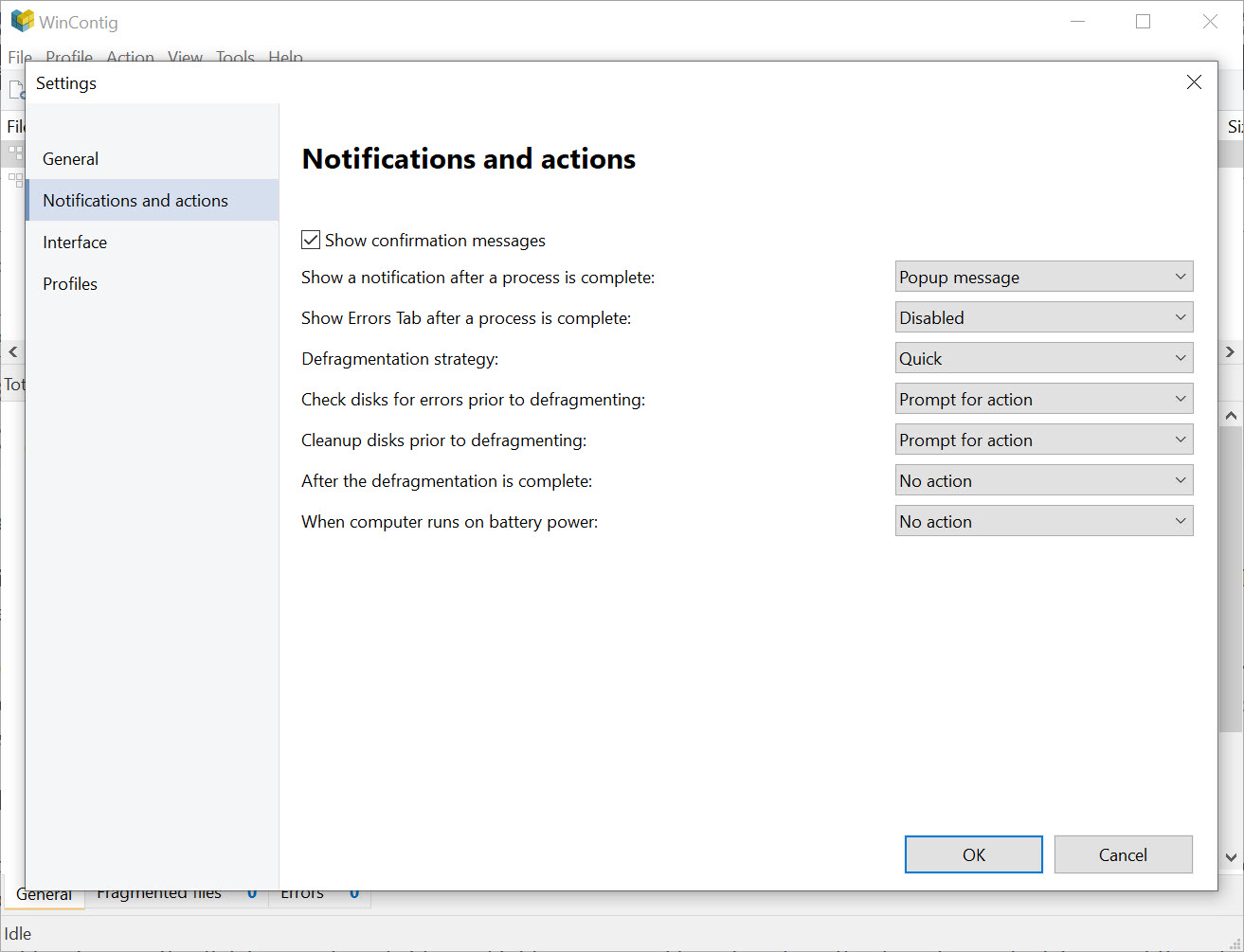
Two methods sit behind the Defragment button, and choosing the right one matters. Quick Defragmentation simply rewrites the file into contiguous space wherever the system finds it. That suits drives you already maintain with a regular full defrag, where empty space is mostly consolidated.
Smart Defragmentation is more careful. WinContig searches for the block of empty space that best fits each file before moving it, which avoids scattering a file into awkward gaps on a cluttered drive.
It takes a little longer, but on a disk that has not been fully defragmented in months it produces a cleaner result. Either way, the moves go through the system’s own defragmentation interface, so the file system itself handles the relocation.
Folder entries get attention too. On NTFS volumes a folder is stored as a special kind of file, and a directory holding thousands of items can become fragmented. The tool can analyse and defragment those folder entries, which helps when a large folder takes noticeably long to open.
Profiles, context menu and command line
Repeated jobs are where it pays off. Group files and folders into a profile, save it, and the same set can be processed later with one click, for example a weekly profile covering your mail store, browser profile and photo catalogue database.
Explorer integration adds analysis and defragmentation to the right-click menu, so a single slow-loading file can be fixed in place without opening the program. Command-line switches take automation further.
A scheduled task can launch a saved profile at night, and the recurse switch finds every file with a given name inside a folder tree, which is handy for scattered database files.
Before defragmenting, the program can also delete temporary files, so it does not waste time moving data you were about to throw away. For a more thorough cleanup, a dedicated junk-file cleaner covers far more locations.
SSDs and other limits
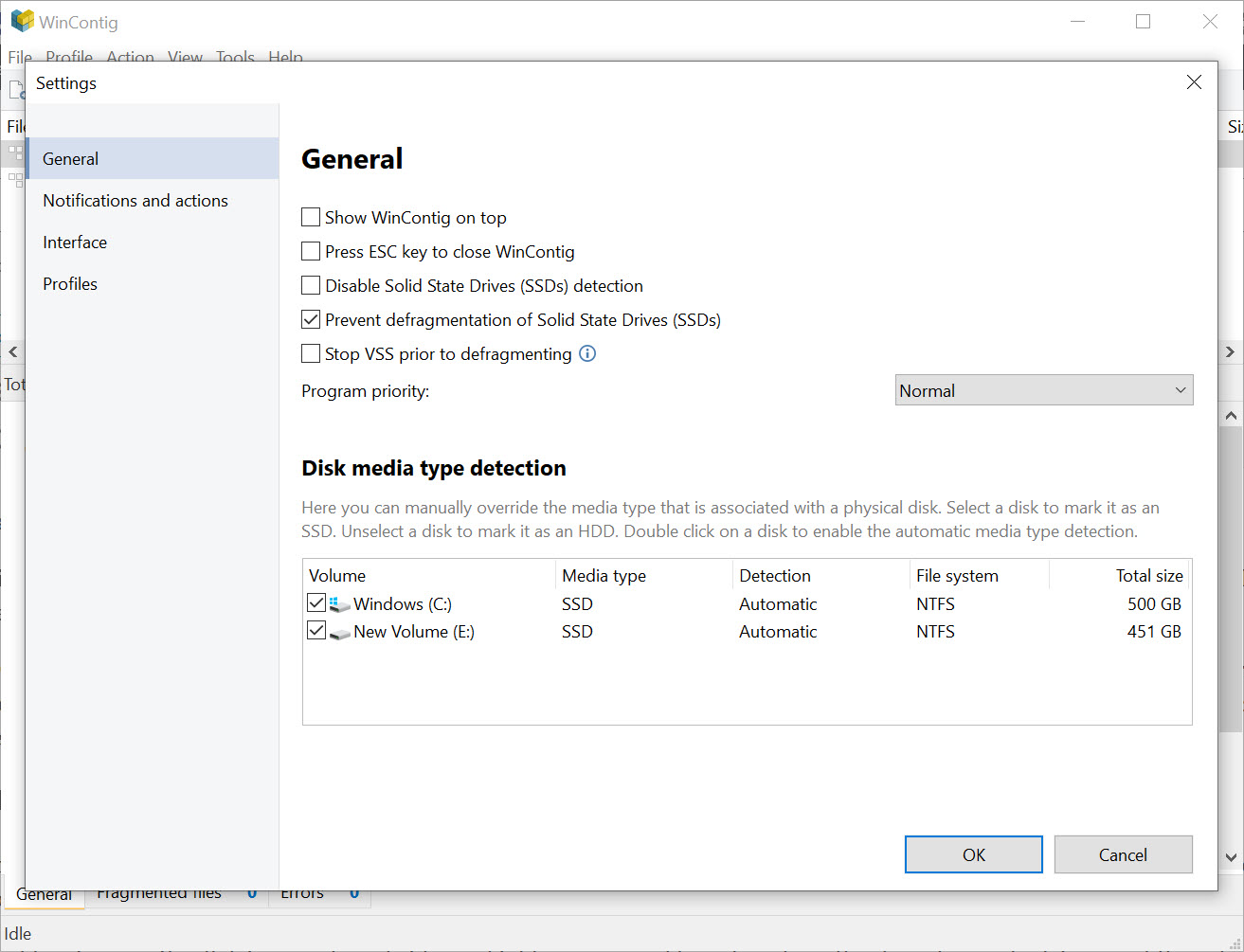
WinContig works on hard disks and SSDs, on FAT32 and NTFS, but that does not mean an SSD needs it. Solid-state drives read fragmented files almost as fast as contiguous ones, and every rewrite adds wear. Keep it for mechanical drives, and leave SSDs to the system’s own optimisation.
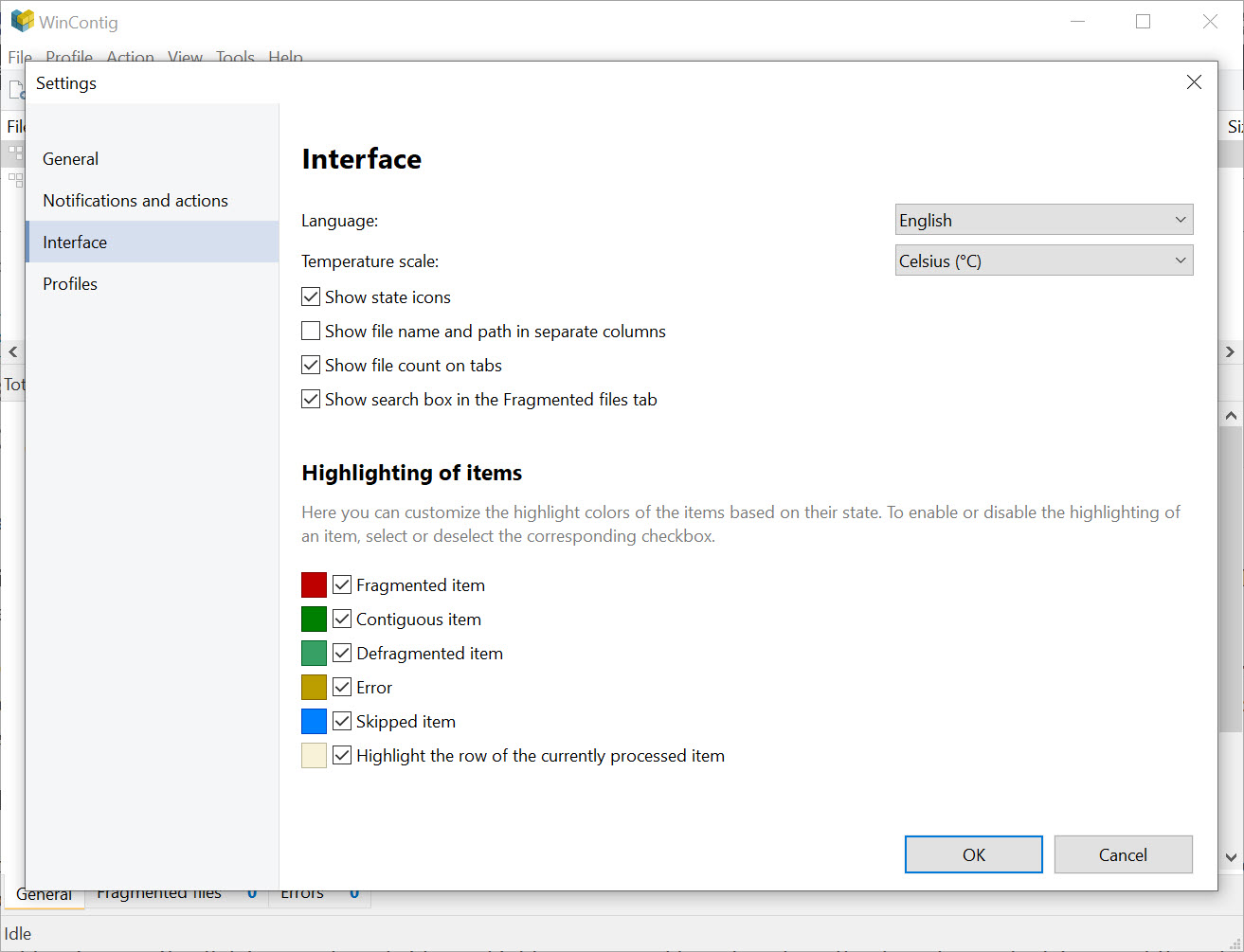
There is no disk map and no overall fragmentation score for a drive, because whole-disk work is not the goal. The interface follows the system theme but stays plain. It may also fail to start when launched from a mapped network drive, so copy the folder locally if that happens.
If you want file-level control plus a drive map in one program, Defraggler combines both.
Conclusion
WinContig suits people who know which files slow them down and want to fix just those, quickly and repeatedly. Its profiles, right-click integration and command-line control make it an ideal companion to an occasional full defrag on mechanical drives.
It offers no overview of the disk, and SSD owners can skip it entirely. As a precise, portable tool for keeping busy files in one piece, it does exactly what it promises.
Pros & Cons
- Defragments individual files and folders in seconds instead of whole drives
- Runs from one folder with no installation or registry entries
- Smart mode finds the best-fitting empty space for each file
- Profiles and command-line switches automate recurring jobs
- Right-click menu analyses and defragments files in place
- No drive map or whole-disk fragmentation overview
- Pointless on SSDs, where defragmentation only adds wear
- May fail to launch from a mapped network drive
Frequently asked questions
It is built for files and folders, so you would add the drive's root folder rather than run a disk-wide pass. For a full defrag with a drive map, a whole-disk tool is the better choice.
Quick rewrites a file into whatever contiguous space is available, which suits regularly defragmented drives. Smart searches for the empty block that best fits each file, giving a cleaner result on cluttered drives.
Yes, indirectly. Save the files you want as a profile, then run the program with its command-line switches from a scheduled task.


