

Universal Radio Hacker
About Universal Radio Hacker
Universal Radio Hacker takes a radio signal pulled from the air and turns it into the bits and bytes underneath, then lets you understand them, change them and send them back. Plug in a software-defined radio, tune to the frequency a wireless doorbell or a remote socket uses, press a button on the device, and the signal appears as a waveform on screen.
From there the tool demodulates it to ones and zeros, works out where the fields of the protocol sit,and retransmits a modified version. It is the workbench for reverse-engineering the short-range wireless devices that fill a home and an office, without a line of code for the common cases.
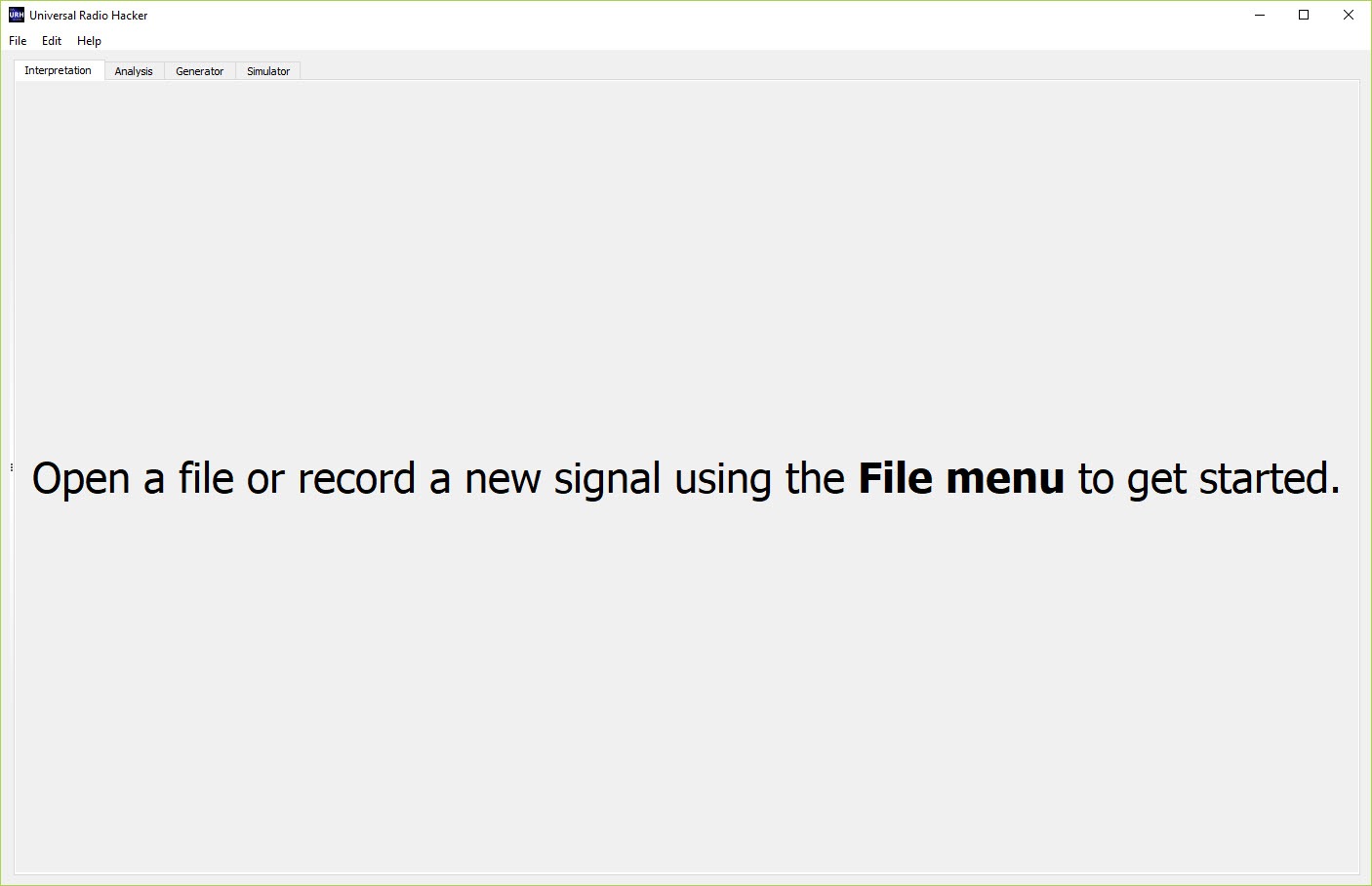
The work moves through four tabs in the order the job takes. Interpretation captures and demodulates the raw signal, Analysis finds the structure in the bits, Generation builds new messages to send, and Simulation handles the protocols where a device expects an answer.
That progression is the design, and it lets a newcomer follow a signal from a squiggle to a working replay in an afternoon while an expert drives each stage precisely. Universal Radio Hacker is open source and runs from an installer with the radio backends bundled, which spares the dependency wrangling this kind of tool usually demands.
Written in Python, it runs from source or extends through a Python distribution for anyone who wants that.
The radios it talks to
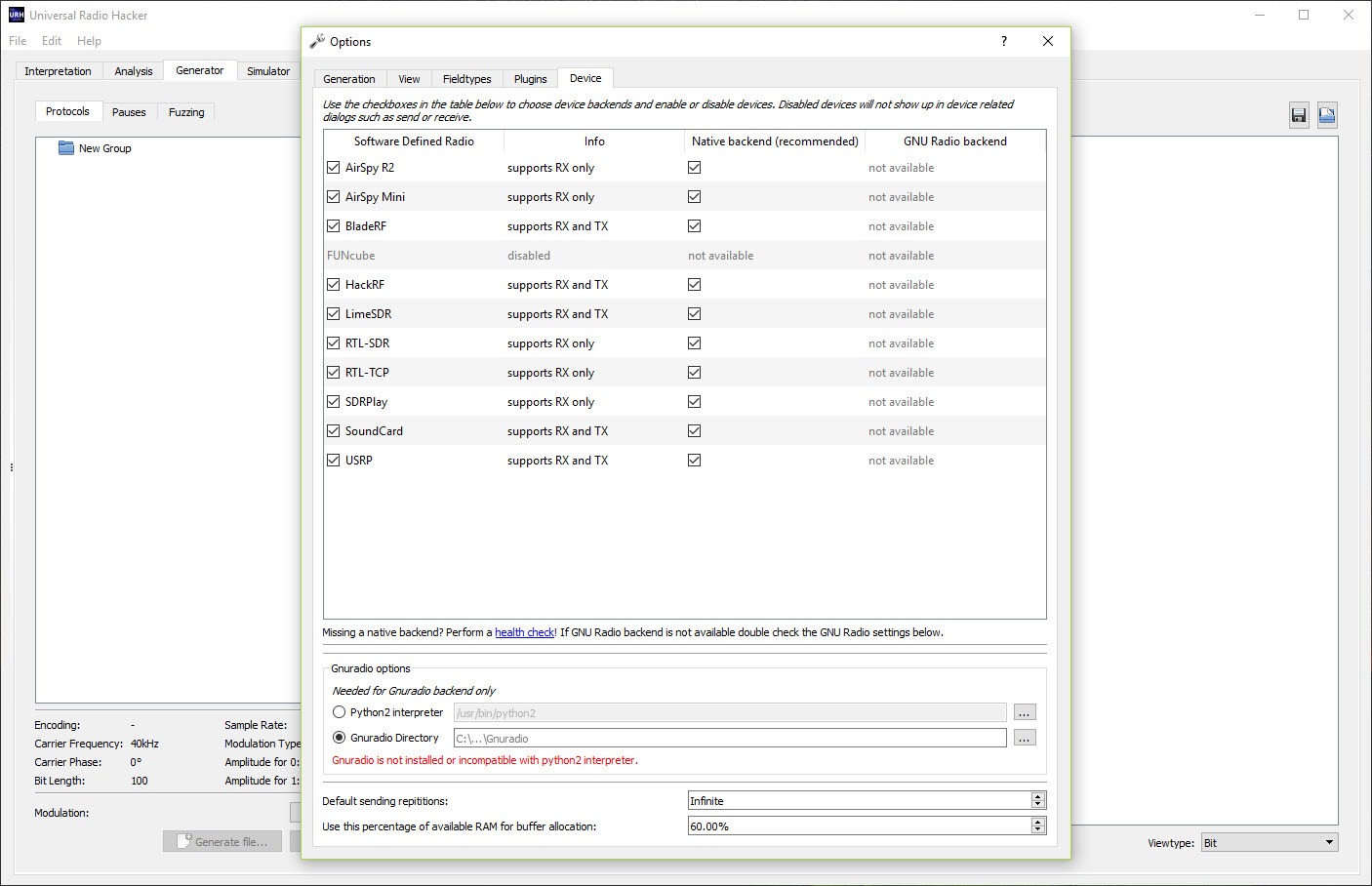
Universal Radio Hacker ships native backends for the popular software-defined radios, the receive-only budget dongles built on the RTL2832 chip, the transmit-capable HackRF, the LimeSDR, the USRP family, PlutoSDR and several others, with a GNU Radio bridge for anything else that framework supports. The receive-only dongles only listen. Sending a signal back needs a transmit-capable radio, the line between studying a protocol and exercising it.
Signals can also load from a file, so a capture made elsewhere opens for analysis and a recording made here saves for later. On the budget dongles the native driver needs the device claimed by the right USB driver first, which means running the USB driver installer these radios rely on before the radio appears.
That step trips up more newcomers than anything in the software.
Interpretation, and reading the waveform
In Universal Radio Hacker the captured signal shows as an analog waveform, and the first job is demodulation, turning the wave into bits. The tool usually detects the modulation, amplitude, frequency or phase shift keying, and estimates the symbol rate, samples per bit and thresholds, so a clean signal decodes on the first try.
When the automation guesses wrong, every parameter is a control you can set by hand while watching the bit sequence update.
A bandpass filter isolates the signal from everything else in the captured spectrum, with a moving-average filter to smooth what remains. A weak or noisy recording can often be rescued by filtering rather than recapturing, and a clean row of bits is the foundation everything after rests on.
Analysis and finding the fields
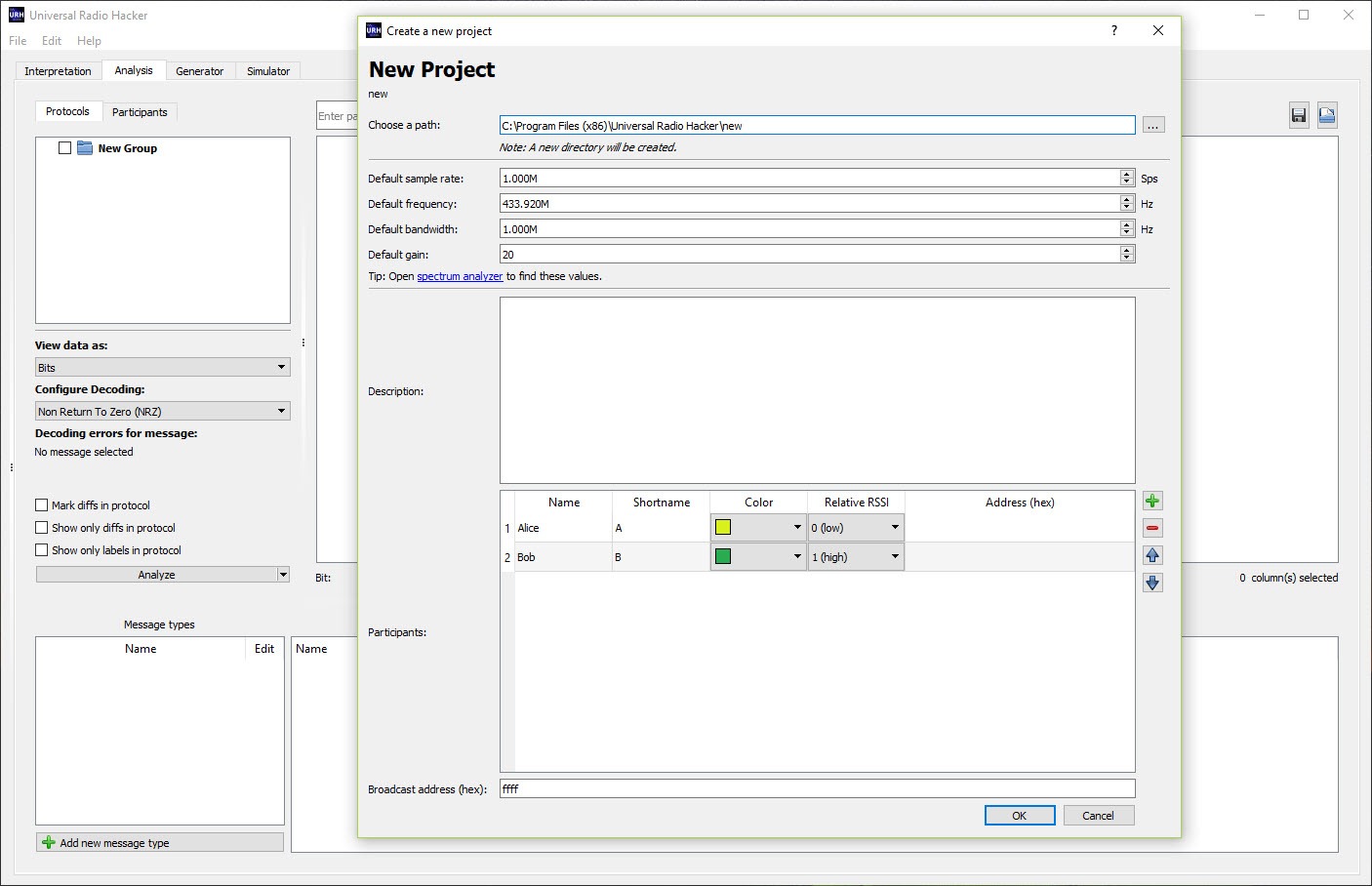
The Universal Radio Hacker Analysis tab treats the demodulated bits as messages and helps you find their structure. Participants can be assigned so the two ends of a conversation are colour-coded, and labels mark out the fields once you spot them, a preamble, a synchronisation word, an address, a counter, a checksum. The tool reads the data in binary, hexadecimal or ASCII, and searching and highlighting across many messages is how a repeating field reveals itself.
Two features do heavy lifting. Customisable decodings undo the encoding a device applies before transmission, peeling off data whitening, Manchester and differential encoding to expose the payload. And a rule-based inference proposes where the fields sit, a fast starting hypothesis rather than an answer.
Common CRC variants can be calculated and verified, confirming a guessed checksum field really is one, and an exported payload opens in a hex editor for a look at the raw bytes.
Generation and fuzzing
Once the protocol is understood, the Universal Radio Hacker Generation tab builds messages to transmit. Type or paste the bits, or take a captured message and change a field, apply the encoding and modulation the device expects, and send it through a transmit-capable radio. That is the replay and the crafted-packet attack in one place.
The fuzzing component automates the search for weaknesses in stateless protocols. Choose a field and a range of values, and the tool sends every variation in turn, which is how an undocumented command or a mishandled input gets found.
It applies the right encoding and checksum to each fuzzed message, so the target sees well-formed packets rather than garbage.
Simulation, for protocols that answer back
In Universal Radio Hacker, a replay works on a device that accepts a fixed command. It fails on anything that challenges the sender, a rolling code, a nonce, a handshake, where the right answer depends on what the device just said. The Simulation tab exists for these. It runs a defined exchange live, receiving the device’s messages, computing the response including any checksum or counter, and transmitting it within the timing the protocol demands.
That makes it an active participant in a stateful conversation, a level most radio software does not reach. Setting it up requires understanding the protocol first, so Simulation is the payoff for the analysis rather than a shortcut past it, and it separates this from the receive-and-decode tools that stop at listening.
Where it asks more of you
This is a specialist instrument that assumes a working grasp of digital radio. Fluency in modulation, symbol rate, encoding and framing is required going in, and the automation produces confident wrong answers on messy signals that only knowledge catches.
A transmit-capable radio is separate from the cheap receive dongles most people start with, and transmitting on many frequencies is regulated, so the legal boundary is the user’s responsibility. The interface is dense and dated, and large captures use a lot of memory.
None of this is a flaw so much as the shape of the field. For watching decoded network packets rather than raw radio, a packet analyser is the tool once the data has left the air.
Conclusion
Universal Radio Hacker suits security researchers, hardware hackers and the technically curious who want to understand and exercise the wireless protocols around them, from a garage remote to a sensor network, and who already speak enough radio to read a waveform. The four-tab pipeline is the clearest path from an unknown signal to a working analysis that the field offers, and the fuzzing and simulation reach places most radio software stops short of.
It is not a tool for a beginner with no radio grounding, and it is not for anyone unwilling to mind the legal line around transmission. Learn the vocabulary, start with a receive dongle on a signal you own, keep transmission to hardware and frequencies you are permitted, and it becomes the one application that carries a wireless protocol from the air to understanding and back again.
Pros & Cons
- Full pipeline from raw signal to modified retransmission in one application
- Native support for the common software-defined radios with bundled backends
- Automatic modulation detection and parameter estimation, all overridable by hand
- Customisable decodings strip whitening, Manchester and differential encoding
- Fuzzing applies correct encoding and checksums to every variation automatically
- Simulation handles stateful protocols with challenge and response
- Assumes a working knowledge of digital radio
- Transmitting needs a capable radio and runs into frequency regulation
- Automatic detection produces confident wrong answers on noisy signals
- Interface is dense and dated, and large captures are memory-heavy
Frequently asked questions
The common software-defined radios natively, including RTL-SDR dongles for receiving and HackRF, LimeSDR, USRP and PlutoSDR for transmit and receive, plus anything through a GNU Radio bridge.
Yes, with a transmit-capable radio. The receive-only dongles capture and analyse only. Note that transmitting on many bands is regulated.
Through the Simulation tab, which receives the device's messages and computes and sends the correct response live, rather than replaying a fixed one.
The dongle needs the correct USB driver assigned first. Run the driver installer these radios use, then the device shows in the list.


