

UEFI BIOS Updater
About UEFI BIOS Updater
UEFI BIOS Updater, known in the modding community simply as UBU, is a tool that nobody should approach casually. It does not flash your BIOS. It modifies the BIOS image file before you flash it, swapping individual modules inside the firmware (CPU microcode, Option ROMs for storage and network controllers, video BIOS, NVMe drivers) for newer versions. You then take the modified BIOS file to your motherboard manufacturer’s own flashing utility and apply it. This separation matters because it tells you immediately what kind of tool this is. UBU is a BIOS modder’s workshop, not a one-click updater.
The reason the tool exists at all is that motherboard manufacturers stop releasing BIOS updates for older boards long before the components inside that BIOS stop receiving updates from their respective vendors. Intel keeps issuing CPU microcode revisions years after a chipset goes end-of-life. Storage controller vendors release newer Option ROM versions with bug fixes and feature additions.
Realtek pushes LAN PXE BIOS updates that the motherboard maker never integrates. UBU pulls those newer modules out of the latest reference packages and lets you graft them into the abandoned BIOS your motherboard is still running.
What gets updated and what does not
The tool works at the module level inside a UEFI BIOS image. Modules it can typically update include CPU microcode (the most common reason people reach for UBU after a new vulnerability disclosure or a stepping fix), Intel RST and Intel RSTe RAID Option ROMs, the EFI variants of those same RAID drivers, Intel LAN PXE OROMs and EFI drivers, Realtek LAN modules, Broadcom LAN modules, video BIOS modules for integrated GPUs, and increasingly the NVMe driver module that lets older boards boot from M.2 NVMe SSDs they were never designed to support.
What UBU does not touch is the core firmware code. The actual UEFI implementation, the bootloader, the setup menu, the platform initialization code, all of that remains exactly as the manufacturer shipped it. UBU is precise enough to swap a discrete module and leave everything else untouched.
This precision is what makes the modified BIOS still bootable when you flash it, but it is also why UBU cannot fix bugs that live in the motherboard maker’s own code. Module-level updates only.
How the modification process actually works
UBU runs as a console application with a menu-driven interface. You point it at a BIOS file (extracted from whatever package your motherboard manufacturer last published), and it analyzes the image to identify what modules are present and what versions they are at. Then it offers to update each one against the latest known reference version. You select what to update, the tool extracts the new modules from its bundled module library, replaces the old modules in the image, recalculates checksums where needed, and writes a modified BIOS file alongside the original.
The dirty work happens inside that analyze-and-replace cycle. UBU is essentially a thin orchestration layer over a collection of vendor tools, including AMI’s MMTool for AMI Aptio-based BIOSes, Phoenix’s tools for Phoenix-based BIOSes, and various Intel reference utilities for specific module types.
The tool figures out which vendor toolkit applies to your specific BIOS and routes the operation through it. This is why UBU can work across so many motherboard makers despite each one’s BIOS being internally different. The result is a BIOS image file that should flash and boot identically to the original, except for the specific modules you chose to update.
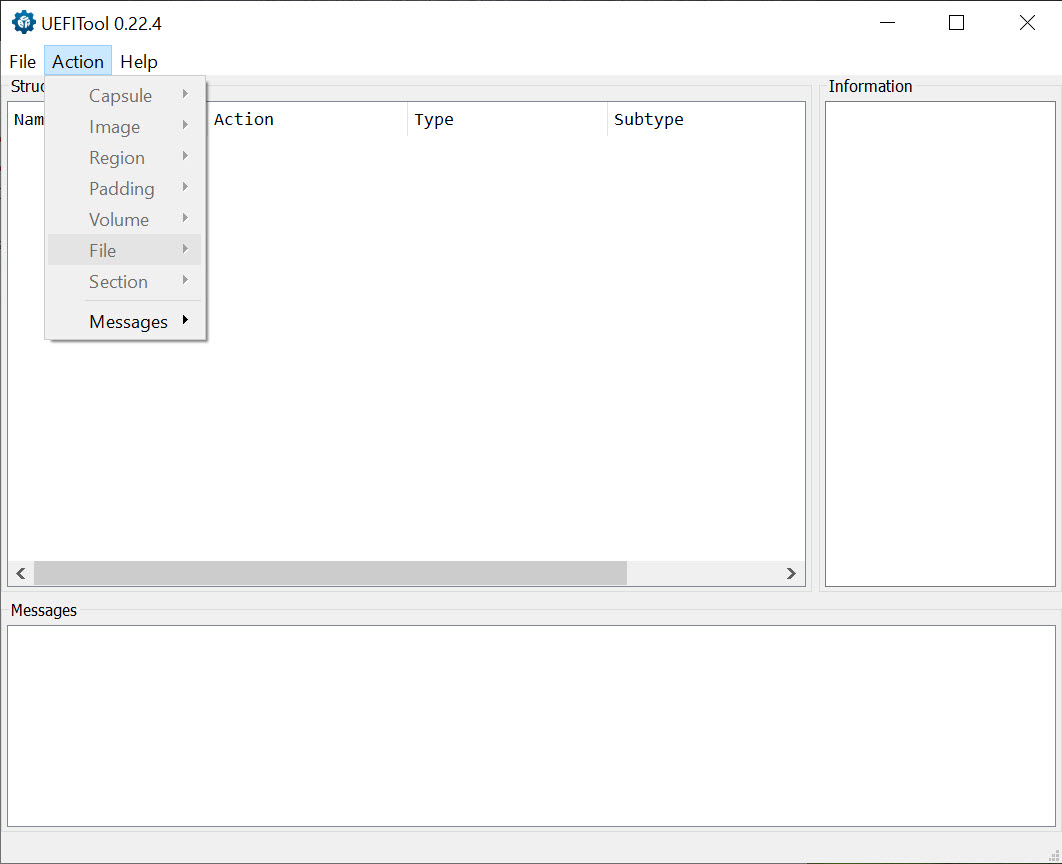
For deeper inspection of what is actually inside a BIOS image before or after modification, UEFITool is the companion application that most people who run UBU also keep around. UEFITool opens the BIOS file in a tree view and lets you see every section, every module, and every PE32 image inside. Power users use the two tools together, UEFITool for inspection and surgical edits, UBU for batch module updates.
Microcode updates and why people care
CPU microcode is firmware that runs on the processor itself, distributed inside the BIOS for the motherboard to load at boot. Intel and AMD periodically release new microcode revisions to fix CPU bugs, patch security vulnerabilities (Spectre, Meltdown, MDS, ZombieLoad, the long parade of speculative execution vulnerabilities all required microcode mitigations), and occasionally improve compatibility with newer steppings of the same CPU family.
A motherboard manufacturer who has stopped releasing BIOS updates for an older board leaves users on whatever microcode that last BIOS shipped with. UBU lets you bring the microcode current independently. The process is straightforward in the tool, you select the microcode update option, UBU pulls the latest microcode from its bundled database, replaces the old microcode in the BIOS image, and you flash the result.
For users running older platforms that are still capable of serving daily duty but have not seen vendor updates in years, this is the single most useful thing UBU does.
The OROM and EFI driver story
Older motherboards predate widespread NVMe support, which means their BIOSes contain no driver capable of recognizing an NVMe SSD as a bootable device. You can install Windows on the NVMe drive, but the system has to boot from a different drive that loads Windows after the BIOS hands off control. UBU lets you graft an NVMe EFI driver into the BIOS image, so the next time you boot the modified BIOS, the system can see the NVMe drive as a first-class boot target. This is one of the most popular use cases on enthusiast forums, particularly for boards from the era just before NVMe became standard.
Similarly, Intel RST and RSTe RAID Option ROMs control how the BIOS presents RAID arrays to the operating system at boot time. Newer RST versions support newer RAID features, larger array sizes, and bug fixes around RAID member detection.
UBU can update these modules independently of the rest of the BIOS, which matters for storage-heavy systems that want the latest RAID firmware without waiting for a board vendor update that may never come.
The risk profile and why this is not for everyone
A failed BIOS flash on a desktop motherboard is one of the worst hardware accidents a user can have. The board may refuse to boot at all, requiring either a BIOS recovery procedure (if the board supports one like dual-BIOS or BIOS Flashback) or a hardware-level recovery using a SPI flash programmer attached directly to the BIOS chip. UBU itself does not flash anything, so the tool’s own behavior is low-risk. The risk comes when you take the modified BIOS file UBU produced and feed it to the motherboard maker’s flasher.
Several things can go wrong. The modified BIOS might be technically valid but cause boot problems on your specific board revision. The newer module might depend on platform features your older board does not properly support. The microcode update might trigger a sanity check in the flasher that refuses to apply a “non-vendor” BIOS. You might lose power during the flash itself, which is the universal worst case. Smart users prepare for this with a stock copy of the original BIOS on hand, a working BIOS recovery method, and ideally a separate flash programmer they know how to operate.
For users who only need to flash a stock BIOS from their motherboard maker, the vendor utilities are the right answer. ASUS WinFlash handles ASUS boards. MSI Live Update covers MSI. Gigabyte App Center bundles Gigabyte’s @BIOS utility for their boards. UBU is for the case where the vendor stopped updating and you want to update the modules inside the BIOS yourself.
Verifying the board before and after
Before you flash a UBU-modified BIOS, verify what motherboard you actually have and what BIOS it is currently running. CPU-Z shows the motherboard model and BIOS version on the Mainboard tab. Speccy presents the same information in a different format. Getting this wrong is a great way to flash the wrong BIOS onto the wrong board, which is exactly the kind of mistake that ends with a paperweight.
After flashing, the same tools confirm that the new modules are active. Microcode revision shows up in CPU-Z on the CPU tab. New OROM versions appear in the BIOS setup screens, in the boot menu listings, or in the operating system’s device management once you boot in.
For RAM-related work, Thaiphoon Burner reads SPD firmware on memory modules, which sometimes interacts with BIOS-level memory training in ways that matter for enthusiast builds.
Limitations worth being explicit about
The bundled module database in UBU is what determines what updates are possible. The maintainers update this database periodically, but if a brand-new microcode revision or a new OROM version has not yet been integrated, UBU cannot apply it. Manual extraction and substitution is possible with UEFITool for users who know what they are doing, but the convenience of the menu-driven UBU experience disappears at that point.
Not every BIOS is moddable. Some motherboard manufacturers sign or check-sum their BIOSes in ways that detect modifications and refuse to flash a modified image. UBU has workarounds for some of these protection schemes, but not all of them, and the situation evolves with each new generation of platforms. Newer boards with Intel Boot Guard or similar firmware-protection technologies are much harder to mod than older boards from the pre-Boot-Guard era.
The console interface is intimidating. Menus are nested, options are labeled with technical abbreviations, and there is little hand-holding. The documentation lives on enthusiast forums and is fragmented across years of forum posts. New users typically spend a couple of hours reading guides before their first attempt.
Conclusion
UEFI BIOS Updater is the right tool for a specific kind of user. Enthusiasts running older platforms who want to extend hardware life with module-level updates, builders adding NVMe boot support to boards that never supported it natively, anyone keeping security-relevant microcode current on systems the motherboard maker has abandoned. Within that audience the tool is genuinely useful and there is not much that competes with it directly.
For everyone else, this is the wrong product. Users who just want to flash the latest official BIOS from their motherboard maker should use that maker’s own utility. Users who do not understand what a microcode revision is or what an Option ROM does should not be flashing modified BIOSes regardless of what any tool makes possible.
The reward for using UBU well is a board that runs newer firmware than it was ever supposed to. The cost of using it badly is a brick. That ratio defines the tool’s audience more clearly than any feature list can.
Pros & Cons
- Module-level surgery inside a BIOS image, updating CPU microcode, OROMs, EFI drivers, and similar components without touching the rest of the firmware
- Brings older boards forward on microcode and storage support long after the motherboard maker has stopped issuing updates
- NVMe boot support can be grafted into BIOSes that originally shipped without it, extending the useful life of older platforms
- Bundled module database is regularly updated with the latest reference versions from Intel and other vendors
- Works across many motherboard makers because it orchestrates the relevant vendor toolkits internally
- Free for personal use with no licensing complications
- The tool itself is low-risk but the BIOS flashing it enables is genuinely dangerous, a failed flash can brick the board
- Console-driven menu interface is intimidating for anyone without modding experience
- Some motherboards refuse to flash modified BIOSes due to vendor checksum or signing protections
- Requires understanding of what each module does before you decide whether to update it, blind updates are how things go wrong
- Documentation is scattered across enthusiast forums, no official user manual that walks beginners through the process
- Newer platforms with Intel Boot Guard or similar protections may be unmoddable regardless of what UBU can do
Frequently asked questions
It modifies BIOS image files at the module level, replacing components like CPU microcode, RAID Option ROMs, EFI drivers, and NVMe drivers with newer versions from its bundled database. It does not flash anything to the motherboard, you take the modified BIOS file and use your motherboard maker's own flashing utility to apply it.
The tool itself only manipulates files on disk, which is low-risk. The danger comes when you flash the modified BIOS to your motherboard. A failed flash can brick the board and require hardware-level recovery. Read multiple guides, verify your board model, keep the stock BIOS available, and understand your board's recovery options before flashing anything modified.
Motherboard manufacturers stop releasing BIOS updates for older boards long before Intel or AMD stop issuing CPU microcode revisions. If you are running a board that no longer receives vendor updates but you want the latest microcode for security fixes or stepping support, the application is one of the ways to get there.
Often yes. Older boards that predate NVMe can have an NVMe EFI driver grafted into their BIOS using this tool, which lets the system see NVMe SSDs as bootable devices. This is one of the most common reasons people use UBU on platforms from the era just before NVMe became standard.
It works with most AMI Aptio and Phoenix-based BIOSes, which covers the vast majority of consumer motherboards. Boards with manufacturer protection like Intel Boot Guard, or specific OEM platforms with locked firmware, may not be moddable. The tool itself will tell you when it cannot process a BIOS it does not understand.
The vendor flasher may refuse to apply a non-stock BIOS due to checksum or signing protections. Workarounds exist for some boards, including using older flasher versions, command-line flags, or alternative flashing methods like DOS-based AFUDOS for AMI BIOSes. The right approach depends on your specific board and firmware.
UEFITool is a viewer and editor that lets you inspect a BIOS image in detail and make precise manual edits. UEFI BIOS Updater is a higher-level tool that orchestrates batch module updates from a curated database. Power users keep both around and use them together.


