

Timez Attack
About Timez Attack
Learning multiplication tables is memorisation, and memorisation needs repetition that children resist. Every attempt to solve that problem involves disguising the repetition as something else, and Timez Attack disguises it as a proper three-dimensional adventure rather than a quiz with cartoon borders.
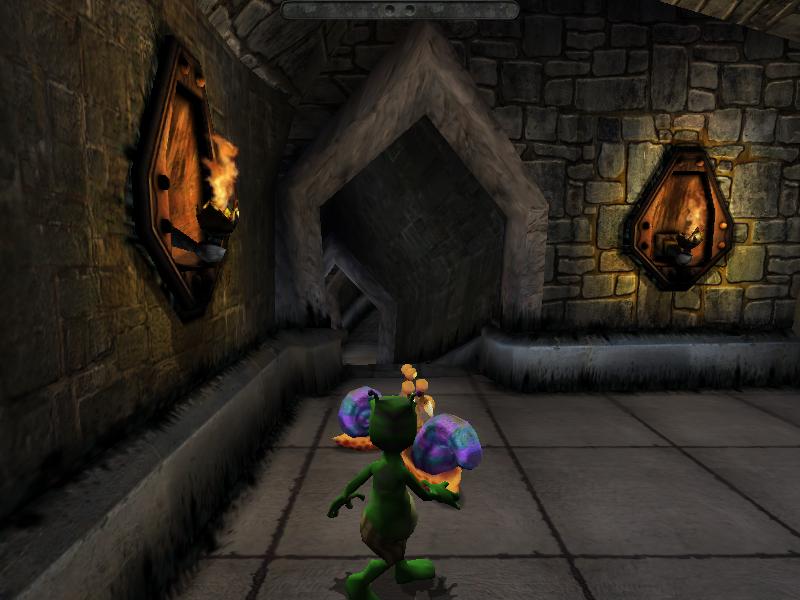
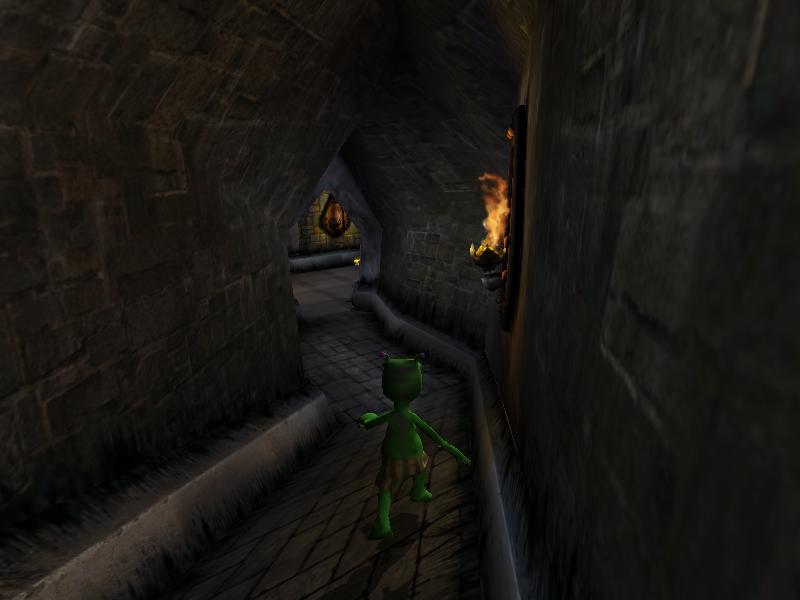
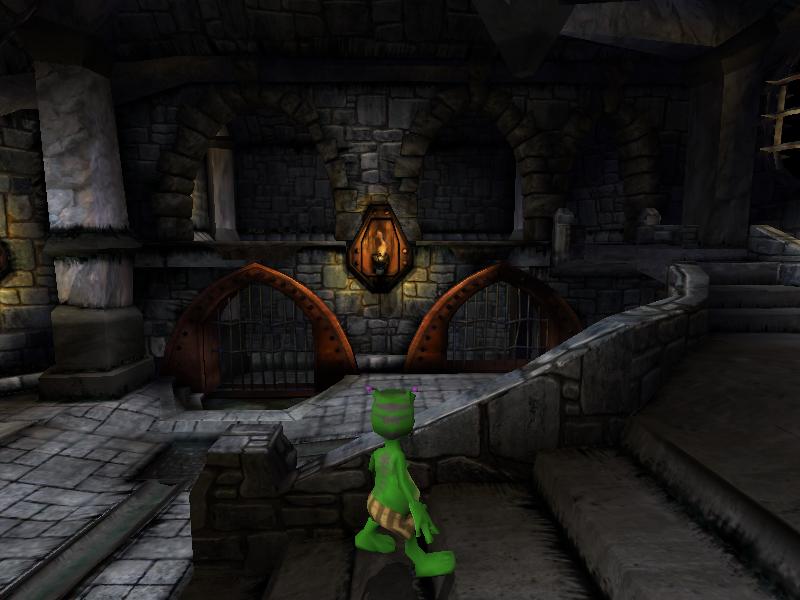
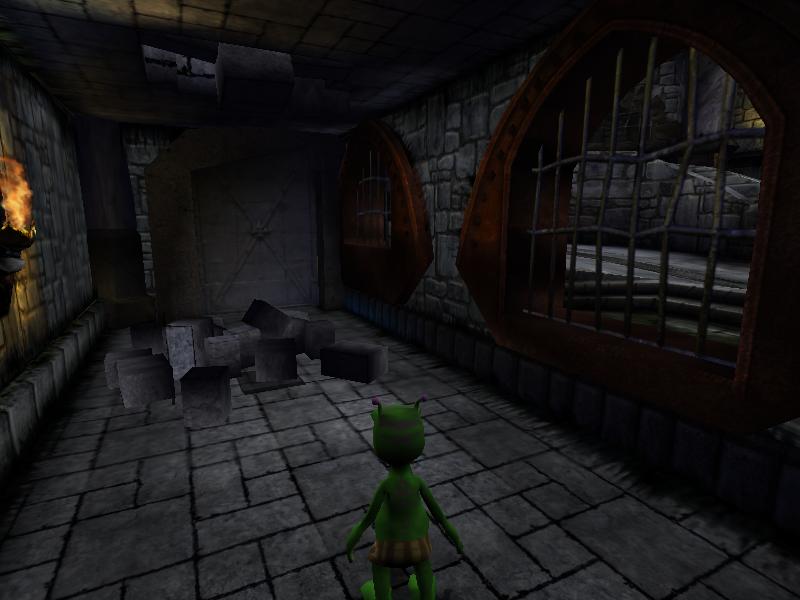
Timez Attack starts with the child picking a frog and setting out to escape a dungeon. Doors need keys, keys need answers, and creatures block the way until the arithmetic is done. At the end of a maze waits a larger monster with unsolved multiplications written across its belly, and getting those wrong sends the player back into the maze to try again.
That last detail is the design working correctly. A wrong answer costs progress rather than producing a red cross, which is a consequence a child actually feels.
One table per level, in order
The Timez Attack structure is sequential rather than adaptive. Each level teaches a single times table, starting at two and working upward through twelve, so a child progresses table by table rather than meeting mixed facts throughout.
A pre-test at the start places them at an appropriate level, which spares a child who already knows the early tables from grinding through them.
Within a level there is some adaptation. The pacing slows on problems a child keeps missing, so a fact that is not sticking gets more attention than one already known. That is narrower than choosing which facts to drill across the whole range, and it is the part that matters during a session.
The dedicated retention drilling, which revisits tables already passed to keep them fresh, belonged to the paid editions rather than the freely available one.
The time pressure divides children sharply
This is the most useful thing a parent can know before installing it, and no product description mentions it.
Timez Attack creates a sense that answers need to come quickly. For a child who needs pushing towards fluency rather than towards understanding, that pressure is exactly the mechanism, and it produces the automatic recall the whole exercise exists for.
For a child who freezes under time pressure, it does the opposite. Some refuse to play at all, and forcing the issue teaches them that arithmetic is stressful, which is the precise outcome nobody wanted.
There is no reliable way to predict which child you have from their age or their ability. Watching the first session is the only test, and stopping is a legitimate result rather than a failure.
What the evidence actually shows
Independent evaluation of Timez Attack exists, which is unusual in educational software and worth reporting accurately.
A controlled classroom study found children who played improved measurably, attempting and answering noticeably more problems on a post-test than beforehand, and reported reduced anxiety about arithmetic alongside greater confidence.
The same study found no significant difference in outcomes between playing this and ordinary classroom instruction. That is the honest headline. It works about as well as teaching does, which makes it a supplement rather than a replacement, and its advantage is that children will do it voluntarily.
The limitations were stated plainly by the evaluators, being a small sample that was not randomly selected over a compressed period. Treat the finding as encouraging rather than settled.
Recall is not the same as understanding
Timez Attack builds instant recall of multiplication facts, which is properly worth having. A child who has to work out seven times eight cannot follow a lesson about fractions while doing so, and fluency frees attention for the harder thinking.
It does not teach what multiplication means. Understanding that three groups of four equals four groups of three, or why the operation applies to a particular word problem, is conceptual work no drill delivers.
Both matter and they are different jobs. A child with the facts and no concept looks competent and struggles later, and the reverse looks slow while understanding more than the marks suggest.
The scenery runs out
The freely available Timez Attack contains two settings, a dungeon and a palace, covering all the tables from two to twelve.
That is enough to complete the material and it does become repetitive, which several parents report as the point where attention fades. The additional settings that solved this belonged to the paid editions.
Those paid editions are no longer sold to households, the consumer product having been discontinued after the software moved into a schools offering. So what exists now is the base game, complete for multiplication and visually limited by design decisions nobody is going to revisit.
Where it fits
For a child of roughly seven to twelve who needs the tables and will not sit still for them, Timez Attack remains one of the better answers, and the fact that it costs nothing removes the risk from trying.
For creative work rather than drill, Tux Paint covers a similar age with an entirely different purpose, and children who resist all practice sometimes respond better to making things.
For an older child or an adult who needs a calculating tool rather than a teaching one, Simplexety handles expressions and functions, which is the next stage rather than a competitor.
Conclusion
Timez Attack understood the real problem, which is not explaining multiplication but persuading a child to repeat facts until they arrive without thinking. Tying progress to correct answers, and sending them back when they are wrong, does that better than any worksheet.
Two things decide whether it suits your child. The time pressure is the mechanism and it is also why some children refuse, so watch the first session rather than the marketing. And it produces fluency rather than understanding, which is worth having and is only half the job, so keep the teaching going alongside it.
Pros & Cons
- Repetition disguised well enough that children continue voluntarily
- A wrong answer costs progress, which children feel more than a mark on paper
- Pre-test places a child at the right table rather than starting from two
- Pacing slows on facts a child keeps missing within a level
- All tables from two to twelve available without paying
- Independent evaluation found measurable improvement and reduced anxiety
- Time pressure makes some children refuse to play entirely
- Levels run table by table rather than targeting weak facts across the whole range
- Two settings only, and the scenery becomes repetitive before the end
- Teaches recall of facts rather than what multiplication means
- Studied outcomes match ordinary instruction rather than beating it
- Paid editions that added scenery and retention drilling are no longer sold
Frequently asked questions
Progress through a dungeon depends on answering multiplication facts at doors and against monsters. The repetition happens because the game requires it rather than because a child has been told to practise.
Within a level, partly, since the pacing slows on problems that keep being missed. The overall structure is sequential though, one table per level from two upward, rather than selecting weak facts from across the range.
For some children, seriously. It motivates a child who needs pushing towards automatic recall, and children who freeze under pressure sometimes refuse to play at all. Watch the first session rather than assuming.
No. A controlled study found improvement comparable to ordinary classroom instruction rather than better, with reduced anxiety alongside it. That makes it a supplement children will do willingly, not a replacement.
The complete set of tables from two to twelve across two settings. The extra scenery and the retention drilling were in paid editions that are no longer sold to households.


