

Tablacus Explorer
About Tablacus Explorer
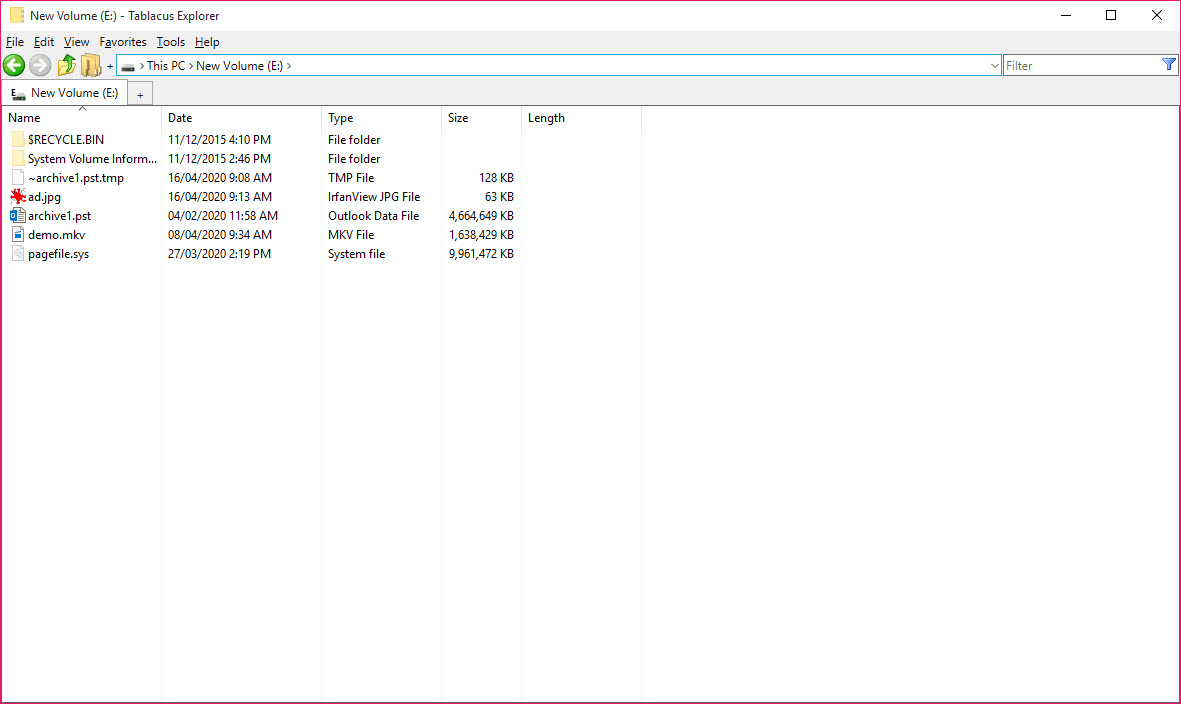
Tablacus Explorer is a tabbed file manager that fits a specific niche, which is users who want an alternative to Windows Explorer with deep customization through an add-on system rather than a single bloated feature set. The application is small (the executable fits in a few megabytes), runs as a portable application without installation, and exposes essentially every aspect of its behavior to user configuration through hundreds of community-developed add-ons.
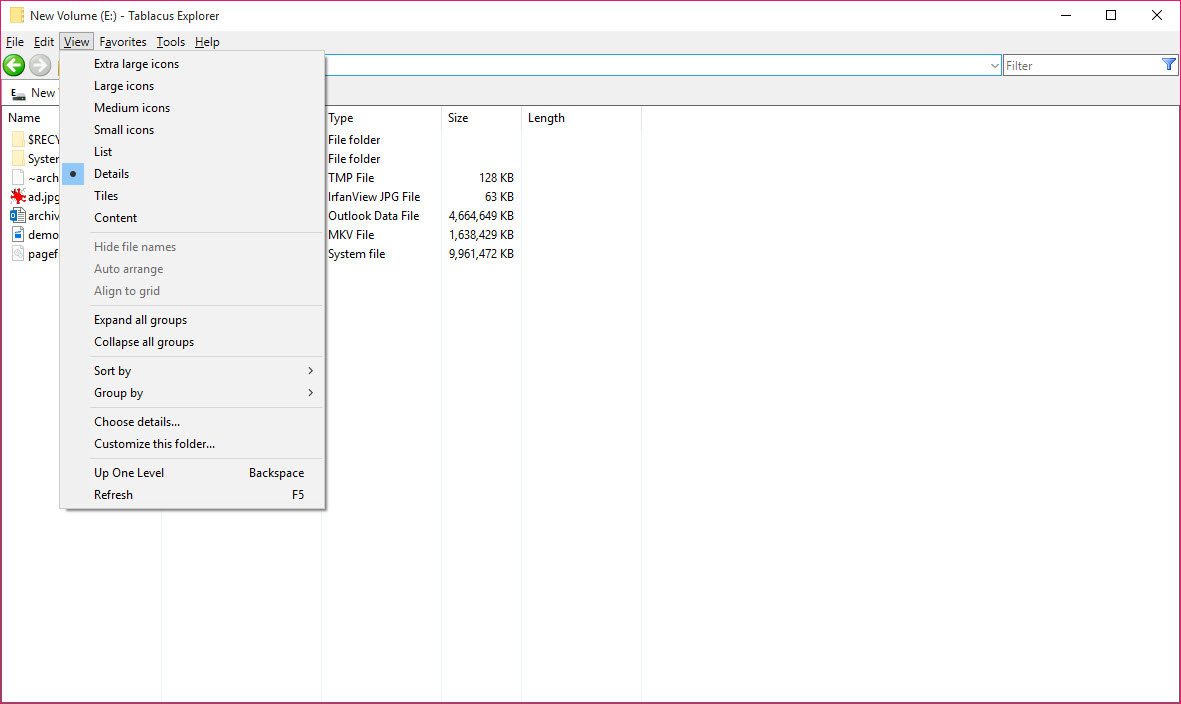
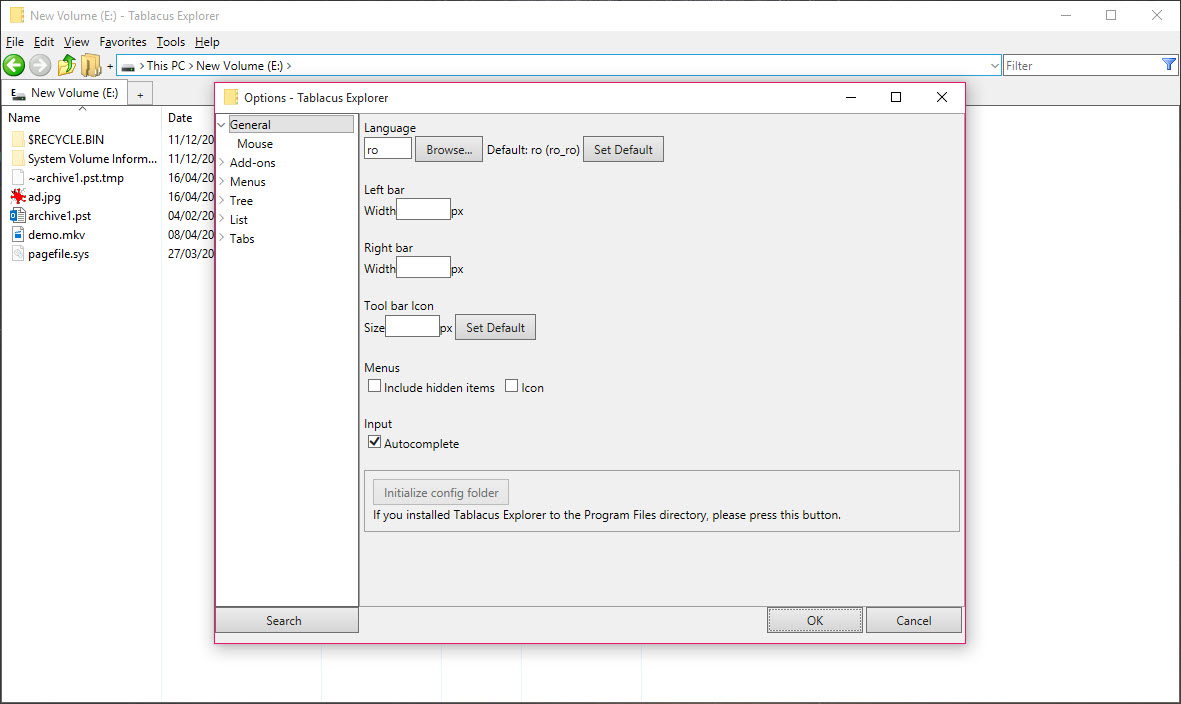
The base interface is minimal almost to a fault, with the expectation that users will assemble exactly the file manager they want by enabling the add-ons relevant to their workflow.
The project is free, has been actively developed for years, and supports Windows from the older versions through Windows 11. The audience is users who appreciate this configuration-heavy approach. If you want a file manager that works exactly the way you want after a few hours of tweaking, you’ll find the depth genuinely rewarding.
If you want a polished out-of-the-box experience that needs no setup, the philosophy of this application probably isn’t the right fit and other tools in the category like FileVoyager offer more pre-configured workflows.
The tabbed interface as the starting point
The core feature that separates the application from Windows Explorer is genuine tab support. Open multiple folders in tabs within a single window, switch between them with keyboard shortcuts or mouse clicks, and rearrange them by dragging. This sounds basic, but Microsoft only added tabs to Windows Explorer in Windows 11 in 2022, and even then the implementation is more limited than dedicated alternatives offer.
Tabs in Tablacus Explorer can be configured with custom names, colored labels, locked states (so they don’t close accidentally), and persistent state across sessions. A session of twenty open folder tabs can be saved, reloaded later, or organized into named sets. For users who routinely work in many directories (developers navigating project folders, photographers working with shoot folders, anyone managing organized data across multiple locations), the tab management is a real productivity feature.
The split view divides the window into multiple panes, each showing its own folder. Dual-pane layout is the classic file manager configuration (commonly used in tools like Total Commander) where you have source and destination folders visible side by side for drag-and-drop operations. The application supports both horizontal and vertical splits, and the splits can be nested for three or four panes if your work pattern needs them.
The add-on system that defines the experience
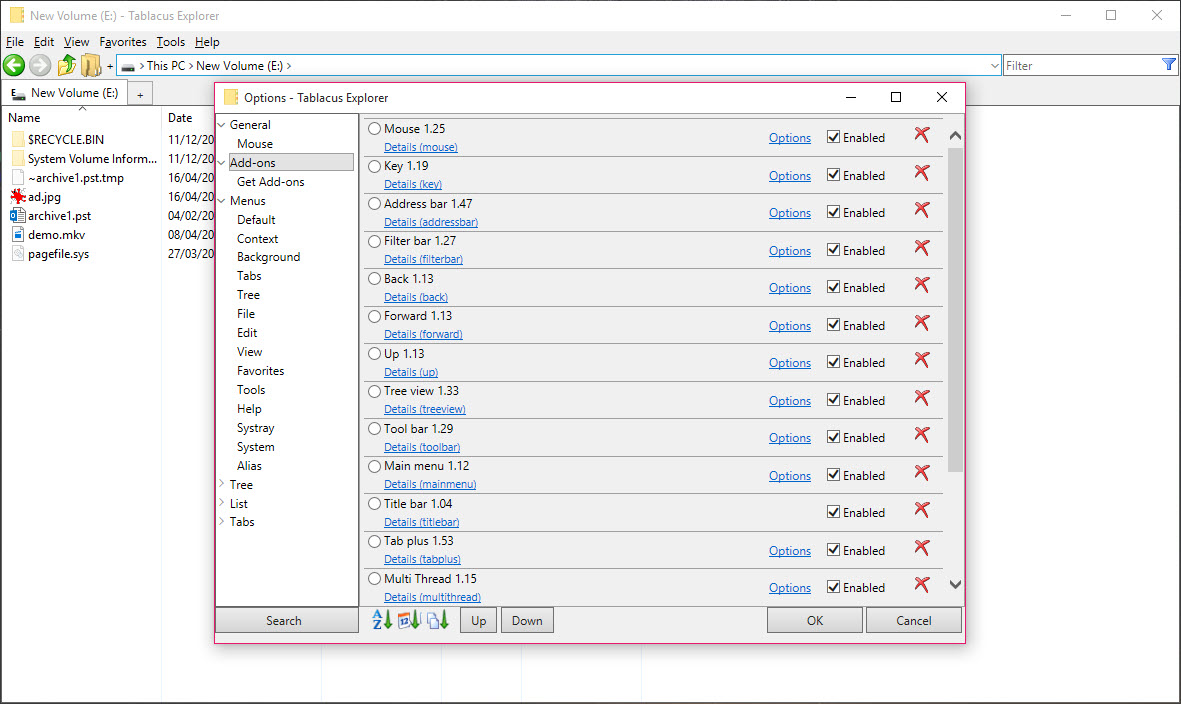
The application’s most distinctive characteristic is its add-on architecture. Out of the box, the base Tablacus Explorer installation is intentionally minimal, with most features available as optional add-ons that users enable based on their needs. The add-on catalog includes hundreds of plugins covering essentially every conceivable file manager feature.
Want preview pane support for images, documents, and videos? There’s an add-on. Want context menu customization with specific actions? There’s an add-on. Want column customization showing different file attributes? Several add-ons handle this differently. Want FTP and SFTP support to manage remote files alongside local ones? An add-on covers this. Want custom keyboard shortcuts beyond what the base supports? Another add-on.
The trade is that the initial setup requires real configuration work. New users open the application, see a relatively spartan interface, and have to discover which add-ons fit their needs through the add-on browser. The discovery process takes time, the documentation is uneven (some add-ons are well-documented in English, others have minimal Japanese-language documentation that requires translation), and the configuration isn’t always intuitive.
For users willing to invest the setup time, the end result is a file manager precisely tailored to their workflow. For users who want immediate productivity without configuration, other file managers with more pre-built feature sets fit better.
The Japanese origin and the localization situation
The project was originally developed in Japan and has its strongest user base there. The application is fully translated to many languages including English, but some of the add-on documentation and community resources remain primarily in Japanese. For most users this doesn’t matter because the application itself works in their language, but anyone digging deep into add-on customization may occasionally encounter Japanese-language resources that need translation.
The development style also reflects the Japanese software tradition of dense customization rather than American-style opinionated defaults. This is the philosophical difference that determines whether the application will feel right or wrong for any given user.
Users who appreciate giving the software extensive control over its own behavior tend to find this approach genuinely appealing. Users who want software to make good default decisions for them often find it overwhelming.
File operations and the basic workflow
The core file operations work as expected. Copy, move, delete, rename, and the standard Windows file dialog operations all function. The application uses Windows’ own shell handlers for file operations by default, which means it integrates with the operating system rather than reimplementing functions like extraction handlers or context menus. Context menu support is good, with the standard Windows right-click menu working in addition to whatever custom items add-ons provide.
Batch rename support is built in, with pattern-based renaming for renaming many files at once according to rules (sequential numbering, find-and-replace, case changes, prefix/suffix addition). For users who often need to rename collections of files, this functionality is faster than navigating to a separate batch rename utility. For more complex batch operations, dedicated tools like Bulk Rename Utility cover deeper renaming workflows.
Multi-file selection works with the standard Windows conventions plus several enhancements. Filter-based selection lets you select all files matching a pattern, all files of specific types, or all files matching custom criteria. For users who routinely select hundreds of files based on attributes, these filter operations save real time compared to manual selection.
Customization examples worth knowing
To make the customization potential concrete, here are some configurations that long-term users actually build.
A photographer might enable add-ons for image preview, EXIF metadata columns, full-screen image viewing, batch rename with date-based patterns, and color labels for marking selected images. The result is a file manager optimized for photo organization workflow without requiring a separate image management tool.
A developer might enable add-ons for syntax-highlighted text preview, integrated terminal access, Git status indicators on tracked files, file content search with regex, and custom column displays for line counts. The result is a file manager that doubles as an exploratory file viewing tool for code.
A power user managing many archives might enable add-ons for browsing into ZIP, RAR, and 7Z files as if they were folders (similar to what Explzh provides at the system level), extraction tools, hash calculation columns, and FTP integration for managing remote backups.
The same base application becomes a different file manager depending on which add-ons are loaded. This is the philosophy in practice.
Portable nature and footprint
The application is genuinely portable. The entire installation including all add-ons fits in a single folder, which can be carried on a USB stick or stored in a cloud-synced folder for consistent configuration across multiple machines. No registry entries, no system services, no installation footprint beyond the folder you put it in.
The portable design makes it useful for system administrators and technicians who work across many machines. Carry your configured Tablacus Explorer on a USB stick, run it on any Windows machine you’re working on, and you have your familiar file management interface immediately without modifying the host system. When you unplug the USB stick, the machine is exactly as it was before.
Memory and CPU use are light. The base application uses minimal resources even when running for extended periods. Heavy add-on configurations can increase the resource use, but the upper bound is still modest compared to large applications.
Where the limitations show
The customization-first philosophy creates real friction for users who don’t want to customize. The first hour with the application typically involves more configuration than productive file management, and users who don’t enjoy this setup phase often abandon the application before discovering what it can do.
Some advanced features require add-ons that are themselves complex to configure. The dual-pane mode, while supported, requires more setup than dedicated dual-pane tools provide out of the box. Advanced features like network browsing, archive integration, or scripted automation may require combining multiple add-ons and learning their interaction patterns.
The visual design is functional rather than polished. Icons, fonts, and layout are workmanlike but won’t appeal to users who care about modern aesthetic refinement. For users prioritizing look-and-feel, Files App and similar modern alternatives target current Windows 11 design conventions more directly.
The add-on quality varies. Some add-ons are well-maintained, well-documented, and bug-free. Others are older, less-maintained, and may have rough edges. The signal-to-noise ratio in the catalog requires some judgment to navigate well.
How it compares to other file manager approaches
The file manager category is genuinely diverse, and Tablacus Explorer occupies a specific corner of it.
For users wanting a polished alternative to Windows Explorer with built-in tabs and a focused feature set, FileVoyager provides a more pre-configured experience. The trade is less ultimate customization but a faster path to productive use.
For users who specifically want tabbed browsing added to the standard Windows Explorer rather than a complete replacement, Clover adds tabs to Explorer itself rather than providing a separate file manager. The integration with Windows is closer at the cost of fewer enhancement options.
For users who want JavaScript-based scripting and automation in their file manager, FileCtor targets that specific workflow with deep scripting support.
For users with cloud storage as a central part of their workflow, Cloud Commander Desktop integrates with cloud services more directly.
Tablacus Explorer wins specifically for users who want the deepest customization potential through community add-ons. The other tools all make more opinionated default choices, which is good or bad depending on whether their choices match your preferences.
Conclusion
Tablacus Explorer is the right tool for users who appreciate deep customization and want to assemble exactly the file manager they need from a library of focused add-ons. The portable installation, the active development, the active community, and the philosophy of giving users control over their tool’s behavior all add up to a file manager that experienced users tend to grow more attached to over time. The hours spent on initial configuration pay back across years of daily file management.
For users who want immediate productivity without configuration investment, alternatives with more pre-built feature sets are the better choice. FileVoyager handles the dual-pane workflow with less setup. Clover adds tabs to Windows Explorer if that integration is what you want. FileCtor targets users wanting scriptable automation. The category is rich enough that there’s a right answer for most file management preferences, and the customization-heavy approach of this application is its specific contribution.
Choose it for the depth, accept the setup work, and end up with a file manager that’s genuinely yours.
Pros & Cons
- Genuine tabs, dual-pane, and multi-pane support beyond what Windows Explorer offers
- Hundreds of community add-ons enable extensive customization for specific workflows
- Portable installation with no registry footprint or system modification
- Light memory and CPU use even with multiple tabs open
- Integrates with Windows' native file operations and shell handlers
- Free with no licensing fees or premium tiers
- Active development with regular updates from the maintainer
- Persistent tab sessions can be saved and restored across application restarts
- Initial setup requires significant configuration work to reach a productive state
- Add-on documentation is uneven, with some resources only available in Japanese
- Visual design is functional but not particularly modern
- Discovery of relevant add-ons takes time and exploration
- Some advanced features need multiple add-ons working together with non-obvious interactions
- Out-of-the-box experience feels spartan compared to more pre-configured alternatives
Frequently asked questions
The application is a tabbed file manager for Windows that uses an add-on system for customization. The base installation is minimal, with most features available as optional plugins that users enable based on their workflow needs.
It supports genuine tabs (with persistent state, locking, renaming, and color coding), dual-pane and multi-pane layouts, and hundreds of customization add-ons. Windows Explorer added tabs in Windows 11 but doesn't offer the same depth of configuration or the add-on ecosystem.
The application works as a basic tabbed file manager without any add-ons enabled, but most users find the base feature set too minimal for daily use. Enabling a handful of relevant add-ons brings the application to a usable state for most workflows. The full power of customization comes from selecting add-ons that match your specific needs.
Through add-ons, yes. Specific add-ons enable browsing into archive files as if they were folders, with extraction and viewing operations supported. The base application doesn't include archive handling by default, but the functionality is available once the relevant add-ons are enabled.
Yes, extensively. Column customization is one of the strongest areas of the application, with add-ons supporting hundreds of different column types (file attributes, EXIF data, image dimensions, audio metadata, custom calculated columns, and others). Different column sets can be saved per folder type.
FileVoyager provides a more pre-configured dual-pane file manager experience with a fixed feature set. This application provides a more flexible foundation that can be customized through add-ons to match many different workflow patterns. The trade is configuration effort versus immediate productivity.


