

Snappy Driver Installer
About Snappy Driver Installer
Reinstall a PC from scratch and the first thing that goes missing is the network adapter driver, which is also the one thing you need to fetch every other driver. Snappy Driver Installer exists for exactly that corner.
It is a portable driver installer that carries its entire driver database with it, so a USB stick with the full set can bring a freshly wiped machine back to life without ever touching the internet. In the driver tool category it sits at the opposite end from Driver Booster and DriverMax, which are online scanners first and offline tools never.
The engine matches the hardware IDs of every device on the board against indexed driver packs (7z archives sorted by category, from chipset and LAN through to audio and graphics), scores each candidate, and lists what it considers a better fit than what you currently have.
You pick, it installs silently. No account, no ads, no nag screens, and no paid tier hiding half the buttons.
The flip side is that Snappy Driver Installer looks and behaves like a tool written by an engineer for other engineers. If Driver Booster is the car dealership, this is the workshop out the back, and if you have never read a hardware ID the first ten minutes will feel like a puzzle.
Indexes only, or the whole driver library?
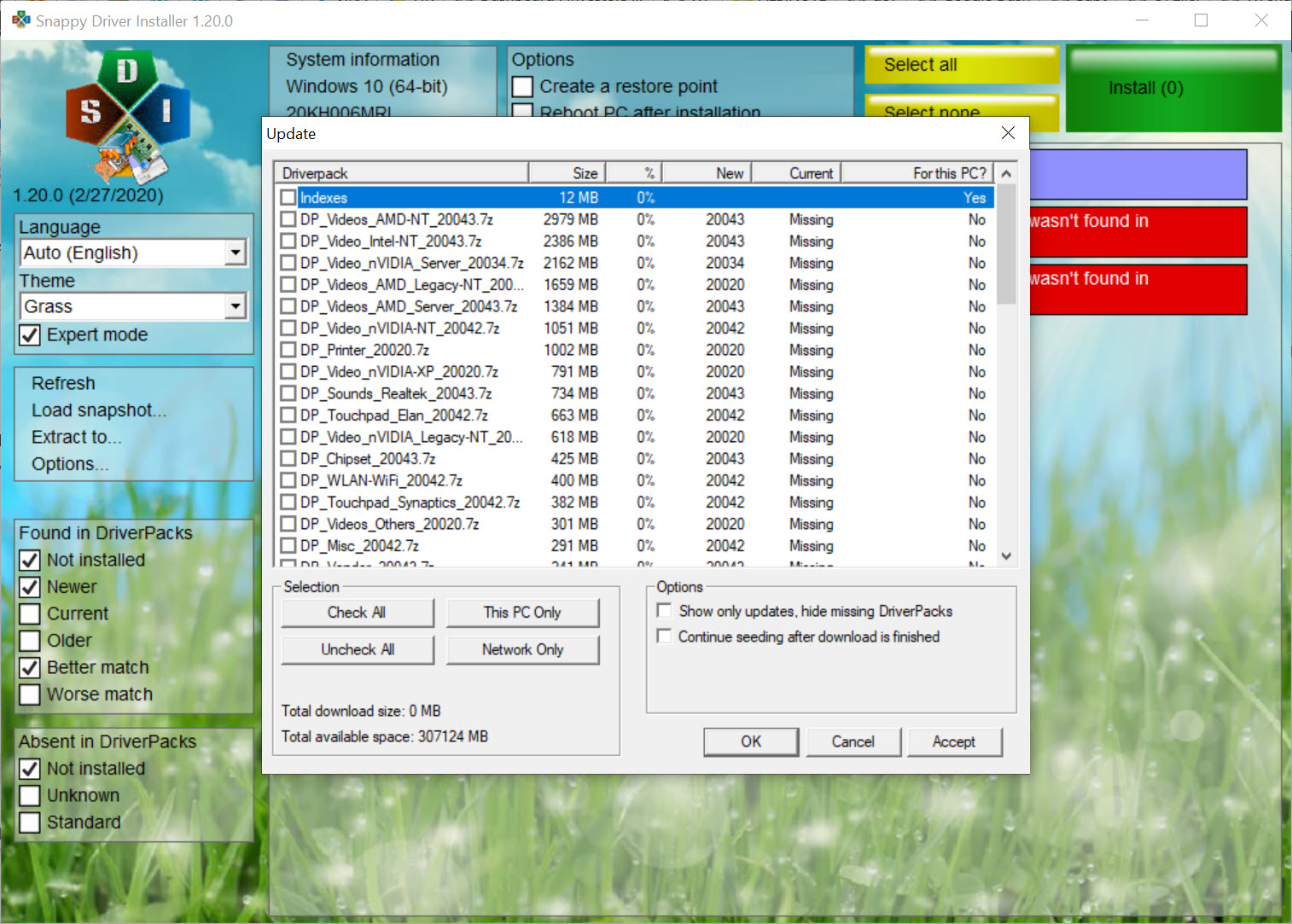
The first screen of Snappy Driver Installer asks a question that decides how you will use the tool. You can download just the indexes, a few megabytes of metadata that lets the application see what drivers exist and fetch only the ones your machine needs. Or you can pull the complete set of driver packs, which lands somewhere in the tens of gigabytes depending on the snapshot, and turns the folder into a fully offline repair kit.
For a single PC with a working connection, indexes are the sane choice. For a technician’s USB drive, the full library is the whole point, and the packs are the same format DriverPack Solution uses, only without the bundled extras that tool is known for.
A middle path works well too. Grab only the Chipset, LAN and WLAN packs, and any offline machine can at least get online to fetch the rest.
Driver packs arrive over BitTorrent
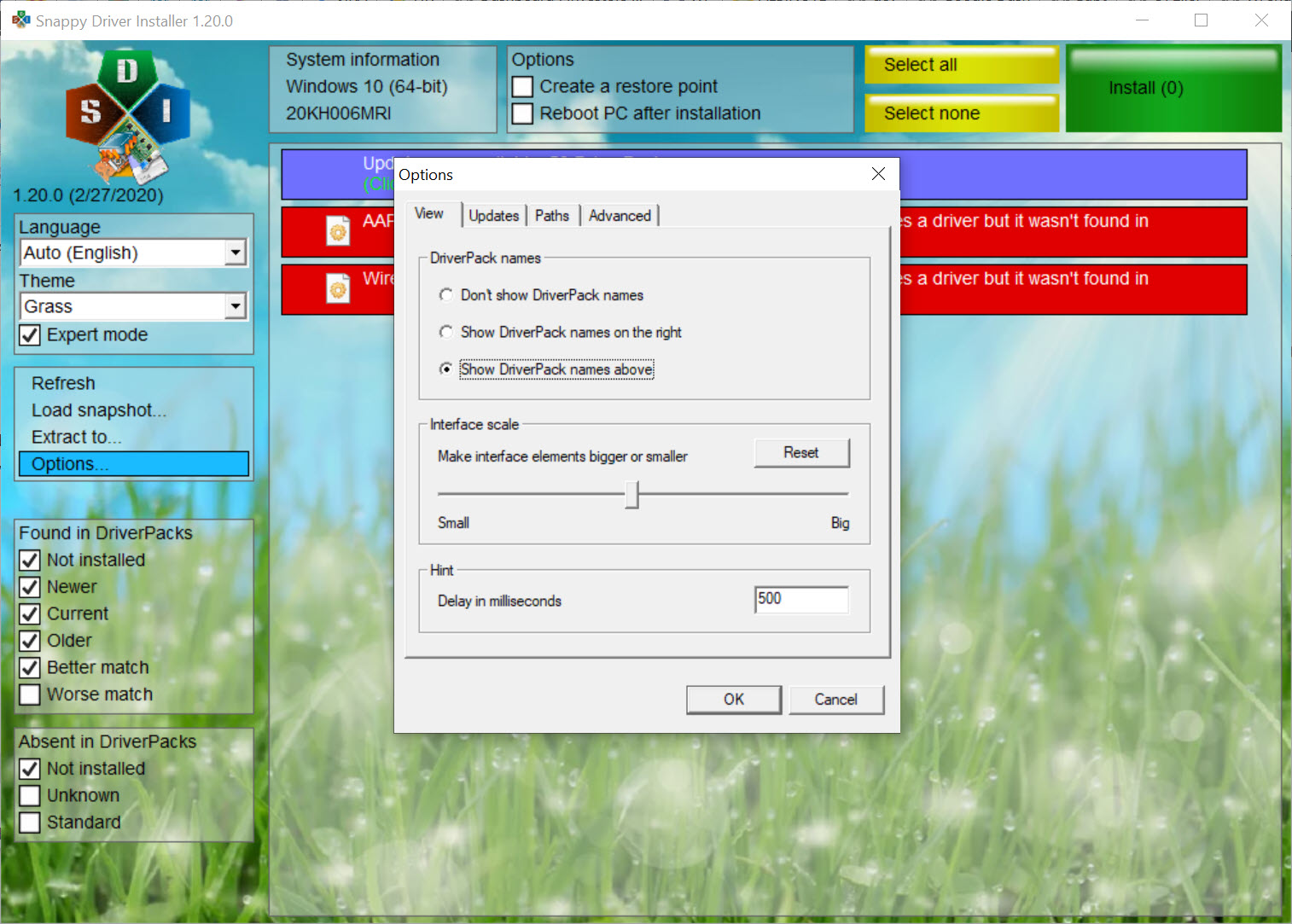
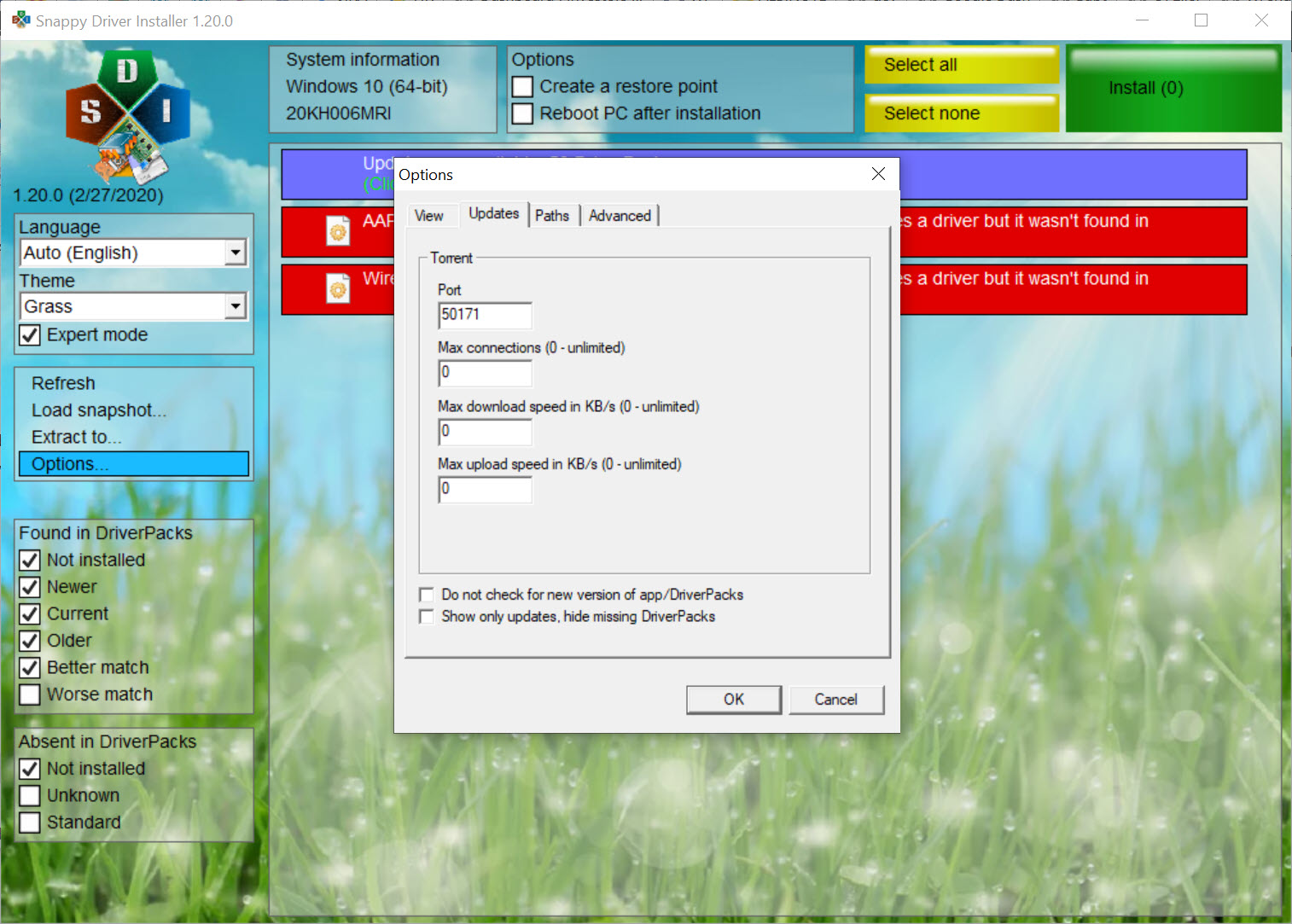
Downloads inside Snappy Driver Installer run through a built-in torrent client rather than a plain direct download. That is why multi-gigabyte packs come down at a decent speed and why a half-finished transfer picks up where it left off. The Options window exposes the listening port and caps for download and upload speed, which matters on a metered line.
It is also the first thing that trips people up. Office firewalls that block torrent traffic leave the progress bar frozen at zero with no obvious explanation, and if you already run another torrent client on the same port you get a collision.
Change the port in Options or let the packs download at home before you take the stick to work.
Expert mode is where the real controls live
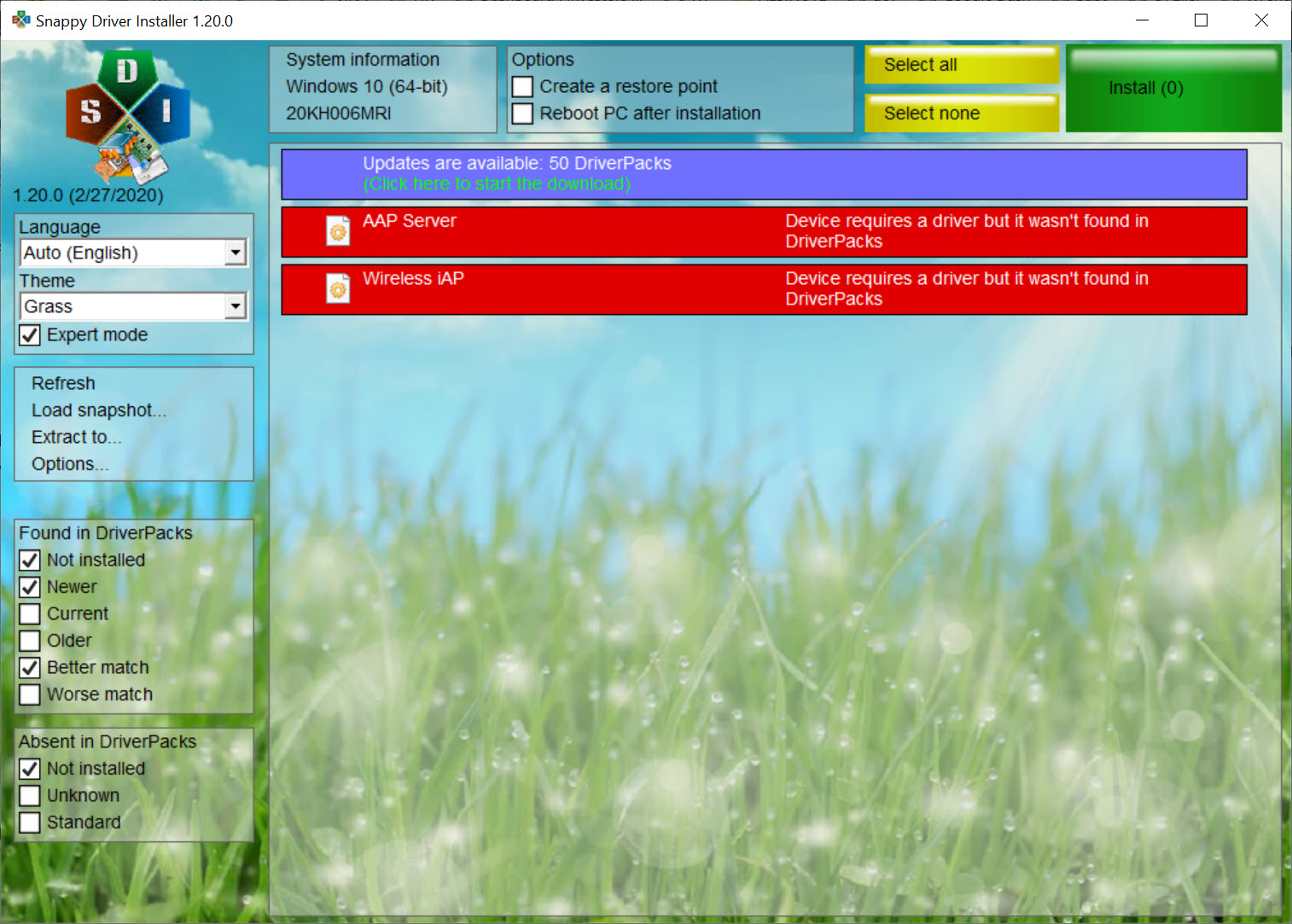
Out of the box the list shows only drivers the tool rates as missing or outdated. Tick Expert mode in the left panel and a filter column appears with checkboxes for Not installed, Newer, Current, Older, Better match and Worse match, plus toggles for duplicates, invalid drivers and devices with no pack at all. You can also write a snapshot of this machine’s driver state to disk, or load one taken elsewhere and browse that hardware as if it were plugged in.
One filter deserves a warning. Better match looks helpful, but it scores on how closely the hardware ID matches, not on how recent the driver is, so it will happily propose something older than what you already run. Untick it unless you have a specific reason.
Hover over any entry and a tooltip shows the installed version, the proposed version, the make and model string and the raw hardware IDs, which is how you catch a false match before it lands. While you are in the left panel, switch to the Metallic theme.
It is the only one where the colour coding of entries is readable at a glance.
Install, restore point, reboot
Select the entries you want (or hit Select all if you are feeling brave), tick the restore point box, and press Install. The application downloads whatever packs it still lacks, unpacks the relevant folder, and pushes each driver through the normal installation path without launching any setup wizard. Hold Shift while ticking an entry and it skips the queue and installs on the spot.
Most installs are uneventful. The ones that are not usually involve audio or graphics, where a replaced driver can overwrite files the rollback needs and leave you reinstalling the old package by hand. For graphics in particular, cleaning first with Display Driver Uninstaller and then letting Snappy Driver Installer put the new one in has given us far fewer black screens than swapping in place.
Scripting for people who do this all day
The command line is the quiet strength. Switches such as -autoinstall, -autoclose, -nogui and -norestorepnt turn the whole thing into a one-line step in an imaging script, -filters sets which categories count as installable, and -drp_dir points several client machines at one shared pack folder on the network. Settings persist in an sdi.cfg file you can pass with -cfg.
We have seen the filter selection reset between unattended runs, which leaves nothing to install and closes the window before anyone notices, so a script should set filters explicitly rather than trusting the saved state.
Conclusion
Snappy Driver Installer is built for the person who reinstalls systems regularly and wants a driver source that works from a USB stick with no connection and no account. Technicians and anyone maintaining a pile of older hardware will find the offline packs and the scripting switches hard to replace.
Someone who updates one laptop twice a year is better served by a friendlier tool and will find the Expert mode checkboxes more intimidating than useful. The engine is excellent. The front door is not, and you need to be willing to read a hardware ID to get the most out of it.
Pros & Cons
- Works fully offline once the driver packs are on disk, which no mainstream competitor manages
- Expert filters and hardware ID tooltips let you verify every proposed driver before it installs
- Built-in torrent transfer resumes interrupted multi-gigabyte downloads
- Command-line switches and a shared pack folder make it scriptable across a fleet
- No ads, upsells or feature tiers anywhere in the program
- The default view hides most of the controls behind Expert mode
- Better match can propose drivers older than the installed ones
- Torrent traffic is blocked on many office networks, stalling pack downloads
- Audio and graphics replacements occasionally break rollback
- Index-only mode still needs a working network adapter, so a bare machine needs packs prepared in advance
Frequently asked questions
Only if you chose to download indexes rather than full packs. With the packs stored locally the tool matches and installs with the network cable unplugged.
The Better match filter ranks on hardware ID closeness, not version number. Untick it in Expert mode and the list will only show entries that are missing or newer.
Expect tens of gigabytes for the complete set. Most people only keep the Chipset, LAN and WLAN packs offline and fetch the rest per machine.
Yes. Running it with -autoinstall -autoclose -nogui installs everything the active filters allow and exits, and -drp_dir lets every client read packs from one network share.
They share the engine, the pack format and the command-line switches, so skills transfer directly. Origin is maintained separately and ships a different default theme, but a user of one will feel at home in the other.


