

Screenshot Captor
About Screenshot Captor
Screenshots split into two species, the quick grab you paste and forget, and the working screenshot, the one that needs an arrow, a blurred password, a caption, and a sensible filename before it’s fit for the bug report or the tutorial.
Screenshot Captor was built entirely for the second species. It captures every way a screen can be captured, full display, window, region, and scrolling pages too long to fit on screen, then walks each shot through annotation, redaction, naming, and filing, treating a screenshot as a document with a lifecycle instead of a pixel dump.
The temperament is maximalist and unapologetic about it. Options exist for nearly everything, the editor carries effects most rivals never dreamed of, and the whole apparatus assumes screenshots matter to your work.
People who take three a year will find it absurd. People who take thirty a day tend to stay for years.
Every capture, including the scrolling one
The capture repertoire covers the full board. Whole screens across any number of monitors, the active window, a freehand or fixed region, precise object grabs of interface elements, and the specialty everyone eventually needs, scrolling capture, which walks down a long page or document and stitches the journey into one tall image.
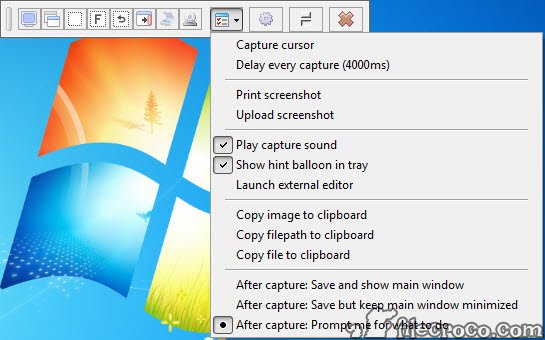
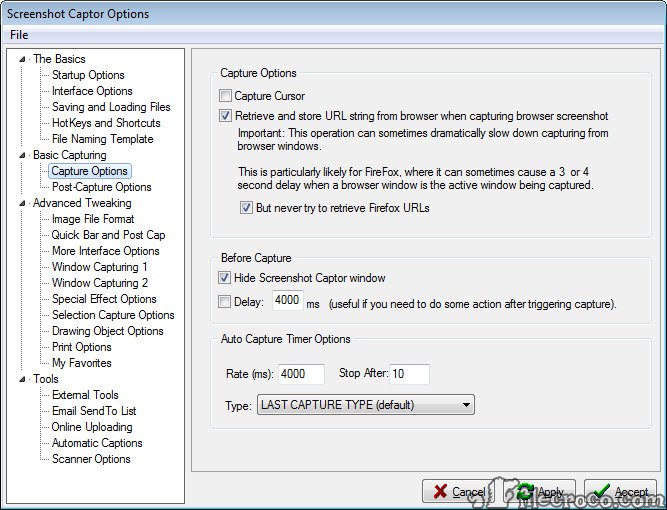
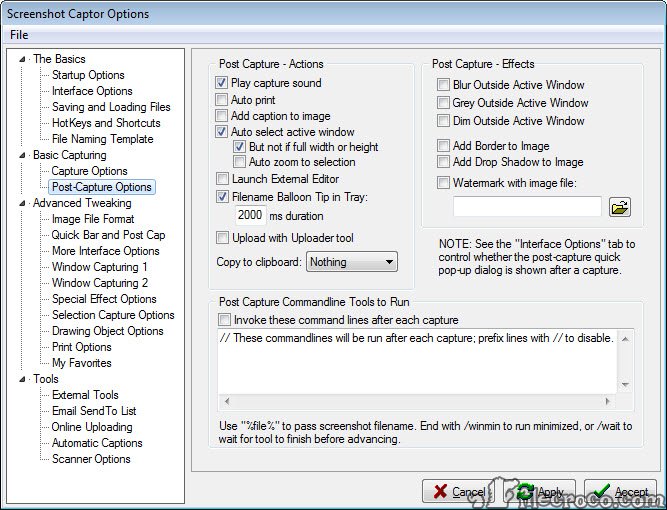
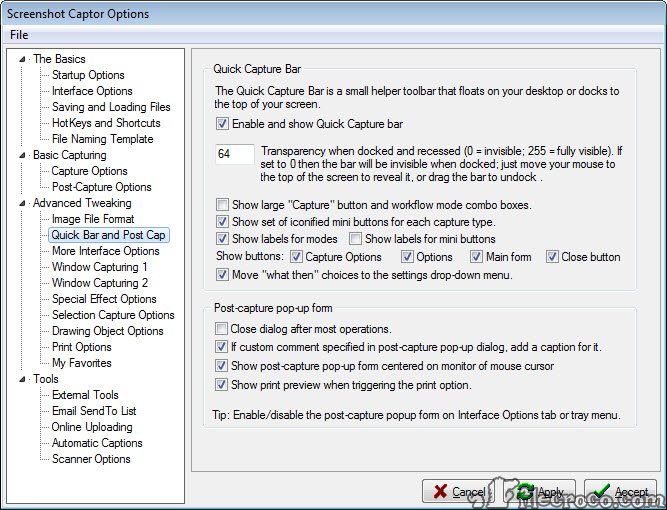
Hotkeys drive all of it, a quick-capture bar keeps the modes one click away, and each capture can trigger an after-shot dialog asking what happens next, save, edit, discard, or name, which is the first hint of the document mindset.
Multi-monitor setups are handled with unusual respect, individual screens, spanning captures, and region grabs across boundaries all behaving predictably, a courtesy owed to the tool’s clear affection for complicated desks.
The editor with a stationery drawer
Annotation covers the professional necessities, arrows, boxes, highlights, text labels, numbered steps, and the redaction tools that blur or pixelate the parts of a screen that shouldn’t travel, account numbers, names, the email that wandered into frame. For documentation and support work, that blur tool alone carries its weight daily.
Then come the signatures. Drop shadows, borders, captions beneath the image, and the famous ragged paper-tear edges that make a cropped screenshot look deliberately excerpted rather than crudely chopped. It’s a small aesthetic vocabulary that generations of manuals and tutorials quietly adopted, and this editor produces it in two clicks.
Watermarks, resizing, and format conversion finish the outbound pipeline.
Filing, because thirty a day adds up
The feature that separates habitual users from tourists is the file management. Captures auto-save with pattern-built names, timestamps, window titles, counters, into folders you define, and a thumbnail browser pane shows the whole collection alongside the editor, ready for reopening, renaming, or pruning. A month of documentation work stays findable without a single manual save-as dialog, which anyone who has excavated a Downloads folder full of “Screenshot (47)” understands immediately.
Quiet extras round the edges, webcam frames captured alongside the screen, clipboard watching, and enough post-capture automation to feed shots into whatever workflow follows.
The clutter, admitted openly
The critique writes itself and honesty obliges. The interface is dense to the point of intimidation, toolbars, panes, and option dialogs stacked in the style of software that never met a preference it didn’t keep, and the aesthetic sits a solid design-generation behind. First contact overwhelms, the tenth day feels like home, and there is no pretending the ramp is gentle.
The field offers gentler slopes for lighter needs. Greenshot covers the capture-annotate-save loop with a fraction of the surface, and the minimal grab-and-share reflex belongs to a one-key tool like Lightshot.
At the power end, ShareX matches the feature density with an automation-first philosophy and its own equally steep learning curve, making the choice between them one of temperament, this tool’s editor and filing against that one’s workflows and uploads. Nobody needs two of these giants installed.
Conclusion
Screenshot Captor is for the person whose screenshots are work product. Technical writers assembling manuals, support staff annotating and redacting all day, QA testers filing evidence, and tutorial makers who want excerpts that look designed will each find a drawer with their name on it. For them, the capture breadth, the editor, and the filing system compound into hours saved weekly.
The casual grab-and-paste crowd should take a lighter tool and be happy. This one is a workshop, cluttered the way real workshops are, and productive the same way.
Features & benefits
Pros & Cons
- Full capture repertoire including scrolling pages and precise object grabs
- Redaction blur, arrows, and numbered steps cover documentation work
- Signature shadows, borders, and torn-edge effects polish excerpts
- Pattern-based auto-naming and folder filing tame heavy daily use
- Thumbnail browser keeps the whole screenshot archive at hand
- Serious multi-monitor support in every capture mode
- Intimidating interface density on first contact
- Visual design sits a generation behind current tools
- Scrolling capture can struggle with some modern applications
- Overkill by a wide margin for occasional screenshotters
Frequently asked questions
Yes, scrolling capture walks down content taller than the screen and stitches it into a single image, the standard answer for long web pages and documents.
The editor's blur and pixelate tools redact regions before saving or sharing, which makes it a daily instrument for support staff and documentation writers.
Yes, captures auto-save under pattern-built names, timestamps, window titles, counters, into folders you choose, and a built-in thumbnail browser manages the growing archive.
Decorative ragged borders that make a cropped screenshot look intentionally excerpted, alongside drop shadows and captions, a signature look for manuals and tutorials.
The surface is dense and the first sessions feel crowded, honestly so. The capture basics work immediately, and the depth reveals itself over days rather than minutes.


