

Pokemon Uranium
About Pokemon Uranium
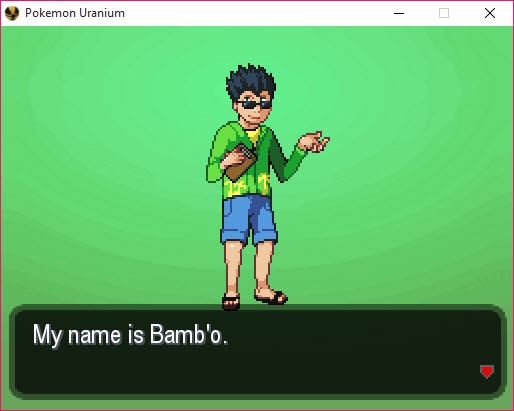
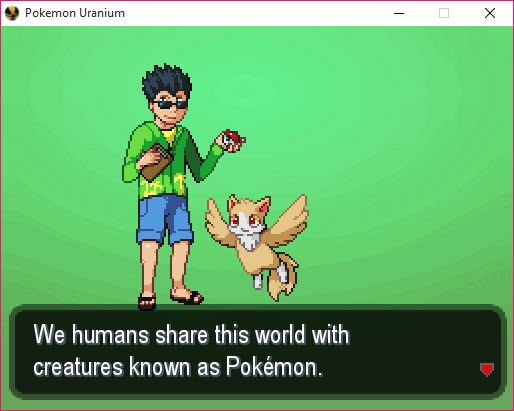
Pokemon Uranium does things the official games never would. There’s a 19th type called Nuclear that’s super effective against every other type except itself and Steel, and weak against every other type except itself. Over 150 original Fakemon populate the Pokedex of a new region called Tandor.
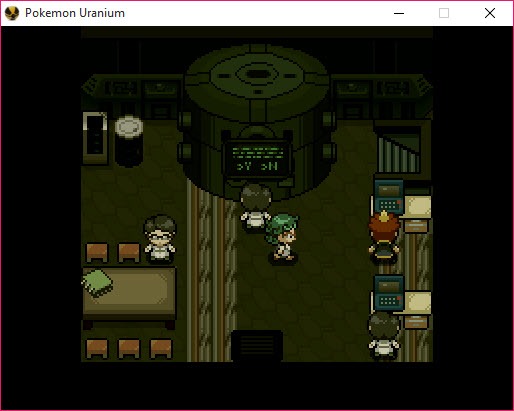
The main storyline involves a power plant disaster, contaminated zones populated by corrupted Pokemon, and a missing parent, all of which sit somewhere between Pokemon Colosseum and a dystopian indie game in tone. None of this would clear a Game Freak design review.
The mechanics that surround these ideas are familiar enough. Built on the Pokemon Essentials framework, the game runs the standard turn-based battles, the type chart with the Nuclear addition, and the usual gym leader progression. Where things diverge is in the depth of features wrapped around the basics.
Built-in Nuzlocke mode enforces fainted-Pokemon-stay-dead rules at the software level. Online battling, trading, and Mystery Gift work through community-maintained servers. The Tandor Pokedex includes original starter lines (Orchynx, Raptorch, Eletux) that fans have been arguing the merits of for years. For a free fan game built on a hobbyist framework, the scope is genuinely substantial.
A darker setting that the official games would never approve
Tandor isn’t Kanto. The region’s central plot device is a nuclear power plant that exploded years before the events of the game, contaminating the surrounding ecosystem and creating a class of corrupted Pokemon that the rest of the storyline circles around. Your character’s father is missing under suspicious circumstances tied to the disaster, your mother has been hospitalized, and you’re being raised by your grandmother in a town that has a very specific reason to be wary of the local power infrastructure.
The tonal shift from mainline Pokemon games is deliberate and substantial. Where Game Freak’s official entries treat their plots as background noise to keep gameplay moving, Pokemon Uranium lets its story carry actual weight. NPCs reference the disaster regularly. Towns have changed shape because of it.
The contaminated zones aren’t just gimmicky obstacles, they’re physical reminders of what happens when industrial accidents poison a region and the people responsible never quite get held accountable. For Pokemon fans who grew up wanting the series to engage with serious themes occasionally, the storyline genuinely delivers.
The Nuclear type and what makes it different
The biggest mechanical innovation is the Nuclear type, the 19th type added to the standard Pokemon roster. Unlike the others, Nuclear is super effective against every other type except itself and Steel, and weak to every other type except itself. The math is brutal in both directions: a Nuclear Pokemon hits everything for double damage, but takes double damage from essentially anything that hits back.
The conceptual model echoes the Shadow type from Pokemon Colosseum and Pokemon XD: Gale of Darkness, but the implementation here is more developed. Nuclear Pokemon exist in the world as products of the contamination event rather than as a separate competitive option.
You encounter them in specific zones, often as boss-tier opponents tied to story moments, and the type’s offensive power is balanced against the constant defensive vulnerability that comes with using Nuclear creatures yourself.
For competitive players who care about type matchups, the Nuclear type creates puzzles that don’t exist in mainline games. Building a team that can handle Nuclear opponents requires planning around their offensive potential, while using Nuclear Pokemon yourself means accepting that your team is fragile against essentially any threat.
The mechanic shifts the strategic landscape in ways the official type chart hasn’t been touched since the introduction of Fairy types.
Over 150 original creatures filling out a complete Pokedex
The Tandor Pokedex spans 150+ original Pokemon designs, with Involuntary Twitch handling the bulk of the design and spritework. The quality of these designs varies, which is honest to acknowledge: some Fakemon look like they belong in an official Pokemon game, while others have the unmistakable feel of fan creations. The starters in particular are well-realized, with proper evolution lines and visual identities that hold up against official starter designs.
Beyond the starters, the regional Pokedex covers the standard archetypes you’d expect: regional birds, electric rodents, water-type fish, ghost-types tied to ruined locations, dragons that take forever to evolve. The familiar structure isn’t accidental. Building a region that feels like a Pokemon region requires hitting these design beats, and Pokemon Uranium mostly does so competently.
A handful of designs have become genuinely beloved in the community. Eletruxo (the Eletux final evolution), Aroumas, Inflagetah, and several others get cited regularly in fan game discussions as examples of what Fakemon design can achieve when done well. Other designs work less successfully, with some critiqued for being derivative of existing Pokemon or for visual choices that don’t quite land.
For a project of this scope, this kind of variation is inevitable, and the strong designs outnumber the weak ones overall.
Online battling, trading, and Mystery Gift
Notably for a 2016 fan game, Pokemon Uranium included online infrastructure that the official games at the time were still iterating on. Online battling lets you fight other players directly, online trading enables Pokemon exchanges with other players, and the Mystery Gift system distributes special Pokemon and items through community-run servers.
The online features were a significant draw at launch and contributed to the rapid initial download numbers. Players weren’t just getting a single-player Pokemon experience, they were getting a connected experience that mirrored what the official games offered. The servers have been more variable since the takedown, with community-maintained infrastructure replacing official hosting, but the multiplayer remains functional through alternative server setups.
The Mystery Gift system specifically helps keep the game feeling alive years after release. Special event Pokemon, holiday-themed distributions, and various other community gifts continue to flow through the system, providing periodic reasons to fire the game back up beyond just replaying the campaign.
Active community management makes this work, with various organizers handling events that the original developers no longer manage directly.
Difficulty and Nuzlocke compatibility
The mainline games have grown easier over the years, with experience share, exp candies, and overleveled starters making serious challenge nearly impossible. Pokemon Uranium runs harder by default. Gym leaders have stronger teams, wild encounters punish underleveled parties, and several boss battles require actual strategic thinking rather than just spamming the strongest move available.
For players who want extreme challenge, built-in Nuzlocke mode adds the standard self-imposed restrictions: fainted Pokemon are permanently dead, you can only catch the first encounter on each route, nicknames are required to develop attachment to your party. The integration of these rules at the software level (rather than honor-system enforcement) makes Nuzlocke runs more genuine and less prone to cheating yourself when things get rough.
The difficulty curve isn’t always smooth. Some specific gym leaders or boss fights spike dramatically harder than the surrounding content, which has been a consistent player critique across the years. Community patches have addressed some of these issues, but expect occasional walls in your run regardless of which difficulty mode you select.
Considerations and limitations
The RPG Maker XP foundation produces certain technical constraints. The default game window is smaller than modern players might prefer, though full-screen options are available. Some performance issues come up on specific hardware configurations. The graphical fidelity reflects the engine’s age rather than what’s possible with modern game development tools.
Some Fakemon designs are genuinely weaker than others, which becomes apparent across long playthroughs as you accumulate Pokemon for your party. Players occasionally find themselves wanting to swap out designs they don’t connect with, only to find limited alternatives in the immediate area.
The total Pokedex size helps with this, but the quality variation across 150+ designs is an honest limitation rather than something the community can easily fix.
Story pacing has rough patches. Several plot beats land powerfully, while others feel rushed or underdeveloped. The writing isn’t going to win awards, and some character interactions feel functional rather than affecting. For a free fan project, this is reasonable. For players expecting Final Fantasy levels of narrative polish, expectations need adjustment.
The save system isn’t compatible with mainline Pokemon games or other fan projects. Pokemon caught here stay here. For players who want their decades-old Pokemon collection to follow them into new games, this isolation is real. For players evaluating the game on its own merits, it doesn’t matter.
Conclusion
For Pokemon fans who’ve worked through the official games and want something that takes mechanical and storytelling risks the series itself won’t, Pokemon Uranium delivers. The Nuclear type changes how battles play out in ways that haven’t been replicated elsewhere, the Tandor Pokedex offers 150+ creatures designed by people genuinely passionate about the source material, and the storyline treats players as adults capable of handling serious themes rather than padding the experience with cheerful filler.
The rough edges are real. Some Fakemon designs miss, some difficulty spikes feel unfair, and the legal status means tomorrow’s availability isn’t guaranteed.
But none of those issues outweigh what the game does well, especially for free. If you’ve finished every official Pokemon game and want to see what the formula looks like with someone else’s hands on the controls, this is one of the better answers the fan game scene has produced.
Pros & Cons
- Original storyline that engages with serious themes the mainline series avoids
- The Nuclear type creates strategic puzzles that don't exist in official games
- Over 150 original Fakemon designs by Involuntary Twitch and the development team
- Online battling, trading, and Mystery Gift functional through community servers
- Built-in Nuzlocke mode with software-level enforcement
- Tandor region feels distinct from official Pokemon settings
- Free distribution through community channels with no commercial barriers
- Active community maintenance keeps bugs patched years after original development ended
- Fakemon design quality varies, with some creatures less polished than others
- Difficulty can spike unpredictably between content sections
- RPG Maker XP foundation imposes some technical limitations
- Story pacing has rough patches in places
- Save files isolated from other Pokemon games or fan projects
Frequently asked questions
This software is a fan-made Pokemon game set in the original Tandor region, introducing 150+ original Fakemon, the Nuclear type as the 19th type added to the standard chart, and a darker storyline involving a nuclear plant disaster that contaminated the region. The game includes online battling, trading, Mystery Gift, and built-in Nuzlocke mode. It runs on the Pokemon Essentials framework built atop RPG Maker XP.
The main story typically runs 25 to 35 hours depending on difficulty level and play style, with additional postgame content that can extend the experience considerably. Players engaging deeply with completing the Pokedex, running Nuzlocke playthroughs, or exploring all side content often invest 60+ hours total.
Nuclear is the 19th type, super effective against every type except itself and Steel, and weak to every type except itself. The model is similar in concept to the Shadow type from Pokemon Colosseum, with Nuclear Pokemon existing in the world as products of the contamination event central to the game's storyline. Using Nuclear Pokemon is powerful offensively but punishingly fragile defensively, creating strategic trade-offs that don't exist in mainline games.
Yes, but through community-maintained servers rather than official infrastructure. After the Nintendo takedown removed official hosting, community organizers stepped in to maintain online battling, trading, and Mystery Gift functionality. The reliability has been generally good across the years, though connectivity occasionally has hiccups depending on server status.
Tandor is the original region the game takes place in, designed by the development team rather than borrowed from official Pokemon canon. The setting includes a central nuclear disaster as background lore, contaminated zones with Nuclear Pokemon, and various towns and routes that fit the standard Pokemon region structure while feeling visually and tonally distinct from official settings.
Yes, the game uses standard save file mechanics that preserve your progress between play sessions. Multiple save slots are available so you can run different playthroughs simultaneously, and the save system tracks all the standard Pokemon game elements including Pokedex completion, party composition, item inventory, and story progress.
No, the save format is specific to this game and isn't compatible with other Pokemon software, official or fan-made. Pokemon caught in Uranium stay in Uranium. Players who want their Pokemon collection to follow them into other games face this isolation as a fundamental limitation, though most players evaluate the game purely on its own merits without needing cross-game compatibility.
Both are fan games built on the Pokemon Essentials framework with darker tones than mainline Pokemon, but the mechanics and creative directions differ. This game adds the Nuclear type and 150+ Fakemon, with a story focused on environmental contamination. Insurgence keeps the standard type chart and uses real Pokemon with Delta variants (alternate types and designs), focusing on cult conflict and Mega Evolution. Both are worth playing for fans of the genre, with the choice between them coming down to which mechanical innovations and storytelling style appeals more.


