

PC Decrapifier
About PC Decrapifier
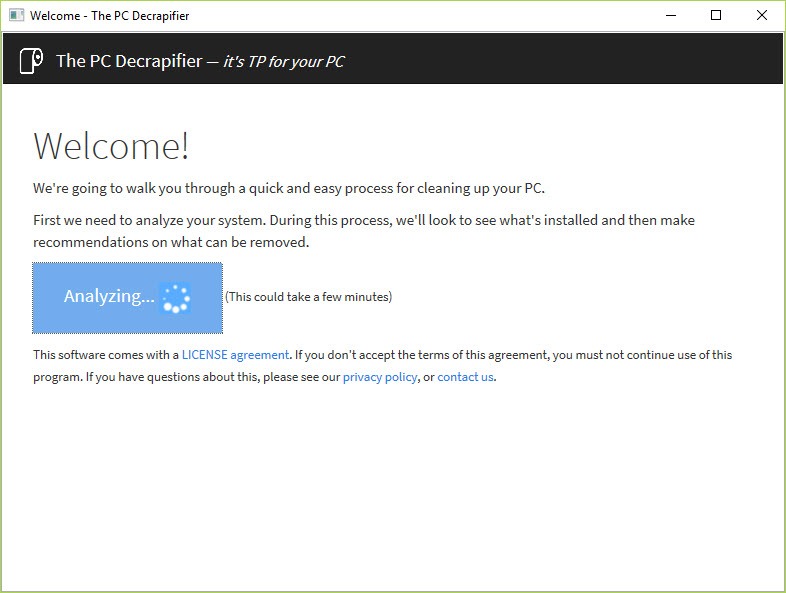
PC Decrapifier clears out the trial software and bundled extras that a new computer arrives with. Run it, and it scans the installed programs, sorts them into a list, and lets you tick the ones to remove. Then it uninstalls the lot in one pass rather than making you visit each program’s uninstaller in turn. Antivirus trials, toolbars, manufacturer utilities and the promotional software that laptop makers are paid to preinstall are its targets, and a fresh machine cleared this way starts lighter and quieter.
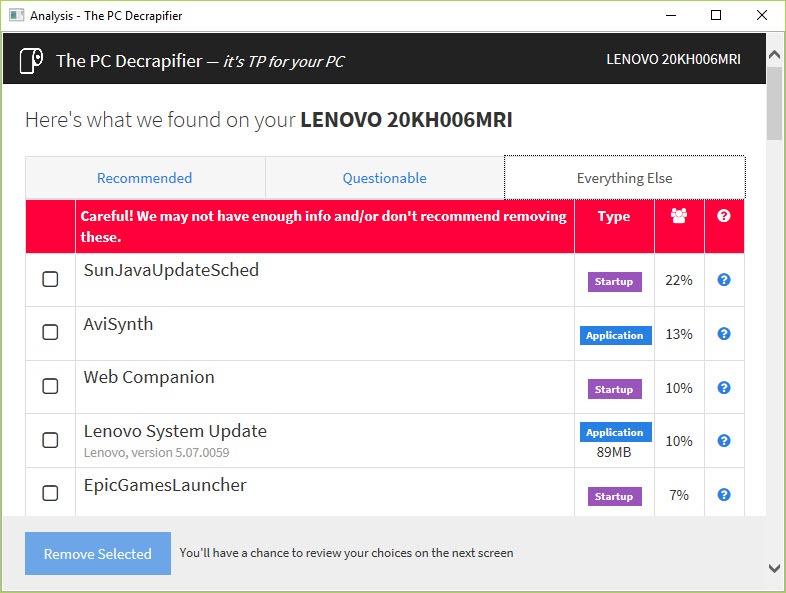
The appeal is the sorting. Rather than presenting every installed program as equal, PC Decrapifier groups them by how likely they are to be unwanted, with a Recommended group of well-known bundled software, a Questionable group that needs a closer look, and everything else.
That judgement, drawn from community reports about what each program is, is what saves a newcomer from guessing. One thing to know first is that the program has been discontinued, so its list of known bloatware is frozen, and newer preinstalled software will not be recognised.
Recommended, Questionable and the rest
The Recommended list holds the software the program is confident you can remove, the trials and add-ons that almost nobody keeps. Items there are often pre-ticked. The Questionable list holds programs that may or may not be wanted, and each deserves a moment’s thought before removing, since a manufacturer utility here might control the laptop’s function keys or battery charging. Everything Else lists the remaining installed software with no recommendation at all.
Reading the list before pressing anything is the whole skill. The categories are guidance, not certainty, and a program flagged as removable can occasionally matter to your machine.
For a second opinion on an unfamiliar entry, a tool that rates installed programs by reputation shows what other users decided.
Restore points and batch removal
Before changing anything, the program prompts you to create a restore point, and taking it is the single most important step. If a removal breaks something, rolling the system back to that point undoes the damage. Users who skipped it report having to repair their machines by hand afterwards.
Once the selection is made, the removals run in sequence, launching each program’s own uninstaller and working through the list. Where an uninstaller asks questions, some prompts still appear, so it is not entirely unattended.
It is portable, running from a USB stick with no installation, which suits a technician setting up several new machines.
Where the frozen list falls short
The discontinued status is the real limitation of PC Decrapifier. The database of known bloatware stopped growing when development ended, so a computer bought now carries preinstalled software the list has never heard of. On such a machine the Recommended group may catch little, and much of the clutter lands in Everything Else, where the program offers no guidance. Reports of it detecting only a couple of items on a machine full of extras are common, and some removals fail outright.
It also does nothing beyond uninstalling. There is no leftover scan after removal, so folders and registry entries that an uninstaller leaves behind stay put.
For a thorough cleanup, a bulk uninstaller that sweeps leftovers handles many programs at once and finds the remnants too.
Removing what the list will not show
The packaged apps that newer systems ship with, the tiles and games added to the start menu, fall outside what this tool was built to handle. Removing those needs a different approach, and a privacy and cleanup tweaker such as one that disables preinstalled apps and telemetry covers part of that ground.
For conventional programs on an older machine, though, the batch removal and the restore point remain a quick way to clear a backlog.
Conclusion
PC Decrapifier suits someone clearing the trial software from an older computer, or a technician who wants a portable tool to batch-remove the familiar bundled extras. The Recommended and Questionable groups take much of the guesswork out of deciding what to keep, and the restore point makes the whole process reversible.
On a current machine its frozen list is the problem, catching little of what modern computers ship with. Take the restore point every time, read the Questionable group carefully, and for a new computer reach for a maintained uninstaller that also cleans up the leftovers.
Pros & Cons
- Sorts installed programs by how likely they are to be unwanted
- Removes many selected programs in one pass
- Prompts for a restore point before making changes
- Portable, running from a USB stick with no installation
- Clear, simple interface for newcomers
- Discontinued, so its bloatware list is frozen and misses newer software
- No leftover scan after uninstalling
- Some removals fail or still show uninstaller prompts
- Does not handle the packaged apps newer systems include
Frequently asked questions
No. It has been discontinued, so its list of known bloatware no longer grows and newer preinstalled software is not recognised.
Yes. It is the one way to undo a removal that breaks something, and the program prompts you to make one before any changes.
No. It runs each program's own uninstaller and stops there, so leftover folders and registry entries remain.
No. The packaged apps included with newer systems are outside its reach and need a different tool.


