

mIRC
About mIRC
Chat software mostly comes and goes, and one client has kept shipping releases while entire platforms were born, absorbed and shut down around it. mIRC still receives updates, still connects to the same protocol it always did, and still contains a full programming language nobody else thought to put in a chat client.
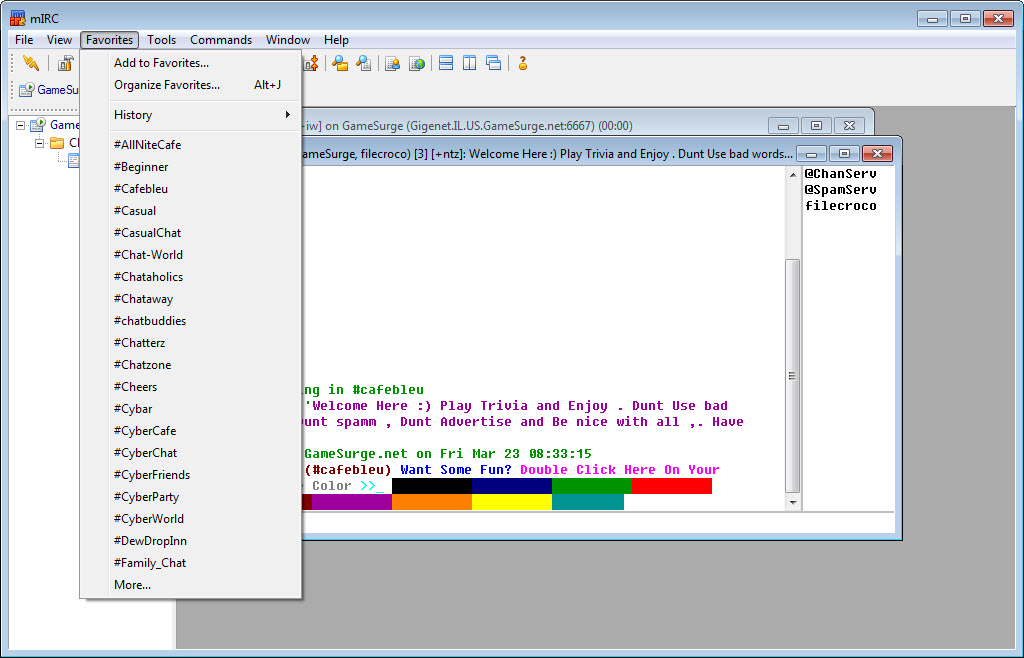
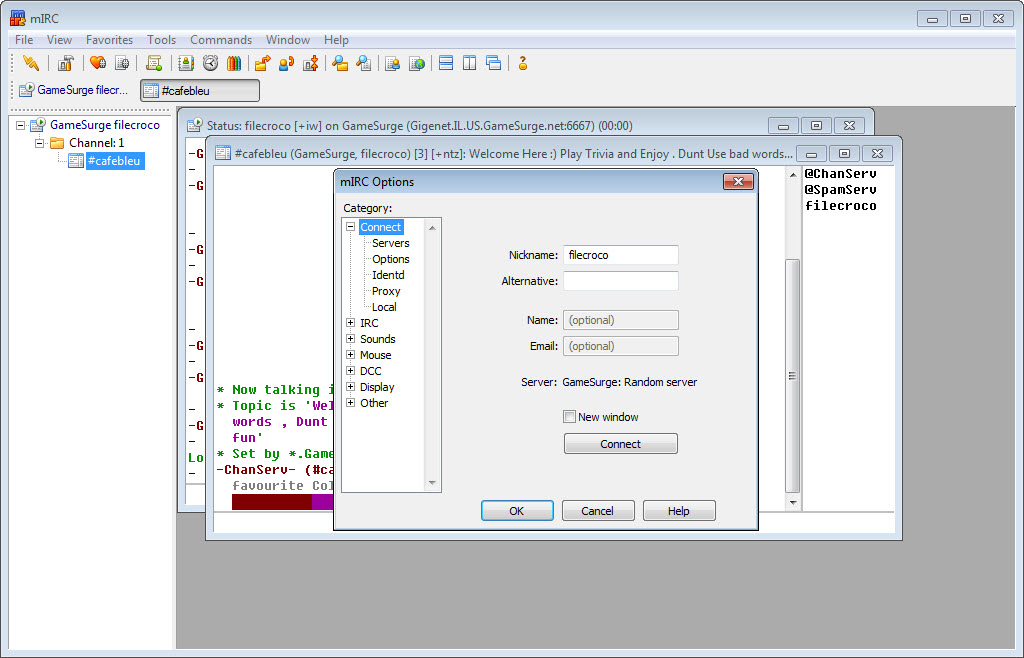
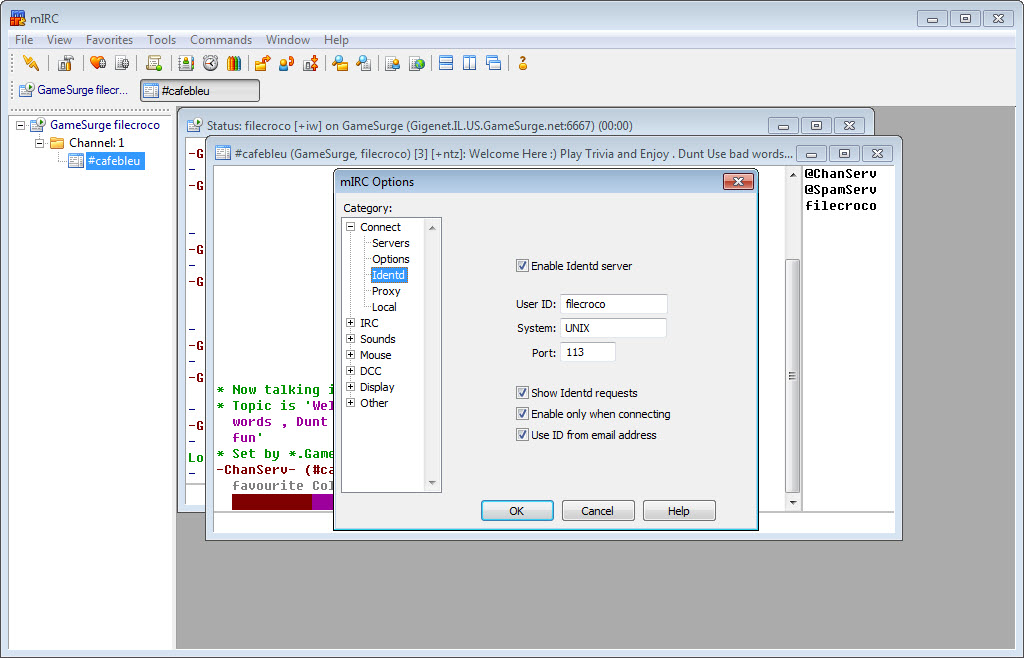
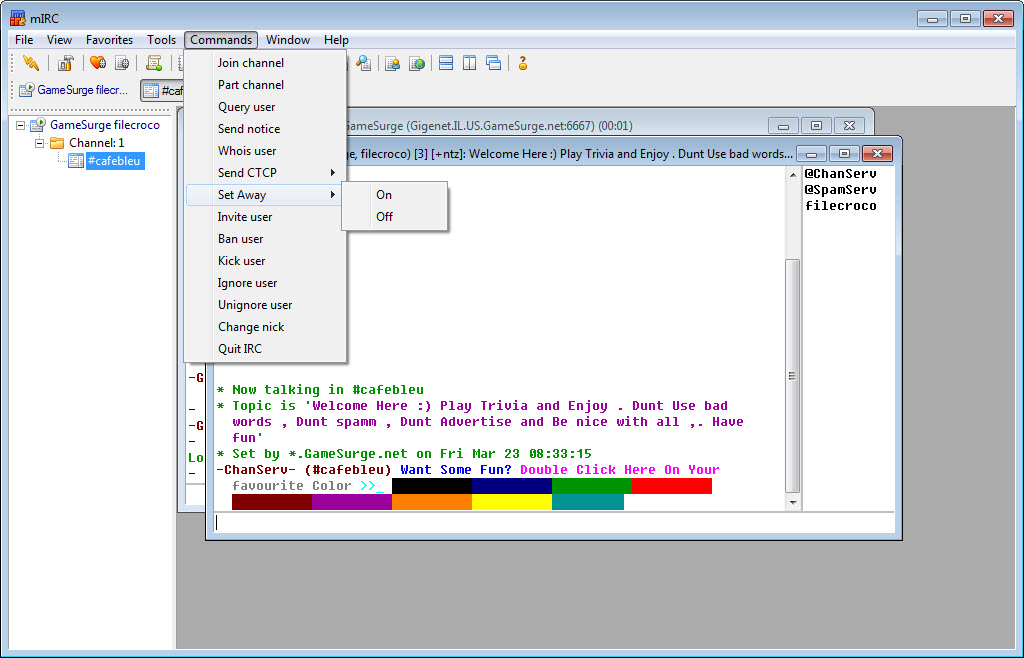
The mIRC interface is panes and a list of names, which is what the protocol is. Channels in one pane, the people in them down the side, and typing at the bottom.
What kept it alive is not the interface, and understanding that explains who should still install it.
The scripting language is the reason it survived
Inside mIRC sits a complete programming environment, and it is the feature no rival matched.
Scripts respond to events, meaning somebody joining, a message matching a pattern, a private message arriving, a timer expiring. From that foundation people built bots, games played inside channels, file servers, moderation systems and automation for things nobody anticipated.
That produced an entire subculture. Channels ran trivia games written in it, communities ran their moderation through it, and a generation of people learned to program by editing somebody else’s script until it did something different.
The capability is still there and still unusual. A chat client that can be programmed to do arbitrary things is a different proposition from one you configure through preferences.
Running other people’s scripts is the old danger
Being direct about the mIRC consequence, because it defined the era and has not stopped being true.
A scripting language powerful enough to build a file server is powerful enough to do anything else on the machine. Scripts circulated freely, people loaded them without reading them, and a great deal of trouble in the protocol’s heyday came from exactly that.
Nothing about that has changed. A script is a program, loading one is running somebody’s code, and the client will do what the script says.
The sensible position is the one experienced users hold, which is reading a script before loading it, or only using ones from a source you already trust. That is unremarkable advice and it is regularly ignored because the script promises something useful.
There is no message history
Here is what catches everybody arriving from modern platforms, and it is the protocol rather than mIRC itself.
When you disconnect, you stop receiving. Anything said while your machine was asleep did not arrive and will not be delivered later. There is no scrollback waiting when you return, because nothing is stored anywhere on your behalf.
That is not a missing feature, it is how the protocol was designed. Messages pass through and are gone.
The established answer is a piece of software that stays connected on your behalf, holding the connection while you are away and replaying what you missed when your client reconnects. Anybody intending to participate in a channel seriously ends up running one.
Coming from a platform where everything is archived and searchable, this is the adjustment that either suits you or does not. a platform that archives every message and makes it searchable is where most communities went for precisely that reason.
Shareware, which barely exists any more
The mIRC commercial arrangement was standard when the client appeared and has almost vanished since.
There is an evaluation period, after which the software asks to be registered, and registration is a single payment rather than a subscription. It continues to function while asking.
Whether that represents fair payment for continuous maintenance over an extraordinary span, or a charge for something the free alternatives also do, is a judgement rather than a fact. The maintenance is real and so are the free clients.
The free alternative most people name has stopped
This matters more than it usually would, and anybody weighing mIRC should know it.
The client that was the standard free recommendation for years is no longer developed, with its final release some time ago and no security fixes since. It still runs, and starting with it now means starting with something nobody is looking after.
HexChat is that client, and the honest position is that it works and is not where a newcomer should begin.
That situation is what makes the shareware question less lopsided than it looks. Paying for something maintained against using something free and abandoned is a different comparison from paying against a healthy free option.
Where the protocol still lives
Something to settle before connecting, since the networks shifted.
The main network for open source project channels holds tens of thousands of users across a comparable number of channels, and it is where most technical communities that stayed on the protocol now are.
Two practical details about it. Registration requires a verified email address and a connection from an ordinary residential address, and unregistered users cannot connect through a tunnel service or anonymity network.
That last one catches people immediately. Somebody who routes everything through a tunnel by default will find the connection refused, and the answer is registering first from an ordinary connection.
For chat across several networks and protocols rather than this one specifically, Pidgin covers that broader ground.
Conclusion
mIRC is the rare case of software that outlasted its era by continuing to be maintained rather than by being remembered. The scripting language is why it persisted, and it remains the only chat client where the sensible response to wanting a feature is to write it.
Understand the protocol before the client, though. Nothing is stored, so anything said while you were away is gone unless you run something to catch it, and the free client most people would name instead has stopped being developed. Within those terms it is a sound choice, and for anybody who just wants a place to talk with searchable history, the platforms that replaced it exist for good reasons.
Pros & Cons
- Still receiving releases, which almost nothing else in this category can claim
- A full scripting language inside the client, capable of bots, games and automation
- Handles multiple servers, encrypted connections and file transfer
- Interface matches the protocol rather than imposing a metaphor on it
- One payment rather than a subscription
- Enormous body of existing scripts and documentation
- The protocol delivers nothing that happened while you were disconnected
- Serious participation means running additional software to hold your connection
- Loading somebody else's script means running their code on your machine
- Shareware, in a category where free clients exist
- Interface will look dated to anybody arriving from a modern platform
- The main network refuses unregistered connections through tunnel services
Frequently asked questions
Because the protocol does not store messages. Anything sent while you were disconnected was not delivered and will not be. Running software that stays connected on your behalf is the established answer, and it replays what you missed.
There is an evaluation period, after which it asks to be registered, and registration is a single payment rather than a recurring one. It keeps working while asking.
Responding to events in a channel, which is how bots, games, file servers and moderation tools were built. It is a full programming environment rather than a macro facility.
Only after reading them, or from a source you trust. A script is a program with the same reach as any other, and loading one without looking is how a great deal of trouble happened historically.


