

Media Creation Tool

About Media Creation Tool
Media Creation Tool builds the installation media for Windows 11 from a single small executable. Run it, accept the licence, choose a language and an edition, and it downloads the current installation image directly and either writes it to a USB stick, which it makes bootable, or saves it as an ISO file for a virtual machine or a disc.
The same tool, run on a machine already using an earlier release, offers to upgrade that machine in place instead, keeping files and programs, and settings too. Nothing else has to be installed, no product key is asked for at this stage, and the image it fetches is refreshed every month to include the latest cumulative update, so a stick made today installs a system that is already current.
That currency is the reason to use it rather than an old ISO kept on a shelf. Media Creation Tool is the official route to installation media and the one the support pages point to, and it is deliberately narrow. It creates media for one operating system, in its current release, for 64-bit processors, and it enforces the hardware requirements of that system during installation rather than finding ways around them.
The sections below cover the two things it does, the choices it offers along the way, and the points where a third-party tool does what this one declines to.
Creating a bootable USB stick
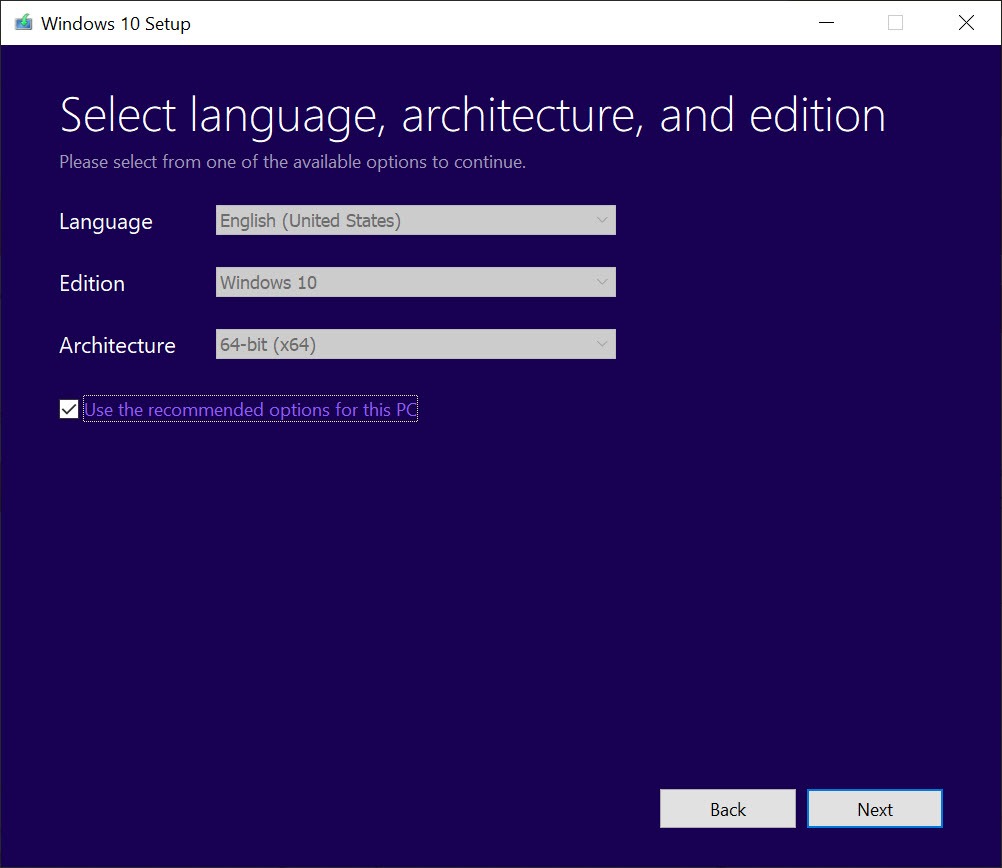
Choose the installation media option in Media Creation Tool, untick the box that copies the current machine’s settings if the stick is for a different computer, and pick the language, the edition and the architecture. Multi-edition media is the default, letting the installer offer the edition at setup time, which suits a technician’s stick that serves several machines. Then select the USB drive from the list. The stick needs 8GB or more and everything on it is erased, which the tool says once and means.
The download runs at whatever speed the connection allows, several gigabytes in all, and the tool verifies it before writing. The result boots on UEFI and on older BIOS machines, since the stick carries both boot methods, and the installer on it walks through a clean installation or a reinstall.
A stick dedicated to one installer is the trade, since Ventoy is what places several ISOs side by side on a drive.
Saving an ISO instead
The Media Creation Tool ISO option writes the same image to a file rather than a stick. That file mounts in a virtual machine as its installation disc, burns to a DVD for the rare machine that still has a drive, or waits on a disk for later. Mounting the ISO on a running machine and launching setup from inside it performs an in-place upgrade or a repair install that keeps everything, which is the recovery technique technicians reach for when a system is damaged but still boots.
The ISO is also the input for tools that do more than this one with the media. Writing it to a stick with Rufus takes a fraction of the time the tool needs and adds options for partition scheme and file system, and anyone who wants several installers on one stick will want a multiboot tool rather than a drive per system.
Upgrading the machine you are sitting at
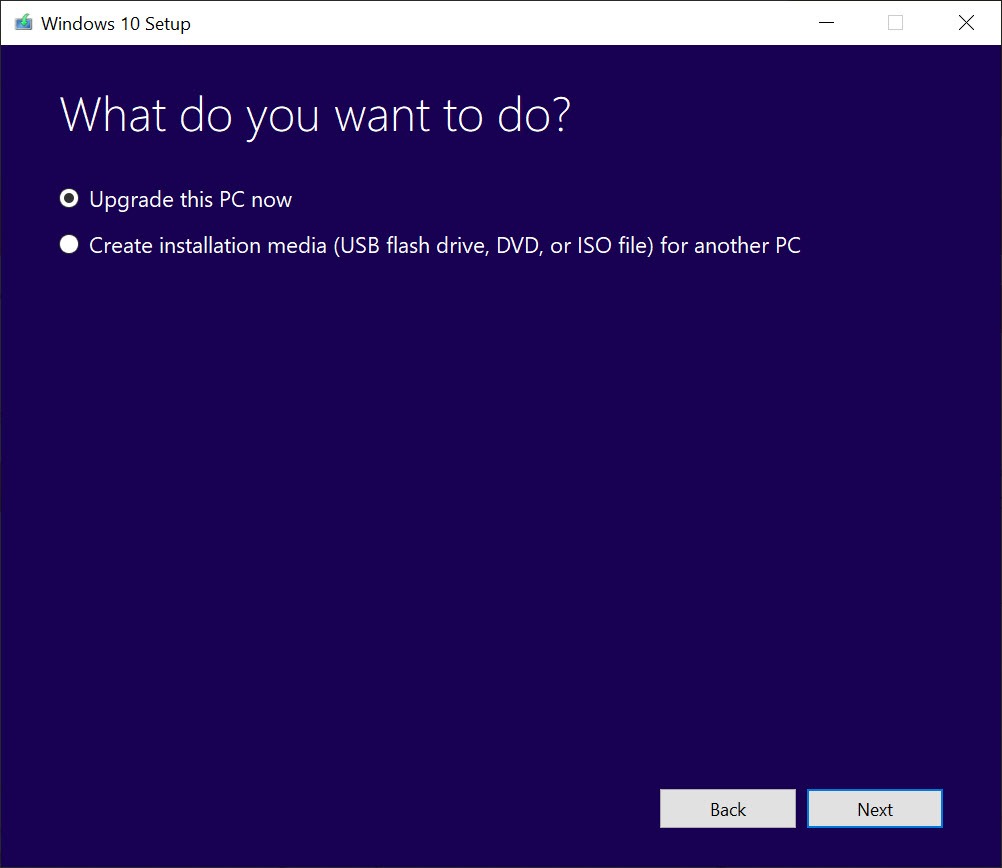
Run Media Creation Tool on a compatible machine with an earlier release, the first screen offers to upgrade this PC now. The tool downloads the image, checks the hardware against the requirements, and hands over to setup, which keeps personal files and installed programs, and most settings, by default, with a choice to keep less. It is the same upgrade the update service delivers, pulled on demand rather than waited for, and it is how a machine that the update service has not yet offered the new release gets it.
The Media Creation Tool hardware check is real. A machine without the required security chip, firmware mode or supported processor is refused, and the tool offers no override. That is the point at which people turn to third-party media that relaxes the checks, and it is a decision with consequences for future updates that the official tool refuses to make for you.
The recommended options box
The Media Creation Tool box labelled use the recommended options for this PC reads the current machine’s language and edition, and its architecture, and locks the choices to match. Left ticked when making a stick for a different machine, it produces media in the wrong language or edition, which is the single most common mistake with the tool and the reason the box deserves unticking by habit. Unticked, every language the system ships in is available, and the edition list covers the consumer and professional editions, with the multi-edition option covering both.
Architecture is 64-bit only for the current system, since the 32-bit line ended with the earlier release. Media for that earlier release is still made by its own edition of the tool, though support for that system has ended and the media it produces installs a system that no longer receives fixes. Anyone still making that media should know what they are installing.
Where it stops
Media Creation Tool makes media for one operating system and nothing else, with no customisation of the image, no unattended answer file, no driver injection and no choice of file system on the stick. The download is large and repeats on every run, since nothing is cached. Writing the stick is slow compared with the dedicated tools, and the hardware requirements are enforced without appeal.
For a multiboot drive that carries this installer alongside other systems and rescue tools, a multiboot drive builder is the next step up, and for an installation image that has been slimmed or preloaded with drivers, that is a job for deployment tools rather than this one.
Conclusion
Media Creation Tool suits anyone who needs a clean installer for Windows 11 on a stick or as an ISO, from a household with one machine to reinstall to a technician who wants a current image every month without hunting for it. The download is official, the media is current, and the in-place upgrade and repair paths cover the two situations where a machine is unwell but alive.
It is narrow by design, slow to write and strict about hardware, and anyone who wants a multiboot stick, a faster write or a customised image reaches for a dedicated tool with the ISO this one produced.
Untick the recommended box when the stick is for another machine, keep the finished stick in a drawer, and the day a machine refuses to boot becomes an afternoon rather than a crisis.
Pros & Cons
- Downloads the current installation image and makes a bootable USB stick in one run
- Saves an ISO for virtual machines, discs or later use
- In-place upgrade of the current machine that keeps files and programs
- Multi-edition media that offers the edition at setup time
- Image refreshed monthly with the latest cumulative update
- Boots on both UEFI and legacy firmware
- Enforces hardware requirements with no override
- One operating system, 64-bit only, with no image customisation
- Erases the whole USB stick and needs 8GB or more
- Downloads several gigabytes on every run with no caching
- Recommended options box produces wrong-language media if left ticked for another machine
Frequently asked questions
No. It enforces the requirements and offers no override. Third-party media that relaxes the checks exists, with consequences for future updates.
The box for recommended options was left ticked, which copies the current machine's language and edition. Untick it when making media for another computer.
Yes. Save an ISO, mount it on the running machine and launch setup from inside it for an in-place repair that keeps files, programs and settings.
Not for the current system, which is 64-bit only. The earlier release's own edition of the tool still makes 32-bit media, though that system is no longer supported.


