

LonelyScreen
About LonelyScreen
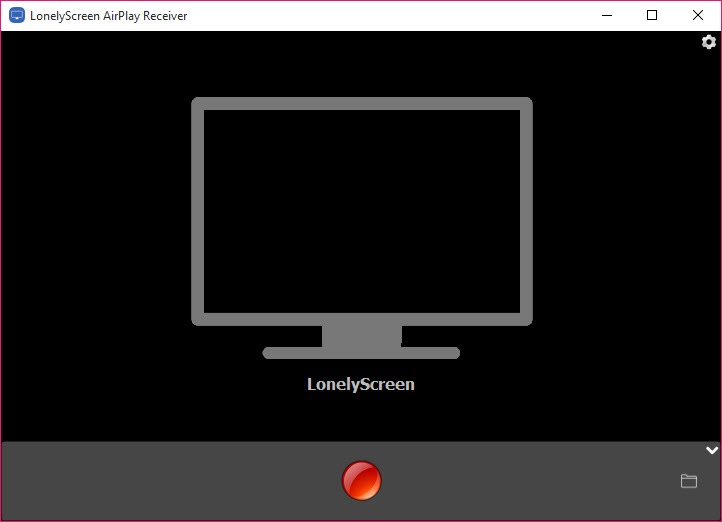
LonelyScreen turns a Windows PC into an AirPlay receiver. Open the application, leave it running in the background, then on an iPhone or iPad swipe into Control Center, tap Screen Mirroring, and pick the PC from the list.
Whatever is on the iOS screen shows up in a window on the desktop, with the audio routed through the computer’s speakers. That is the whole pitch. No cables, no jailbreak, no special configuration on the phone side, just an AirPlay target sitting on the same Wi-Fi network.
The application is built around a real implementation of the AirPlay protocol rather than a workaround, so the iPhone treats the PC the same way it treats an Apple TV. This is why LonelyScreen stays useful for teachers showing iOS apps to a class, support staff walking through a phone problem, anyone capturing footage of a mobile game for a tutorial, or developers who need to demo an iOS build on a projector.
The use case is narrow but the execution covers it well enough that the application has stuck around in this niche.
How the AirPlay receiver actually works
When you launch LonelyScreen, it broadcasts itself on the local network as an AirPlay-capable device using Bonjour, which is Apple’s zero-configuration networking layer. The iPhone scans for AirPlay targets the same way it scans for AirPods or an Apple TV, and the receiver appears in the list under whatever name you set in the application window. The default name is “LonelyScreen” but you can rename it to something like “Living Room PC” so multiple devices on the same network do not get confused.
The mirroring itself runs as a video stream encoded by the iOS device and decoded on the receiving end. This means the heavy work happens on the phone, and the PC mostly just plays back the incoming video.
CPU usage on the receiving machine is modest, hovering in the single digits even during fast-moving content like games. Latency is in the half-second range, which is fine for presentations and software demos but noticeable enough that you would not want to play a rhythm game through it.
What it does and does not capture
The receiver picks up everything the iOS device sends through AirPlay mirroring, which is the full screen including the status bar, notifications, and any app you open. Audio is captured alongside the video. If you start a YouTube video on the phone, both the picture and the sound come through the PC. Apps that explicitly block AirPlay (some streaming services like Netflix do this through HDCP-style protection on certain titles) will refuse to mirror and instead show a black rectangle with a copyright notice. There is nothing LonelyScreen can do about that, the block is enforced on the iOS side.
What you cannot do is control the phone from the PC. This is one-way mirroring, not a remote desktop. Touches still happen on the device, the PC just shows you what is on the screen. For two-way control of mobile devices, Vysor covers the Android side, but on iOS there is no clean equivalent without a developer connection through Xcode.
Recording the mirrored stream
A small but useful feature is the built-in recorder. Once a phone is connected, a record button appears in the application window. Hit it and LonelyScreen saves the incoming stream to an MP4 file on disk. The output is functional rather than studio quality. The encoder is locked, you cannot pick a different bitrate, and the file always lands in the same default folder unless you change it in settings.
For quick captures this is enough. For anything more serious, the better workflow is to leave LonelyScreen as just the receiver and point a proper capture utility at the application window. Streamlabs Desktop can grab the mirrored window as a source for streaming or local recording, and ShareX handles short clip captures and screenshots well. Layering a real capture tool on top of the receiver gets you control over codec, framerate, and overlay options that the bundled recorder does not expose.
Free version, paid version, and what changes
The application runs in two modes. The free build is fully functional for mirroring, with one cosmetic catch. A small “LonelyScreen” watermark sits in the corner of the window, and after a stretch of use a prompt asks you to upgrade. The mirroring itself never stops, the prompt is just nagware. The paid build removes the watermark, removes the prompt, and unlocks higher-resolution recording. For occasional use the free version is genuinely usable. For anyone recording professional content, the paid build is the saner choice because the watermark will end up burned into your video.
There is also the question of whether the application is still under active development. The codebase has not seen meaningful changes for some time, and the website’s pace of updates has slowed considerably.
This matters because newer iOS releases occasionally tweak the AirPlay protocol in ways that break older receivers, and a stalled application cannot keep up. Current iOS builds still work with it, but this is worth keeping an eye on.
Network requirements and common failure modes
Both devices have to be on the same Wi-Fi network. Same SSID, same subnet. If your router has client isolation turned on (some guest networks do this), the iPhone will not see the PC even though both are connected to the internet. The application will be running, the phone will not list it as an AirPlay target, and there is no error message to tell you why. This is the single most common reason LonelyScreen appears not to work.
Windows Firewall is the second common culprit. The first time you launch the application it asks for network permissions, and if you click the wrong button or have a third-party firewall that intercepts the request silently, the Bonjour broadcasts get blocked and again the phone never sees the receiver. The fix is straightforward, allow the application through the firewall for both private and public networks, but the failure mode is opaque.
A weaker but real failure is corporate or school Wi-Fi that blocks multicast traffic, which Bonjour relies on.
There is no workaround on those networks short of switching to a personal hotspot, which then introduces its own complications around the iPhone hosting the hotspot and trying to mirror to a PC connected to it.
Where it fits alongside other mirroring options
AirParrot goes the other direction, sending a PC screen to an Apple TV or similar AirPlay target. AirServer is the bigger commercial alternative on the receiving side, with support for AirPlay, Google Cast, and Miracast all in one application. LonelyScreen is narrower than AirServer (AirPlay only) and simpler to use, with the trade-off being fewer protocols and less polish in the interface.
For someone who only needs AirPlay reception and wants the lightest application that does the job, LonelyScreen is the right size. For a classroom mirroring iPads, Android tablets, and Chromebooks all at once, AirServer covers more ground.
Conclusion
LonelyScreen is the right pick for someone who specifically needs AirPlay mirroring on a Windows PC and does not want to deal with a more elaborate multi-protocol receiver. Teachers, presenters, support staff, and anyone capturing iPhone app footage for tutorials will find it does the job without much ceremony. The free version is generous enough for occasional use, and the paid upgrade is reasonable for anyone who needs clean recordings.
The reservations are real, though, and worth weighing. The lack of visible development activity means betting on long-term iOS compatibility is a guess. The narrow protocol support means it is the wrong tool for any environment with mixed Apple and non-Apple devices.
And the network troubleshooting can be frustrating when the AirPlay target refuses to appear and the application offers no diagnostic information. Within its lane, though, the application is honest, small, and does exactly what it claims.
Pros & Cons
- Real AirPlay receiver implementation, iOS treats the PC like any Apple TV with no extra setup on the phone
- Captures both video and audio from the mirrored device
- Built-in MP4 recorder for quick captures without needing a separate screen capture utility
- Lightweight on system resources, modest CPU usage even during full-screen mirroring
- Free version is fully functional, the watermark is the only meaningful limit
- Simple interface with no configuration overhead, mostly works the first time once the network is right
- Watermark on the free build will end up baked into anything you record
- Built-in recorder has no codec, bitrate, or framerate controls
- Development pace has slowed, and iOS protocol changes could eventually break compatibility
- Will not work on networks with client isolation or blocked multicast traffic, with no clear error message when this happens
- AirPlay only, no support for Google Cast or Miracast for mirroring Android devices
- One-way mirroring with no ability to control the phone from the PC
Frequently asked questions
It turns the PC into an AirPlay receiver, so an iPhone or iPad can mirror its screen wirelessly to a window on the desktop. The audio comes through too, and there is a basic record button to save the stream as an MP4.
Most often it is a network issue. The phone and the PC must be on the same Wi-Fi network with no client isolation, and Windows Firewall must allow the application through for both private and public profiles. Guest networks and some corporate Wi-Fi block the multicast traffic AirPlay needs.
No. The application uses the standard AirPlay protocol that ships with every iPhone and iPad. You connect through the regular Screen Mirroring control on the device, no developer mode or jailbreak involved.
Yes. There is a record button in the application that saves an MP4 file. The encoder settings are not adjustable, so for higher-quality captures you are better off using a dedicated screen recorder pointed at the mirrored window.
The free build mirrors and records normally but adds a watermark to the video and shows occasional upgrade prompts. The paid build removes both and unlocks higher recording quality. The actual mirroring functionality is the same in both.
A half-second delay is normal because the iOS device encodes the stream and the PC decodes it. If the lag is worse, it is usually network related. A congested 2.4 GHz network with many devices, weak Wi-Fi signal, or the phone hosting a hotspot the PC is also connected to will all push latency up.
No. The application only speaks AirPlay, which is an Apple protocol. For Android screen mirroring you need something that supports Google Cast or a dedicated Android utility like Vysor or Mobizen.


