

KillUpdate
About KillUpdate
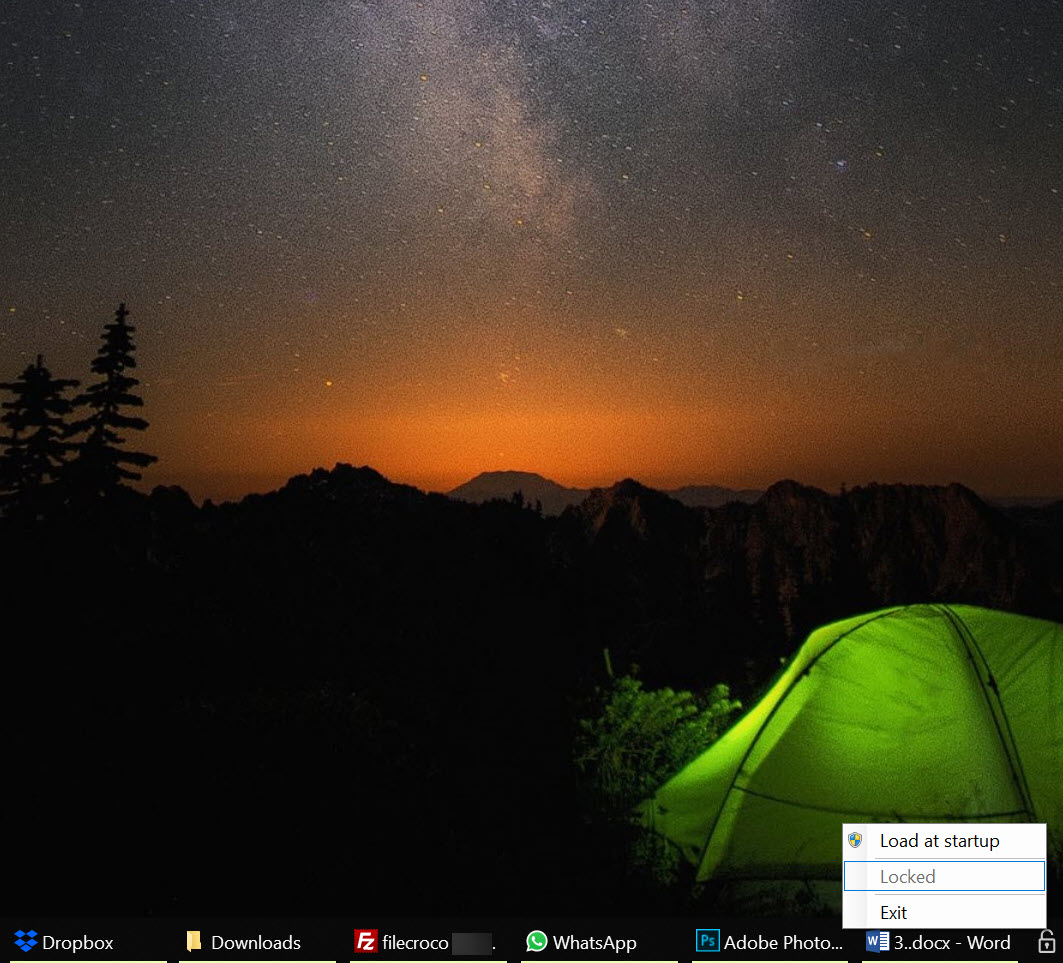
KillUpdate stops the system from installing updates on its own schedule and hands that schedule back to you. It sits in the tray as a padlock icon. Right-click it, tick Locked, and from then on it checks the update-related services every ten seconds. Anything that has been switched back on gets switched off again, without a prompt and without a window appearing.
That ten-second loop is the whole design, and it is the reason the tool works where a single toggle does not. Disabling the update service by hand lasts until something turns it back on, and the system has several mechanisms whose job is exactly that.
KillUpdate does not fight those mechanisms once. It simply outlasts them, every ten seconds, for as long as it runs.
The Locked switch and the tray menu
The menu has three meaningful entries. Locked turns the blocking on and off. Load at startup makes the tool start when you sign in, which is the setting that matters, since a blocker that is not running blocks nothing. Exit closes it. There is no main window, no options dialog and nothing to configure beyond those.
It needs administrator rights, because changing service states is a privileged operation. Run it without them and the padlock appears but nothing is actually disabled, which is the most common reason people think it is not working.
The tray icon follows the light or dark theme, so it stays visible either way.
Updating when it suits you
Blocking updates is not the same as never updating, and the tool is built around that distinction. When you are ready, untick Locked, open the update settings, check for updates and install them. Reboot, then tick Locked again. The whole cycle takes as long as the updates themselves.
While the lock is on, the update page reports an error rather than a friendly message. That is expected and harmless, since the page cannot reach a service that has been disabled. It is also a useful sign that the tool is doing its job.
Anyone who wants to choose individual updates rather than all or nothing will find StopUpdates10 and similar tools more granular. KillUpdate does not pick and choose. It blocks everything until you let everything through.
Antivirus signatures and the daily exception
The obvious worry with a blanket block is that the built-in antivirus stops receiving definition updates too, since it relies on the same services. The tool has an answer for that. An optional menu setting, when enabled, briefly lifts the block once a day, triggers a signature download for the built-in antivirus, and then locks everything down again.
Switch that on if the built-in antivirus is your only protection. If you are unsure which services the tool touches, a startup and service inspector lists them by name.
Leave it off if you run a third-party suite that updates itself through its own channel, since the daily window is then unnecessary.
Logging, and checking what it did
A log is available but hidden behind a small manual step. Create a text file called settings.txt in the same folder as the program, put the path of the log file you want on a single line, and start the tool. Activity is written there from then on.
The file grows slowly but steadily, one entry per check, so it is a troubleshooting aid rather than something to leave on permanently. For a visual check instead, a tray service manager shows the update service’s state at a glance and confirms it stays disabled.
Conclusion
KillUpdate suits anyone who has lost a working evening to an unscheduled restart and wants the timing of updates to be their decision. Gamers, people running long renders or recordings, and anyone on a machine that must not reboot unexpectedly will get exactly what they need from a tool with one real switch.
It is deliberately blunt. There is no picking individual updates, and the responsibility for actually installing them lands on you. Treat the lock as a pause button rather than an off switch, unlock it on your own schedule, and it does the job cleanly.
Pros & Cons
- Checks and disables update services every ten seconds, outlasting anything that re-enables them
- Single tray toggle to lock or unlock, with a load-at-startup option
- Optional daily window keeps built-in antivirus definitions current
- Portable, with no installer and no background service of its own
- Icon adapts to the light or dark theme
- Blocks all updates together, with no per-update selection
- Silently does nothing if started without administrator rights
- Logging requires creating a settings file by hand
- Update settings page shows an error while locked
Frequently asked questions
It is almost always running without administrator rights. Close it, right-click the executable and choose to run it as administrator, then tick Locked again.
Untick Locked in the tray menu, check for updates and install them, reboot, then tick Locked again.
Only if you leave the daily exception off. Enable it in the menu and the tool briefly lifts the block once a day to fetch new signatures.
Yes. The block works by rechecking every ten seconds, so enable Load at startup to make sure it is always active after you sign in.


