

Kanto Player
About Kanto Player
Kanto Player is a karaoke player built around the files people already own rather than an online catalogue. It opens MP3 backing tracks, MIDI and KAR songs with embedded lyrics, KFN files, MP3 with CDG graphics in loose or zipped form, and karaoke videos in AVI, WMV or MP4. Lyrics scroll on screen and the key and tempo bend to the singer. A second monitor can carry the words to the room, and a record button captures the performance.
The audience splits in two. Families with a folder of karaoke files want a player that handles all of them without fuss. Hosts of karaoke nights want the live tools, from a rotation list of singers to a display the audience can read from the other side of the bar.
The program covers both without an account.
Every karaoke format in one player
Format support is the first reason to choose it. A normal media player will play the audio of an MP3+G song but ignore the CDG file holding the lyrics. It has no idea what a KAR file is either. Kanto Player reads the lyrics graphics, the embedded MIDI lyrics and the newer KFN format alongside plain MP3s and video files, so a library collected over years from discs and downloads plays from one list.
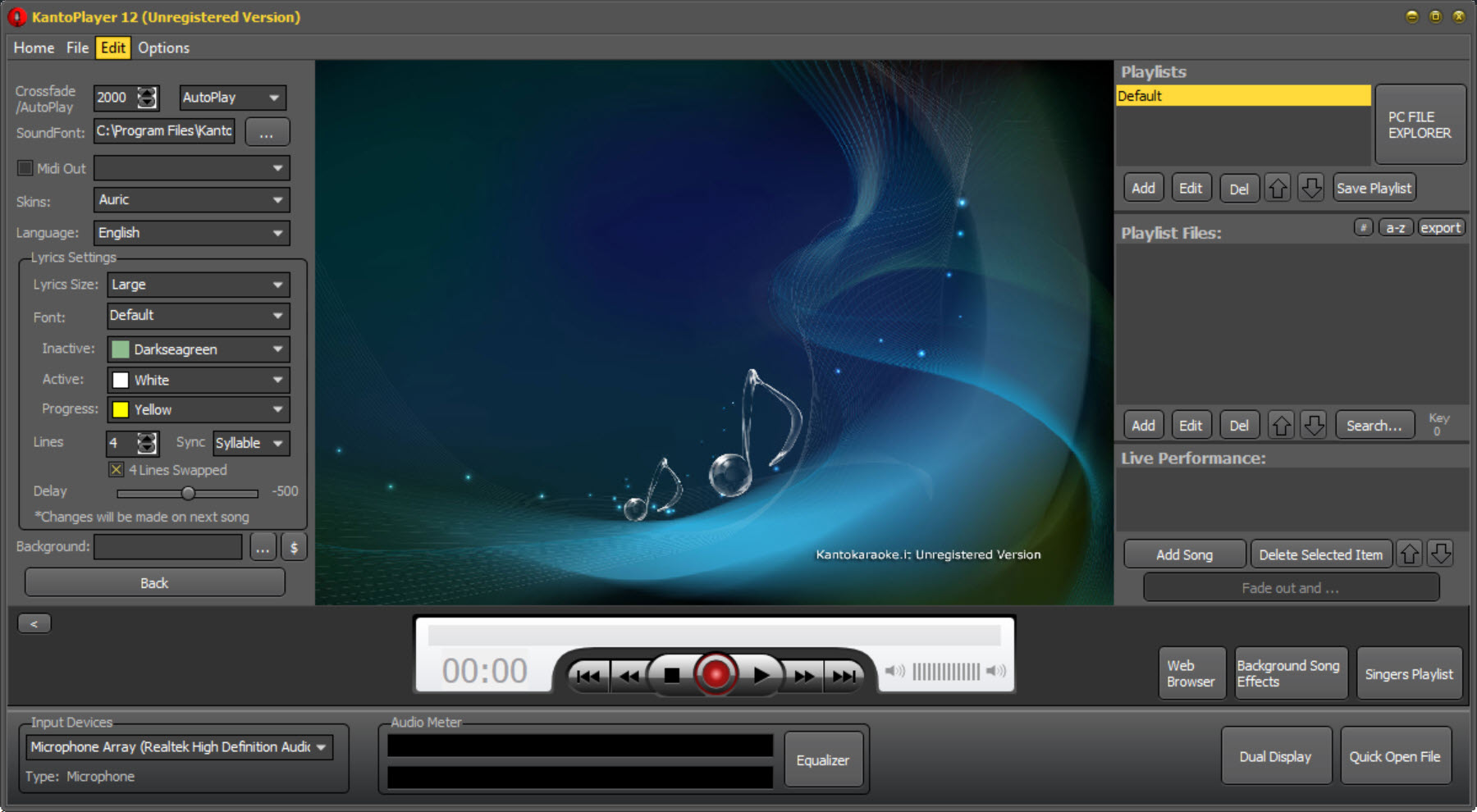
MIDI songs play through soundfonts rather than the system’s thin built-in synthesizer, which makes old KAR files sound like real instruments instead of a doorbell. The melody track that guides the tune can be switched off when the singer knows the song, and switched back on for someone who needs the cue.
Plain karaoke videos with burned-in lyrics play in any player, such as VLC Media Player, but the key change, singer list and second screen only come with a dedicated karaoke program.
Key changes and a screen for the audience
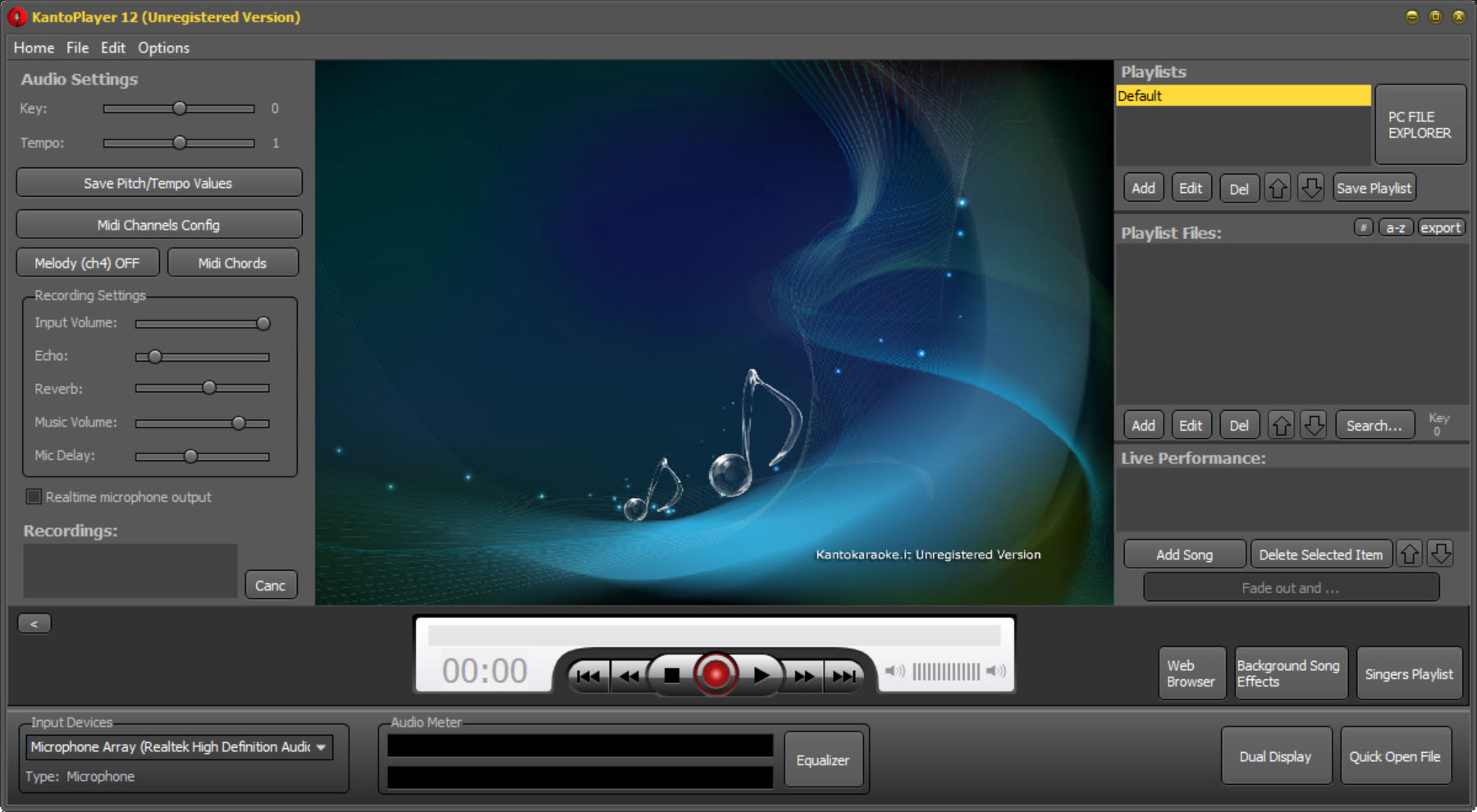
Pitch and tempo controls sit on the main window of Kanto Player. Drop a song two semitones for a singer who cannot reach the chorus, or slow a fast verse during practice, and the change applies live, including on video files, which many players cannot shift at all. Audio settings also cover volume and the balance between music and vocal input.
Dual screen mode sends a clean lyrics display to a second monitor or a television while the main screen keeps the playlist and controls for the host. Background images and effects can sit behind the words, and the singer’s name and the next singer in line can appear on the display, so nobody has to shout who is up.
Running a karaoke night
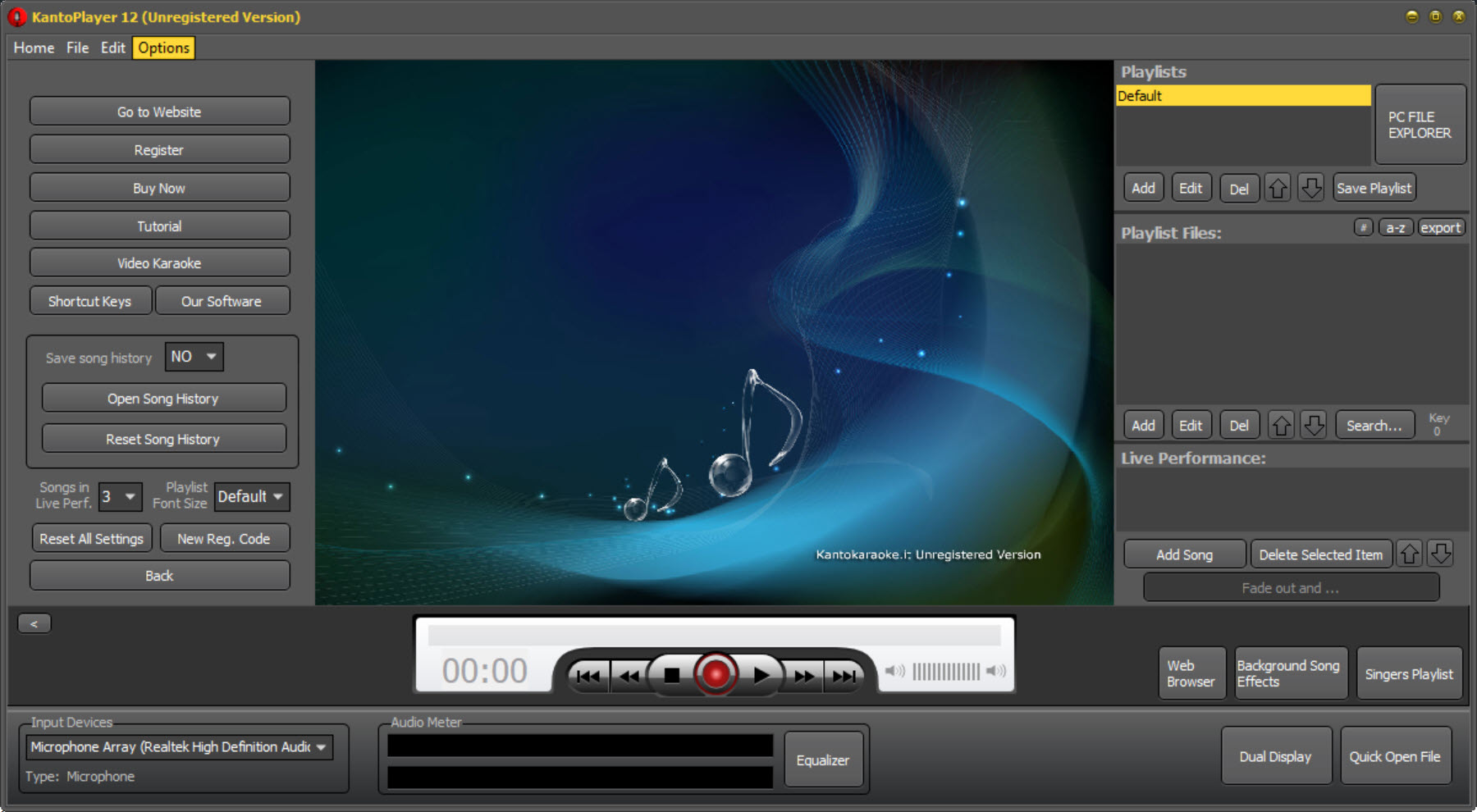
The live performance tools are where Kanto Player steps beyond a home player. A singers rotation list keeps the queue fair, with each name tied to a song, and a history records what has been sung so the same three songs do not come round every hour. Playlists can be built in advance, imported from M3U files, sorted alphabetically and saved. That turns a chaotic evening into a schedule.
The host searches the library while a song plays, queues the next one, and the handover happens without silence.
For a large venue that wants singers to request songs from their phones and a cloud catalogue of licensed tracks, KaraFun Player takes that route, with the trade-off of depending on an online library rather than your own files.
Recording and MIDI conversion
The record button in Kanto Player captures voice over the backing track to a file, with microphone level and reverb adjustable before the take. It is enough for practice recordings and party souvenirs, though the result is a simple mix with no separate vocal track. Cleaning up a recording afterwards belongs in an audio editor.
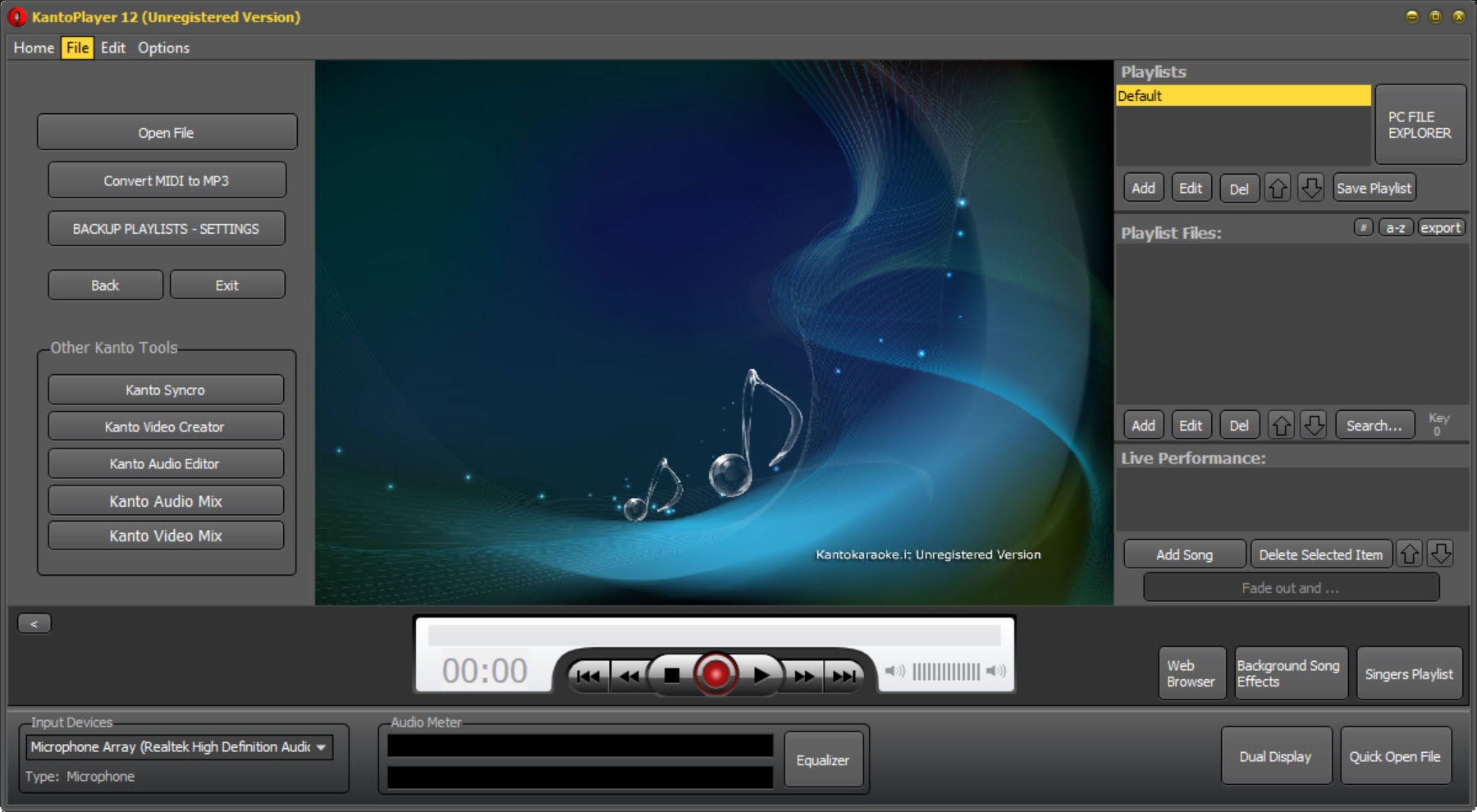
A converter turns MIDI and KAR files into MP3, with or without the melody track, using the same soundfonts as playback.
That is the practical way to bring an old karaoke collection onto a phone or a player that only understands audio files, and the quality depends on the soundfont rather than on a hardware synthesizer.
Conclusion
Kanto Player suits anyone with a collection of karaoke files in mixed formats, from families singing at home to hosts running a weekly night who need a rotation list and a display for the room. Soundfont playback and live key changes make old files sound and fit better than they did on the discs they came from.
It shows its age in the interface and keeps recording basic, and it offers no catalogue of its own. For playing and managing the karaoke files you already have, it does the job thoroughly.
Pros & Cons
- Plays MP3+G, zipped CDG, KAR, MIDI, KFN and video karaoke from one library
- Key and tempo change live, including on video files
- Dual screen lyrics display with singer and next-singer names
- Singers rotation and saved playlists for live events
- Records performances and converts MIDI to MP3 with soundfonts
- Interface looks dated next to current players
- Recording produces a simple mix with no separate vocal track
- No built-in song catalogue, so you supply every file
Frequently asked questions
MP3, MIDI and KAR, KFN, MP3 with CDG graphics in loose or zipped form, and karaoke videos in AVI, WMV and MP4.
Yes. Dual screen mode sends the lyrics to a second monitor or a television while the host keeps the playlist and controls on the main screen.
Yes. Pitch and tempo adjust live from the main window, and the pitch change also works on MP4 and other video karaoke files.


