

iPadian
About iPadian
People who search for iPadian usually arrive with one of two expectations. Either they want to play iOS apps on a Windows PC, or they want to see what iOS looks and feels like without buying a device. Only one of those expectations matches what the application actually does, and the gap between the two is wider than most blog posts admit. Going in with the right idea about what this is changes whether the experience feels useful or disappointing.
iPadian is a simulator, not an emulator. The distinction matters because it determines what runs inside it. An emulator like BlueStacks replicates the underlying hardware and operating system of the device it imitates, which is why you can install real Android APKs and they actually run. iPadian does not do that.
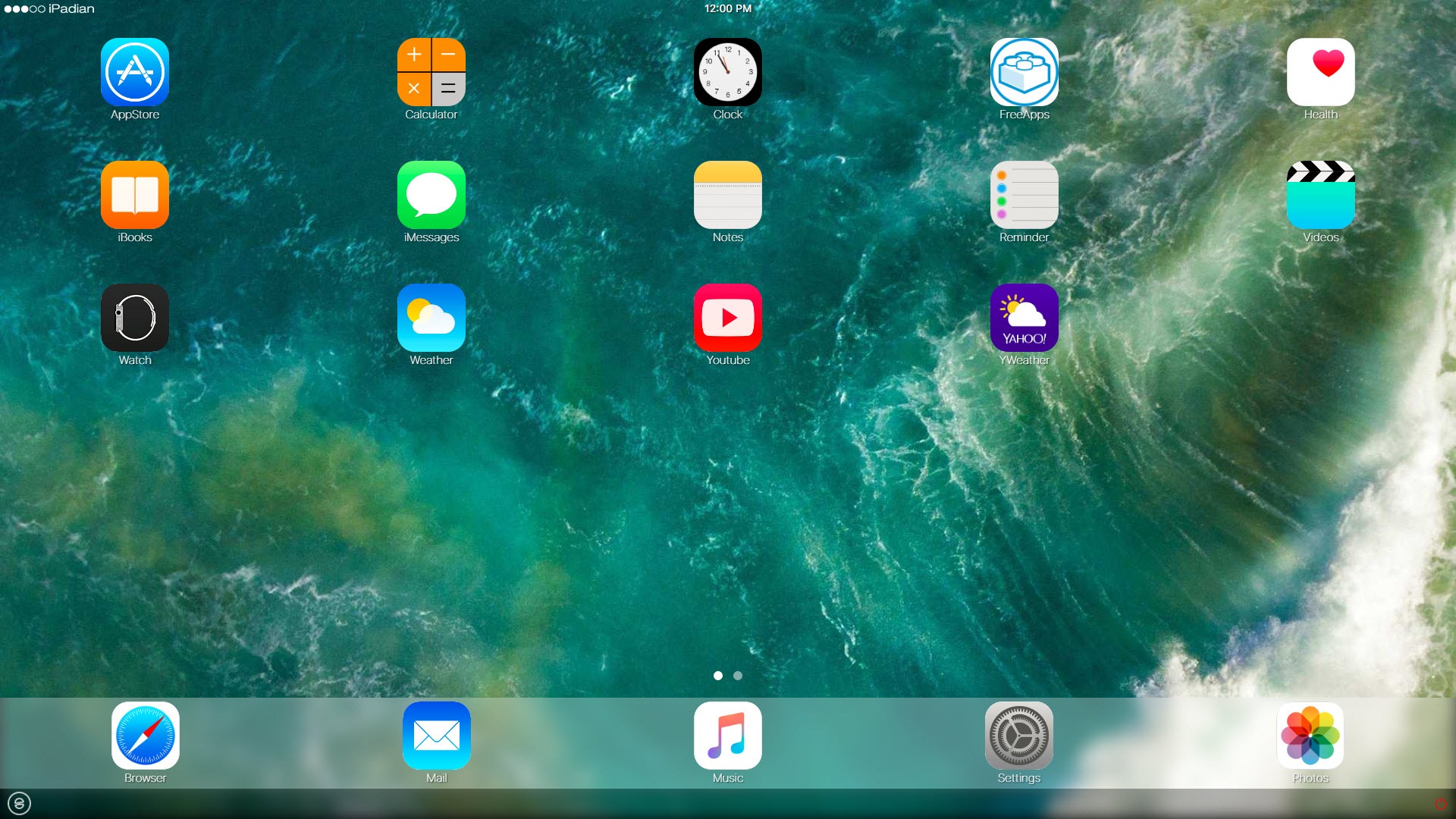
It is an Adobe AIR application that renders an iOS-styled interface on top of Windows and gives you access to a curated set of web apps and HTML5 games dressed up to look like iOS apps. The Springboard grid is there, the Dock is there, the status bar is there. The actual iOS app catalog is not.
What the simulator actually delivers
When you launch the application, you get a fullscreen overlay that looks like an iPad home screen. Rounded app icons in a grid, a wallpaper behind them, a Dock at the bottom, a status bar at the top with mock indicators. Click an icon and something happens, what that something is depends on the icon. The Safari icon opens a built-in web view.
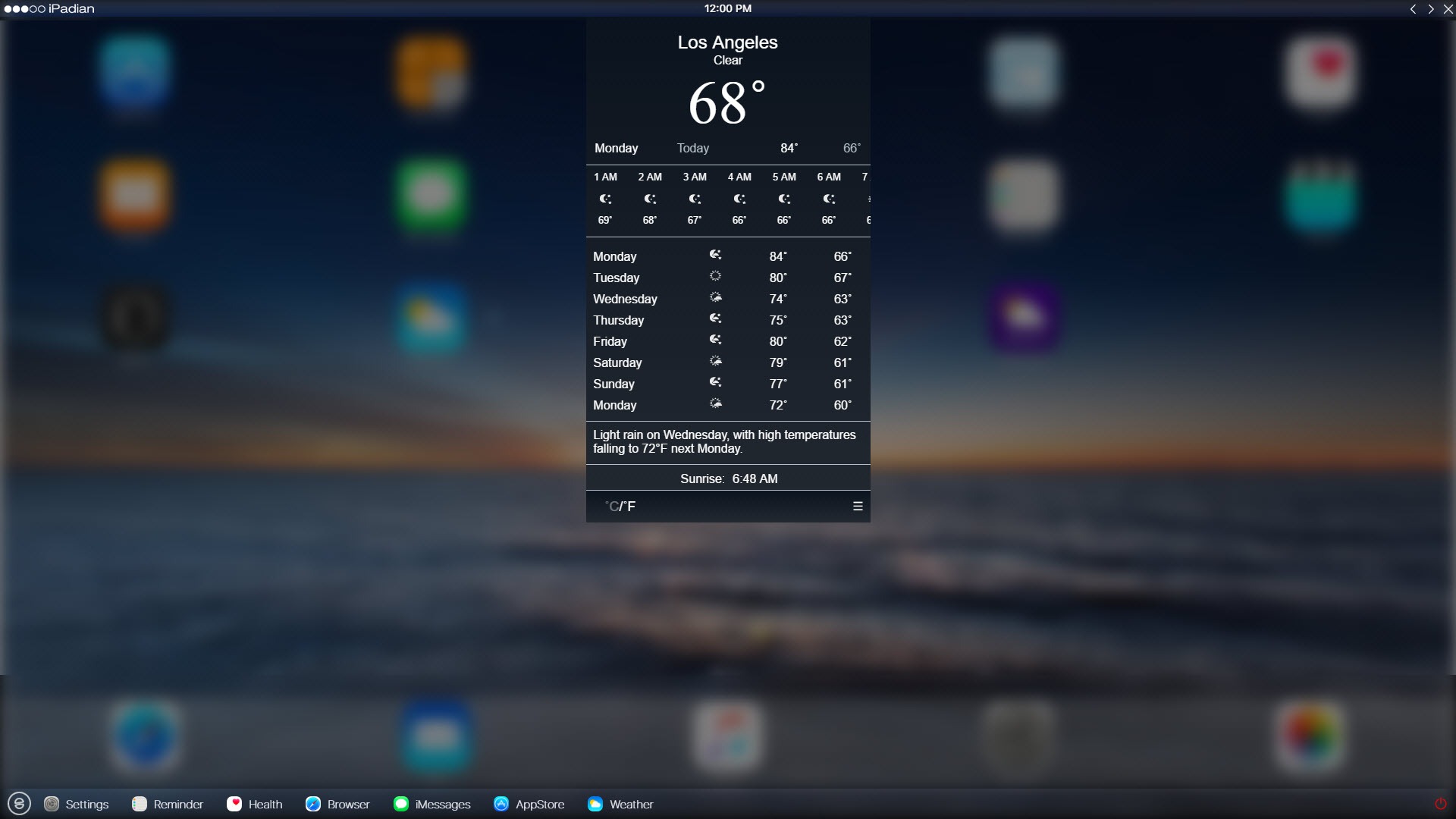
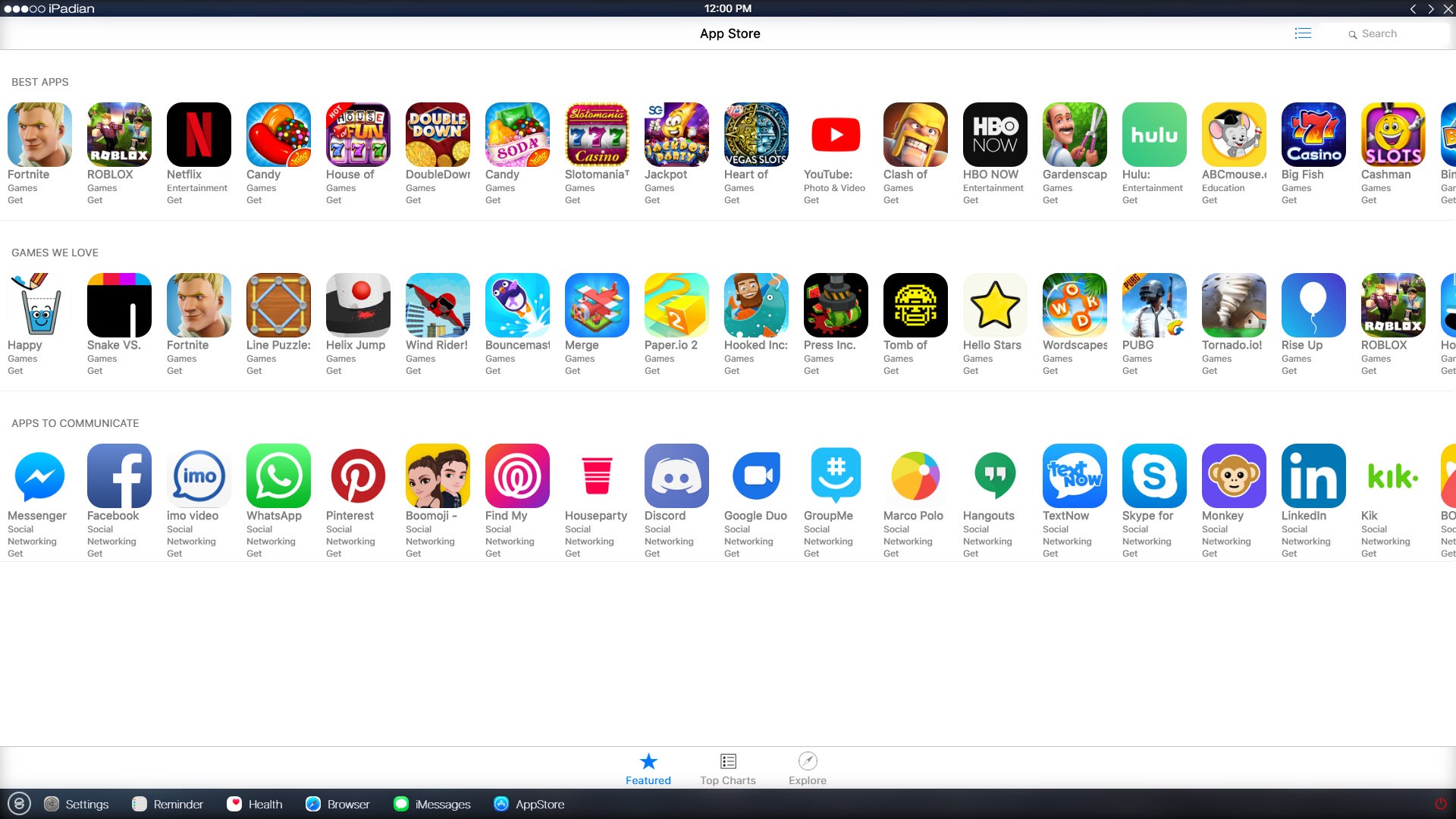
The calculator icon launches a working calculator widget. The weather icon shows weather information. The App Store icon opens a curated catalog of additional web apps you can add to your home screen.
Everything inside the simulator is either a Flash or HTML5 application, a wrapper around a website, or a small built-in utility coded into the AIR project. The Game Station, which is one of the more popular features, is a hub of browser-based games rebranded to fit the iOS visual style. None of it is real iOS code. The simulator does not contain a JavaScript-to-iOS runtime, an ARM translator, or any of the machinery that an actual emulator would need.
That sounds like a criticism but it depends on what you wanted in the first place. If you wanted a styled launcher with a curated bundle of web apps and games, this is exactly that, and it works without the heavy resource cost an emulator would demand.
If you wanted to run TikTok, WhatsApp, Clash of Clans, or anything else from the App Store, this is the wrong tool and no amount of trying will change that.
Why the iMessage and FaceTime searches lead nowhere
The keyword data around iPadian is dominated by searches for things that do not work, iMessage, FaceTime, Lucky Patcher, WhatsApp on iOS, specific iOS games. These exist because the iOS aesthetic creates an expectation that the iOS apps come with it. They do not. iMessage and FaceTime require Apple servers, Apple account authentication, and Apple’s proprietary protocols.
Lucky Patcher is an Android tool that has no iOS equivalent in the first place. WhatsApp for iOS is bound to the iOS WhatsApp client and the Apple ID it was registered with.
The free version, the premium version, and what changes
The free version of the application runs with advertising integrated into the interface. Banner ads appear in some of the bundled apps, the App Store catalog is partially gated, and a portion of the bundled content is locked behind the upgrade. The Premium version, which is a paid upgrade, removes the ads and unlocks the full bundled catalog (more web apps, more games in the Game Station, no banner interruptions during normal use).
The question of whether the upgrade is worth the cost depends entirely on what you plan to do with the simulator. For a quick look at the iOS aesthetic on Windows or a few hours of casual browser-based gaming dressed up in iOS style, the free version is enough to evaluate. For sustained use as a styled launcher with the full curated bundle, the paid version makes the experience cleaner.
The realistic answer for most users is that the free version answers the curiosity, and few people end up needing more.
Performance and what running it actually costs
The Adobe AIR runtime that the application is built on is dated technology, no longer the platform anyone would choose to build a new application on. The practical effect is that the simulator runs on modest hardware without complaint, the AIR overhead is small compared to a real emulator, and most of what the application does (rendering icons, loading web pages, running small HTML5 games) is well within what any current PC can handle.
The catch is that the rendering quality is what AIR can produce, which is acceptable rather than impressive. Animations are not as smooth as native iOS, fonts do not look quite right, and the visual fidelity is closer to a competent imitation than a pixel-perfect copy. On a high-DPI display the scaling can be awkward, with icons that look soft and text that does not always render crisply.
For users who want the iOS aesthetic specifically as a desktop dressing rather than a full simulator experience, a dock-style application like RocketDock gives you the visual influence with much less commitment, just a styled dock on your Windows desktop and your regular apps inside it.
The honest use case
The simulator is genuinely useful in three scenarios. First, as a quick way to show someone the iOS visual language on a Windows machine, useful for design discussions, app concept demonstrations, or showing off the aesthetic to someone who has never used an Apple device.
Second, as a styled hub for a small set of web apps you would access anyway, browser games, simple utilities, web-based productivity tools, all dressed up in a coherent UI. Third, as a casual gaming wrapper, the Game Station has enough browser games to fill an evening or two of light play.
Outside those three scenarios, the simulator does not have much to offer that a regular browser bookmark folder and a wallpaper change could not deliver. It is not deceptive about what it is, the project documentation has long described the application as a simulator rather than an emulator, but the broader internet has muddied the distinction enough that confusion is the default state.
Conclusion
iPadian is one of those applications where reading what it actually does before installing it changes the entire experience. As a styled launcher with a curated web app and game bundle, it works. As an iOS emulator that runs real apps, it does not exist and never has, and the project has been clear about this even when search trends suggest most users are expecting the wrong thing.
The realistic audience is small. Users curious about the iOS look on a Windows PC, designers wanting a quick visual reference, casual gamers who like the wrapped browser experience, and anyone who finds the curated app bundle convenient. For everyone else, especially the large group searching for ways to run iOS apps on Windows, the answer is to set the expectation correctly upfront, no consumer Windows tool delivers that, and the simulator is not a substitute.
Within its actual scope, the application does the job it was designed for, and the disappointment usually comes from the gap between what it promises and what people assume.
Pros & Cons
- Lightweight install with minimal system requirements compared to actual emulators
- Faithful visual recreation of the iOS Springboard interface for demonstration or curiosity
- Curated bundle of web apps and HTML5 games packaged into a coherent UI
- Free version is functional enough to evaluate the experience without paying
- Adobe AIR runtime keeps resource use low, runs on modest hardware
- Game Station hub provides browser-based gaming inside the iOS-styled wrapper
- Does not run real iOS apps from the Apple App Store, never has, never will
- Cannot replicate iMessage, FaceTime, or any service tied to Apple authentication
- Free version includes advertising and locks part of the bundled catalog
- Adobe AIR is dated runtime technology, the rendering quality is approximate rather than precise
- High-DPI display scaling produces soft icons and uneven text
- Search interest is dominated by people expecting functionality the application does not provide
Frequently asked questions
No. The application is a simulator that renders an iOS-styled interface around web apps and HTML5 content. It does not include the underlying iOS runtime, does not translate ARM code, and cannot install or execute .ipa files. There is no consumer-grade Windows tool that runs real iOS apps.
An emulator replicates the hardware and operating system of another device, allowing applications written for that device to run unchanged. A simulator imitates the look and behavior of another device without running its actual software. iPadian is in the second category, the iOS appearance is faithful, the iOS application execution is not.
No. iMessage and FaceTime require authentication against Apple servers and Apple-specific protocols. WhatsApp for iOS is tied to the iOS client and a registered Apple ID. None of these can function inside the simulator because the simulator does not execute iOS code.
The Premium tier removes advertising from the interface and unlocks the portion of the bundled app catalog that the free version restricts. The simulator's core functionality is the same in both tiers.
For design demonstrations of the iOS visual style, yes. For actual app testing, no. Apple's official Xcode Simulator on macOS is the only real option for testing iOS app behavior, and it requires a Mac. The application does not provide a development environment.
The simulator's name has been used by various unofficial download sources that bundle the installer with unrelated software. Acquiring the simulator from any source other than a trusted catalog is where most of the reported issues originate. The application itself, when installed cleanly, is what it claims to be, a simulator running on Adobe AIR.


