

Insync
About Insync
Anyone who uses cloud storage seriously eventually runs into the same limitation: each service comes with its own desktop client, each with its own quirks, and managing files across multiple cloud accounts means juggling multiple applications that don’t talk to each other. Google Drive’s official client works one way, OneDrive’s another, Dropbox‘s another, and trying to sync the same folder structure across multiple services is essentially impossible without elaborate workarounds.
Insync is the third-party desktop application that takes a different approach by handling Google Drive, OneDrive, Dropbox, and SharePoint through a single unified interface.
Originally built to fill the gap left by Google’s lack of an official Linux client, this software has grown into a serious cloud sync tool used by professionals, small businesses, and anyone who works across multiple cloud services regularly.
The premise stays simple: install one application, connect your various cloud accounts, and treat them all as equal participants in your local file system rather than separate islands requiring separate clients.
Multi-cloud sync from a single application
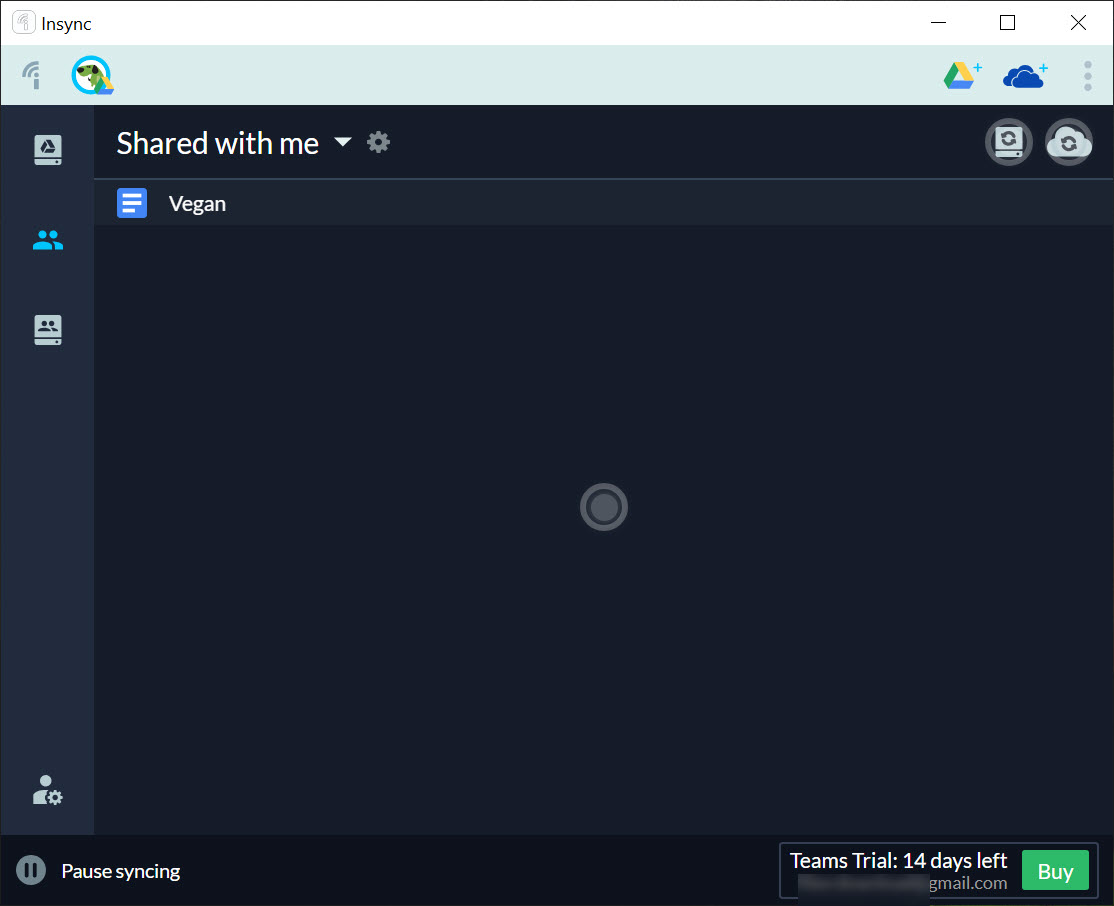
The defining feature of Insync is that it handles multiple cloud services from one unified interface. Connect a Google Drive account, a OneDrive account, a Dropbox account, and a SharePoint account, and they all sync to your computer through the same application with consistent behavior across services.
For users who actually use multiple cloud services for different purposes (Google Drive for personal files, OneDrive for work, Dropbox for client collaboration), this consolidation eliminates the friction of running multiple sync clients simultaneously. You configure once, manage through one interface, and stop thinking about which application handles which service.
The same approach extends to multiple accounts within a single service. If you have a personal Google Drive and a work Google Drive, this software handles both accounts in parallel rather than forcing you to switch between profiles in the official client.
Selective sync with granular control
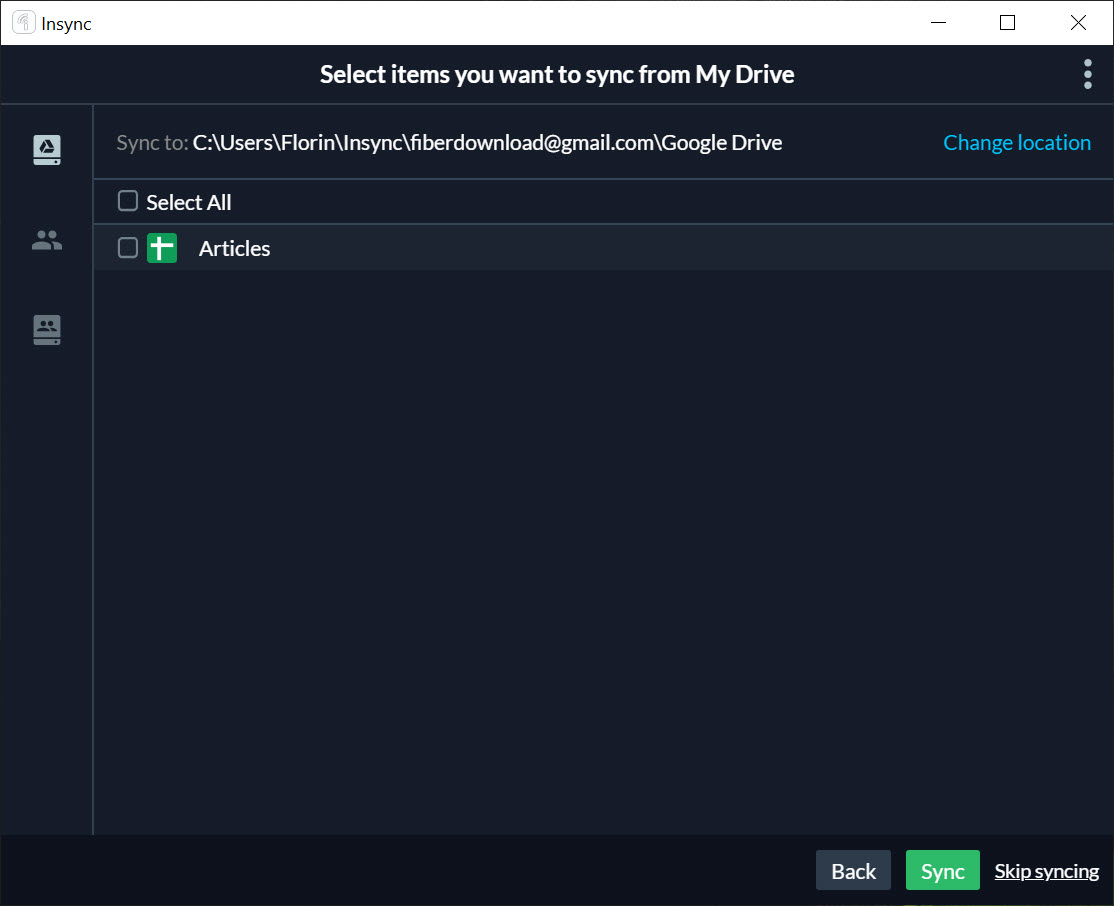
Cloud sync becomes problematic when your account contains more data than fits on your local drive, which is increasingly common as cloud storage gets cheaper and people accumulate larger collections. The selective sync feature lets you choose exactly which folders sync to your local device and which stay only in the cloud.
The granularity goes deeper than just picking top-level folders. You can drill into specific subfolders, exclude particular files, and configure different sync rules for different services or accounts. For users with massive cloud collections who only need certain portions locally, this fine control prevents your hard drive from filling up while keeping the files you actually need available offline.
The implementation handles new folders gracefully too, prompting you about whether to sync them locally rather than automatically syncing everything by default. For users with disciplined local storage management, this opt-in approach for new content works much better than the opt-out approach some clients use.
One-way sync for backup-style workflows
Beyond standard two-way sync, the application supports one-way sync configurations that treat one location as authoritative. Local-to-cloud one-way sync acts essentially as cloud backup, pushing changes from your local files up to the cloud without pulling cloud changes down to local.
Cloud-to-local one-way sync inverts this, keeping a local read-only copy of cloud content that doesn’t propagate local changes back up.
These directional sync options matter for specific workflows. Photographers who want their organized local catalog backed up to cloud without cloud accidents corrupting the local version benefit from local-to-cloud sync. Users wanting a local cache of cloud content without risking local changes affecting the cloud master benefit from cloud-to-local sync.
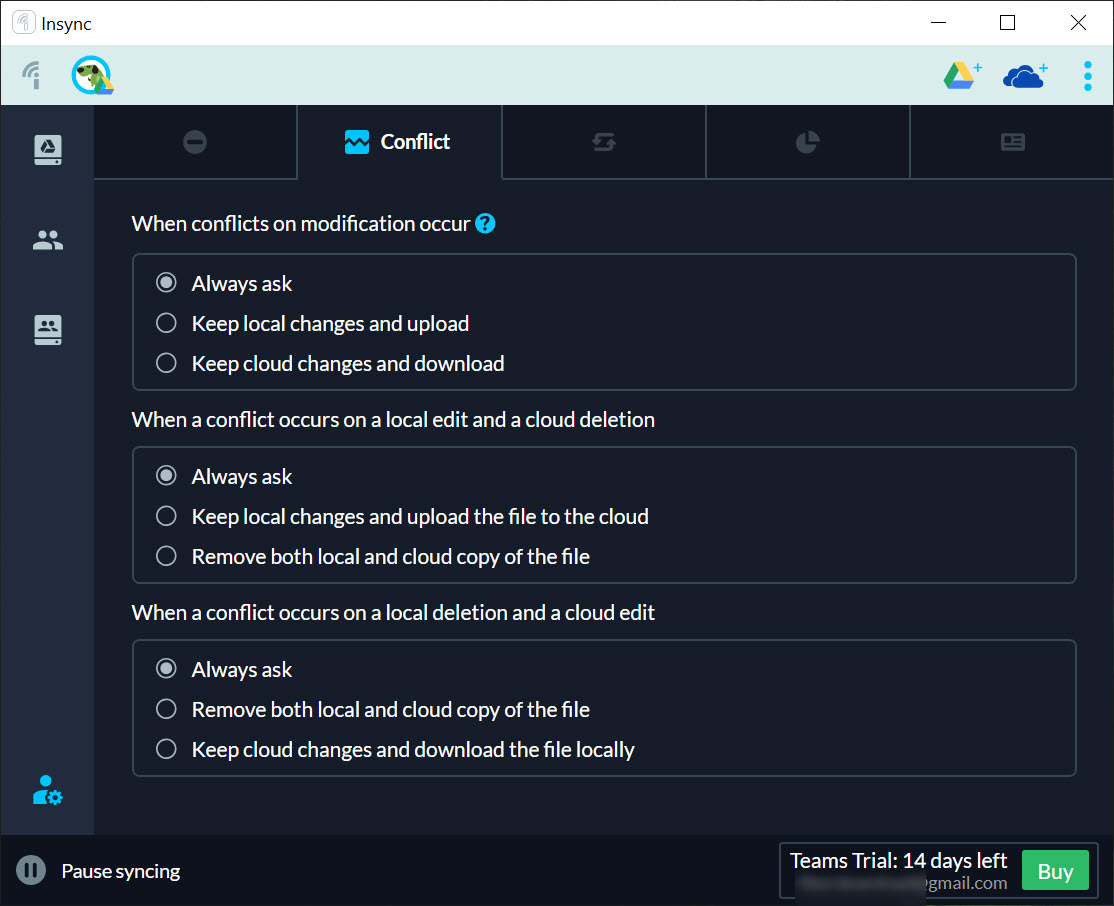
For users who’ve experienced sync conflicts that overwrote work they wanted to keep, having explicit one-way options provides peace of mind that the wrong changes won’t propagate in the wrong direction.
Merge folders and base folders
A particularly clever feature is the ability to merge multiple cloud folders into a single local folder structure, or to set custom base folders that determine where each cloud’s files live on your local drive.
Rather than being forced into the default Documents/Google Drive, Documents/OneDrive structure that’s awkward to navigate, you can organize sync targets to match how you actually think about your files.
The merge capability is particularly useful for users who maintain similar folder structures across multiple cloud services and want to see them combined locally rather than duplicated.
Merging your Google Drive Documents folder with your Dropbox Documents folder into a single local Documents view eliminates the artificial separation that the cloud services impose.
File manager integration
The application integrates with the system file manager, providing the kind of right-click context menu access and status indicators that make cloud sync feel native rather than bolted-on. You see sync status (synced, syncing, errors) directly in your file manager, can trigger specific actions through context menus, and generally interact with your cloud files using the same patterns as local files.
This integration matters because sync clients that exist purely as separate applications create friction every time you want to do something with cloud files. Having sync status visible where you’re already looking at files, and having sync actions accessible through familiar right-click menus, reduces this friction dramatically.
Sync peripherals like external drives
For users who want their cloud sync to land on external drives or network locations rather than the system drive, the application supports configuring sync targets to non-standard locations. External hard drives, network attached storage, and various other drive types all work as sync destinations.
This flexibility is particularly valuable for users with large cloud collections that wouldn’t fit on their primary drive but who still want offline access. Pointing the sync target at a 4TB external drive lets you have your entire cloud library available locally without sacrificing space on your faster system drive.
The implementation handles the various edge cases that come with non-standard sync locations, including drives that aren’t always connected (where the application gracefully pauses sync rather than crashing) and network drives with intermittent connectivity (where sync queues changes for later transmission).
Premium pricing model
The application uses a one-time purchase model rather than the subscription approach common in the cloud sync space. You pay once per machine and use the software indefinitely, with separate licenses for each device you want to install on.
For users who plan to use the software long-term across one or two computers, this pricing typically works out cheaper than subscription alternatives over a few years.
For users who frequently switch devices or want to use the software across many machines, the per-machine licensing can add up, though most users find one or two licenses cover their needs.
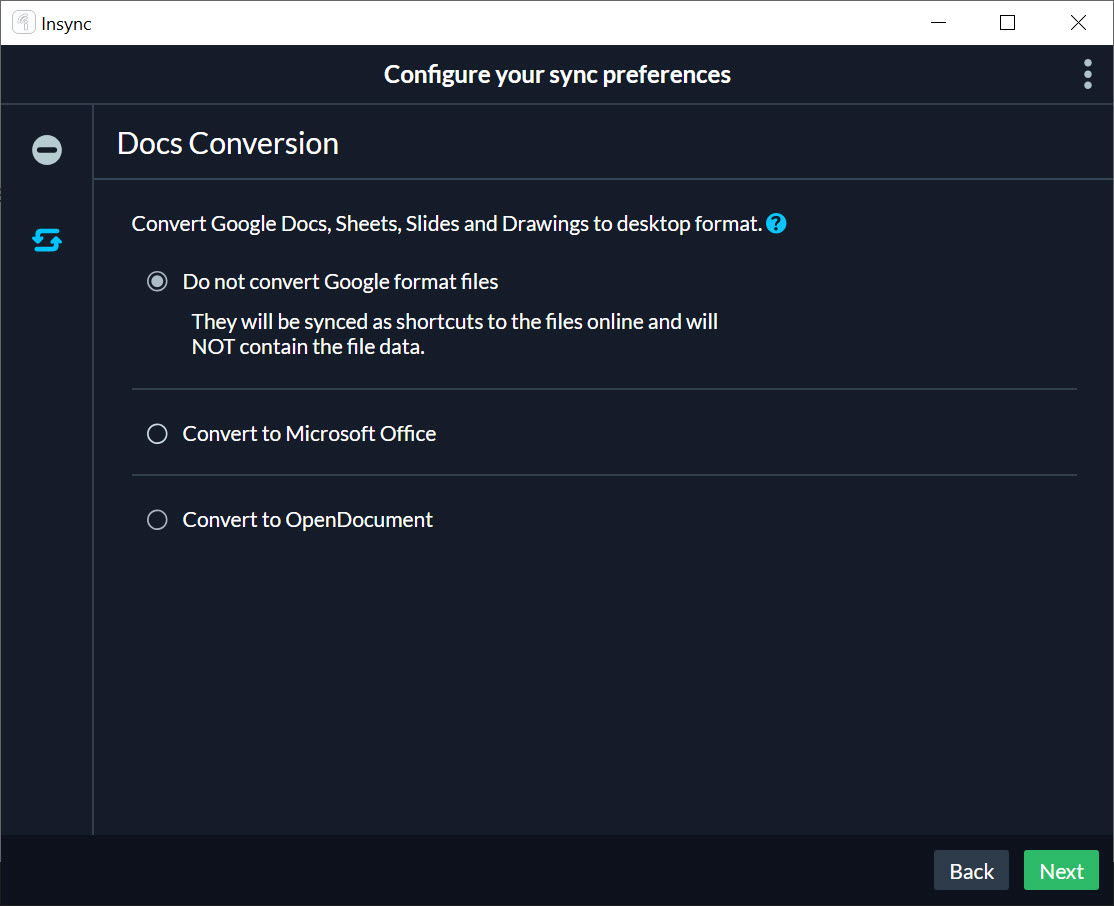
A free trial period lets you evaluate whether the software fits your workflow before committing to the purchase, which is reasonable given that cloud sync needs vary substantially across users.
Active development across major cloud services
The development cycle has been responsive to changes in the underlying cloud services, adapting to API updates and new features as the major providers introduce them. SharePoint support was added relatively recently, expanding the capability beyond the original Google Drive focus that defined earlier versions.
For users whose cloud usage might shift between services over time, having a sync client that supports the major providers means you don’t need to switch tools when your cloud preferences change. The same skills, configuration approach, and interface apply regardless of which specific service you’re working with.
Conclusion
Insync has earned its niche in the cloud sync space by addressing the gaps that the major cloud providers’ official clients leave open. Multi-service support, advanced selective sync, one-way sync configurations, folder merging, and external drive targeting combine into a feature set that genuinely makes cloud sync more flexible and powerful than the default options provide.
It’s not for everyone, and users with simple single-service needs can manage perfectly well with the free official clients. But for users running multiple cloud accounts across different services, dealing with sync targets that require flexibility, or wanting more control over how their cloud files actually live on their local systems, Insync offers the kind of capability that justifies its premium pricing through real, daily-use workflow improvements.
Pros & Cons
- Unified interface for Google Drive, OneDrive, Dropbox, and SharePoint
- Multiple accounts per service supported without switching profiles
- Selective sync with granular folder and file control
- One-way sync options for backup-style workflows
- Folder merging combines cloud folders into unified local views
- File manager integration shows sync status natively
- External drive and network location support for sync targets
- One-time purchase model rather than subscription pricing
- Active development tracking changes in supported cloud services
- Premium pricing may not appeal to users preferring free or subscription alternatives
- Per-machine licensing can add up for users on many devices
- Initial setup requires more configuration than simpler official clients
- Some advanced features require time to learn and configure properly
- External drive sync occasionally causes issues with drives that disconnect
Frequently asked questions
This software is a desktop application that syncs files between your computer and multiple cloud storage services including Google Drive, OneDrive, Dropbox, and SharePoint. Unlike the official clients for each service, it provides a unified interface that handles all your cloud accounts together, with advanced features like selective sync, one-way sync, folder merging, and external drive targets.
Each cloud service provides its own official desktop client, but they don't work together and have varying feature sets. This software handles multiple services through one interface with consistent capabilities across all of them, plus advanced features like folder merging, custom sync targets, and one-way sync that the official clients typically lack.
The application syncs each cloud account to its own configured local folders by default, but the merge folders feature lets you combine multiple cloud folders into unified local views. For users who want their files actively synced to multiple cloud services for redundancy, separate sync configurations for each service achieve this.
Yes, you can connect multiple Google Drive, OneDrive, or Dropbox accounts to the application and manage them all in parallel. This is particularly useful for users with separate personal and work accounts in the same service who want both available simultaneously rather than switching between them.
Selective sync lets you choose which folders and files actually download to your local computer, with everything else remaining only in the cloud. For users with cloud storage exceeding their local disk capacity, this prevents the sync from filling up the drive while keeping access to less-used content through the cloud.
Yes, the one-way sync options let you configure local-to-cloud sync that effectively functions as backup. Local changes propagate to the cloud, but cloud changes don't propagate back to local, which protects your local files from accidents in the cloud while still maintaining cloud copies for backup purposes.
Yes, the application supports configuring sync targets to external drives, network attached storage, or various other drive types beyond the system drive. This is particularly valuable for users with large cloud collections that wouldn't fit on their primary drive but who want full offline access.
The pricing uses a one-time purchase model with separate licenses for each device you want to install on. For users planning to use the software long-term, this pricing typically works out cheaper than subscription alternatives over a few years, though each additional device requires its own license.
Yes, SharePoint support has been added relatively recently, expanding the capability beyond the original cloud services. For users who use SharePoint as part of Microsoft 365 enterprise environments, having SharePoint sync alongside personal cloud services in the same application simplifies the workflow significantly.
Selective sync solves this scenario by letting you choose which folders actually download locally. Combined with external drive target support, you can configure substantial cloud collections to sync to a large external drive while keeping the system drive uncluttered. For users with multi-terabyte cloud accounts, these options make local sync practical where it would otherwise be impossible.
The official clients are free but limited to their specific service and lack many advanced features. This software costs money but provides multi-cloud support, advanced sync options, and consolidated management that the free clients don't offer. For users with simple single-service needs, free official clients are adequate. For users with complex multi-cloud or advanced sync requirements, the additional capability often justifies the cost.


