

HFSExplorer
About HFSExplorer
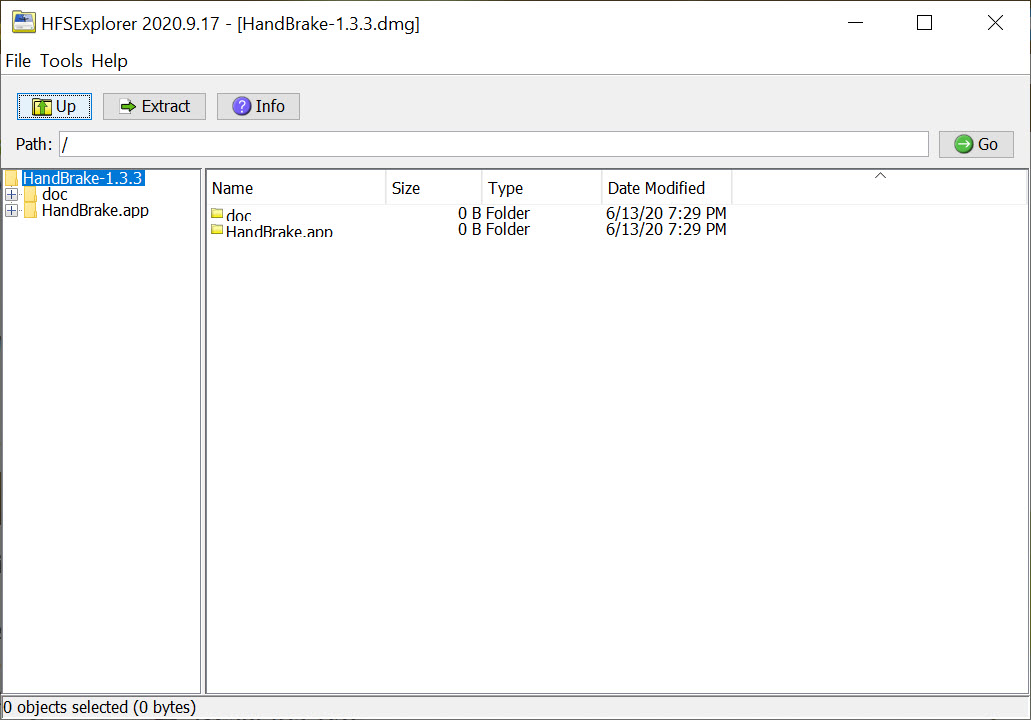
HFSExplorer opens drives and disk images formatted on Apple computers and lets you copy files off them. Plug in an external disk that came from an Apple machine, launch the program, and pick the drive from a list. Its folders appear in a browser that looks like any file manager, and selecting files and pressing extract copies them to a folder you choose. The system cannot read these drives on its own, and that gap is the whole reason the tool exists.
It reads the three older Apple file systems, HFS, HFS+ and the case-sensitive HFSX variant, and it opens most .dmg, .sparseimage and .sparsebundle disk images, including compressed ones and those encrypted with AES-128 or AES-256 when you supply the password.
HFSExplorer is read-only by design. It never writes to the drive, which makes it safe to point at a disk you cannot afford to damage, and it runs on the Java runtime, so that has to be installed first.
Reading drives and extracting files
Opening a physical drive needs administrator rights, so the program should be started that way, otherwise the drive list stays empty. Once a volume is loaded, the browser shows its folder tree with each file’s name and size, and its date. Select one file, a folder or a whole selection and extract it, and the copies land in the destination with their contents intact.
Resource forks and extended attributes, the extra data that Apple files can carry alongside their main contents, can be extracted too, which matters for older applications and documents that keep important information there.
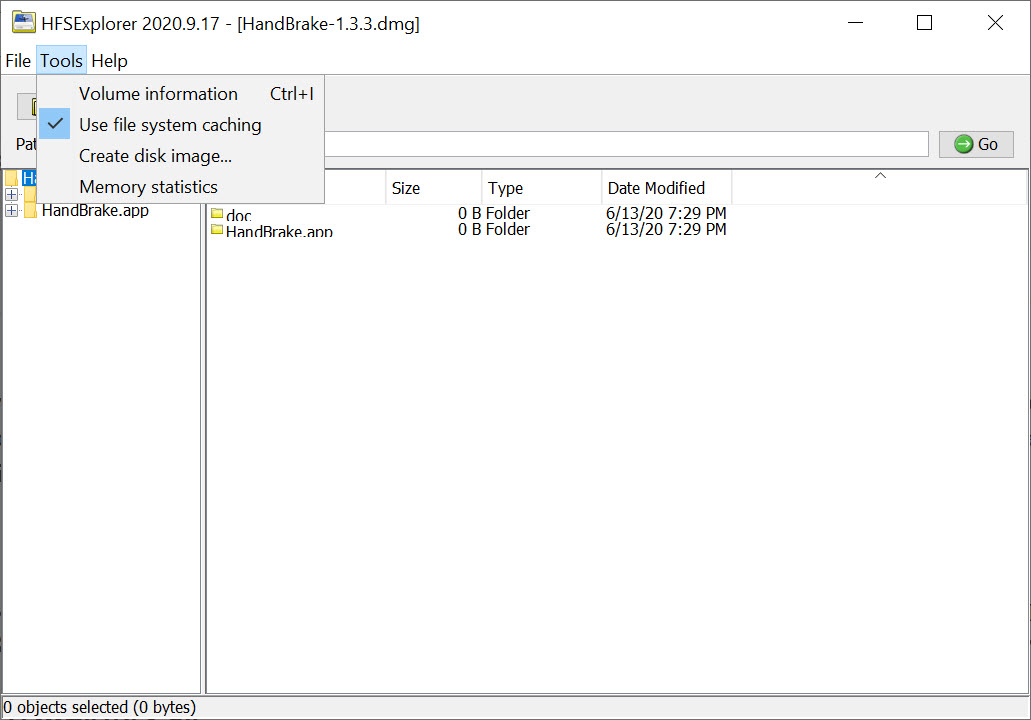
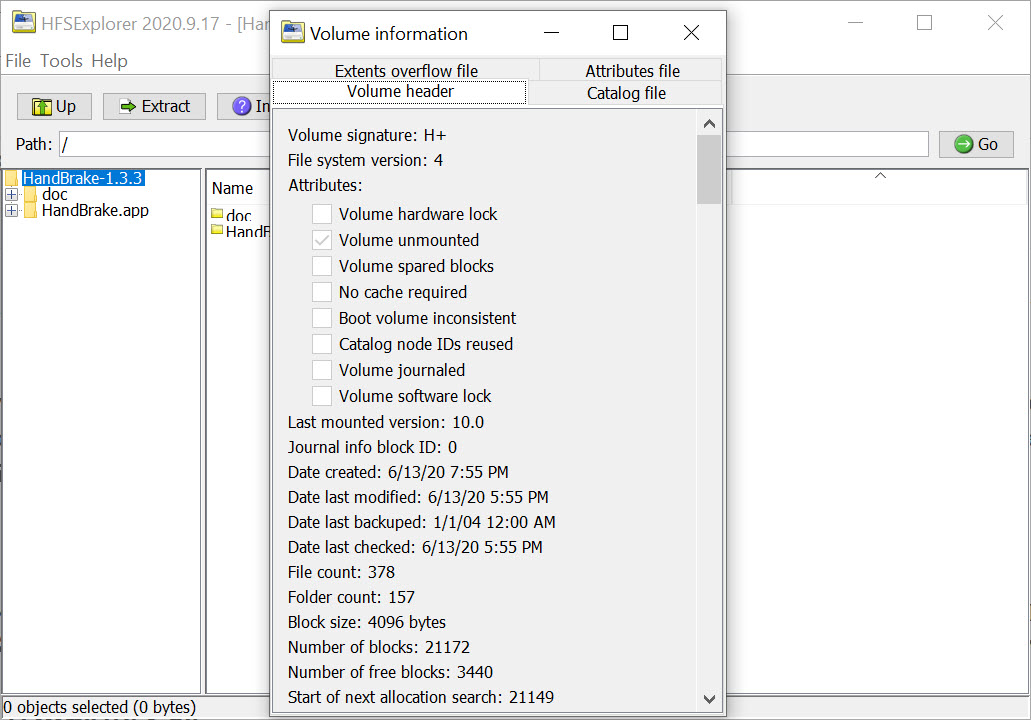
Files stored with the file system’s own compression open and extract properly. A volume can also be saved as a disk image file, which is a handy way to make a copy of a failing drive before working on it further.
Compressed and encrypted disk images
Disk images are the other common job. A .dmg downloaded from somewhere, or a backup someone sent you as a .sparsebundle, opens as though it were a mounted drive, and the same extract command pulls files out. Compressed images using zlib or bzip2 open without extra steps, and encrypted images prompt for their password. Images nested inside other images can be opened directly rather than extracted first.
For simpler archives inside a disk image, an archive manager can sometimes open a .dmg on its own, though it handles far fewer image types and does not understand HFS+ volumes the way this tool does.
The APFS limit, and other gaps
The single biggest limitation is the newest one. Apple’s current file system, APFS, replaced HFS+ as the default on recent Apple computers and their external drives, and HFSExplorer does not read it. A drive formatted on a recent machine may therefore show nothing usable. Checking how the drive was formatted before relying on the tool saves frustration, and for APFS volumes a different reader is needed. A partition manager that reads Apple file systems covers that case and adds recovery.
There is no writing, so you cannot copy files onto the drive or fix anything on it. There is no repair tool for a corrupted volume, and partitioning schemes on some USB drives are only partly supported. The interface is plain Java and dated, and large extractions can be slow.
None of that matters for the core job of rescuing files from an old Apple drive, which it does reliably.
Setup and the Java requirement
The program needs a current Java runtime, and without one it will not start. With Java in place, the installer adds a launcher, and on drives that hold data you care about, opening the program as administrator and loading the volume read-only is all that is required. Nothing is written to the source drive at any point.
Conclusion
HFSExplorer suits anyone handed an old Apple-formatted drive or a .dmg file and needing the files on it, from a household with an aging backup disk to a technician recovering data for a client. Its read-only design, the disk image support and the extraction of resource forks make it a safe, dependable way across a file system the computer otherwise cannot see.
Its blind spot is APFS, and that grows more important as older drives retire. Check the format first, install Java, run it as administrator, and for anything formatted on a recent Apple machine reach for a reader that understands the newer file system.
Pros & Cons
- Reads HFS, HFS+ and HFSX drives that the system cannot open
- Opens .dmg, .sparseimage and .sparsebundle images, compressed or encrypted
- Extracts resource forks and extended attributes
- Read-only, so the source drive is never modified
- Can save a whole volume as a disk image
- Does not read APFS, the file system on recent Apple drives
- No writing or repair of any kind
- Requires the Java runtime
- Must run as administrator to see physical drives
Frequently asked questions
Only if it uses HFS+ or HFSX. Recent drives often use APFS, which this tool does not read.
It needs administrator rights to access physical disks. Close it and start it again as administrator.
Yes. It opens AES-128 and AES-256 encrypted images when you enter the password, as well as compressed images.
No. It is read-only and never writes to the source drive or image.


