

FireAlpaca
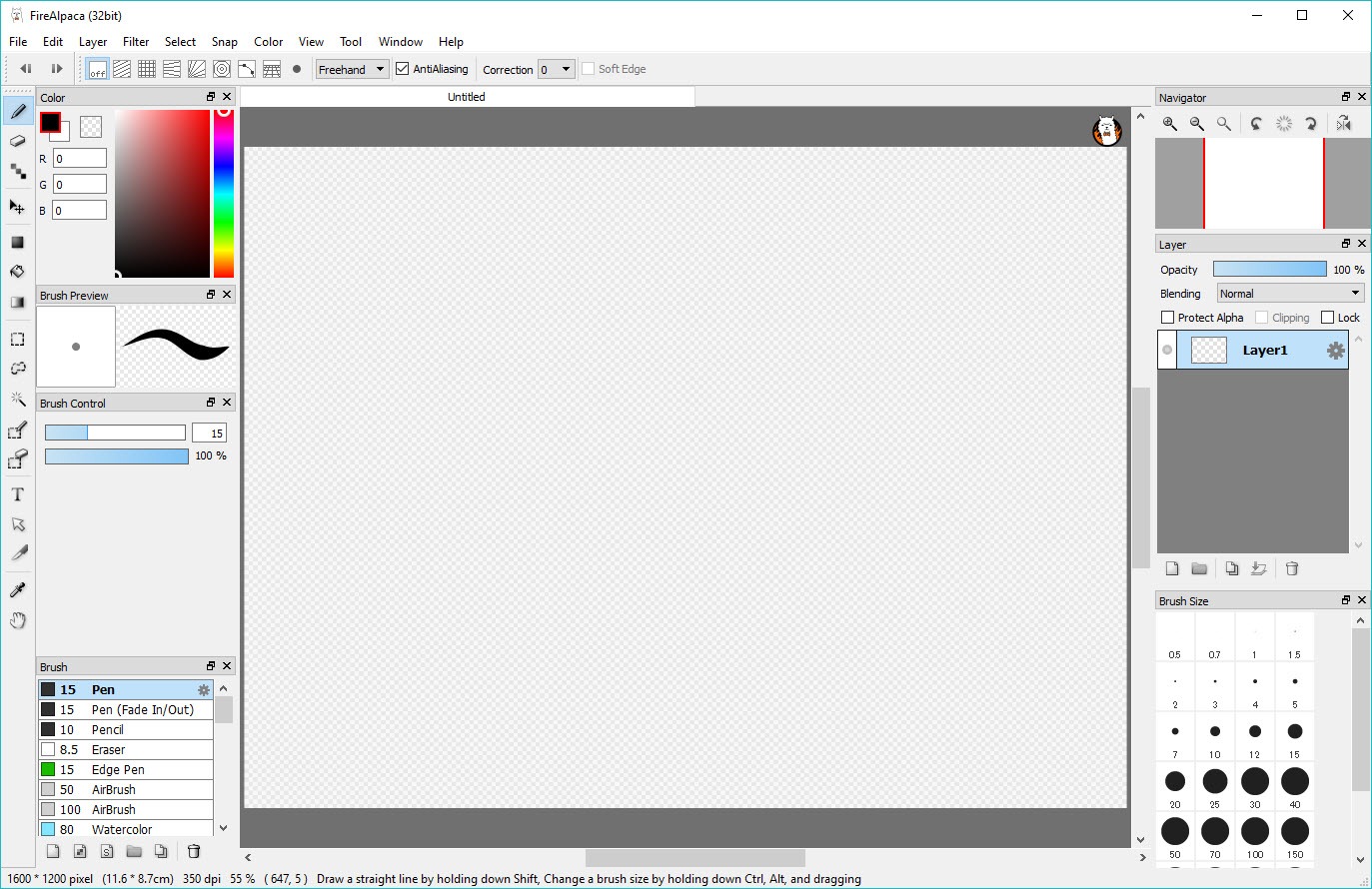
About FireAlpaca
Drawing software divides between programs built for painting and programs built for line art, and the difference shows in what they make easy. FireAlpaca belongs firmly to the second group, and the tools that distinguish it are aimed at comics and illustration rather than at brushwork.
FireAlpaca is small, opens quickly and runs on hardware that heavier alternatives struggle with, which is worth stating early because it is the reason a good many people use it rather than something more capable.
Layers, blending modes, layer folders, selections, plus a bucket fill with proper tolerance control all work as anybody would expect. The interesting part is what sits beside them.
Snapping, which is the reason to choose it
Line art involves a great many straight lines and curves that must converge properly, and FireAlpaca is built around that, and drawing those freehand on a tablet is unpleasant work.
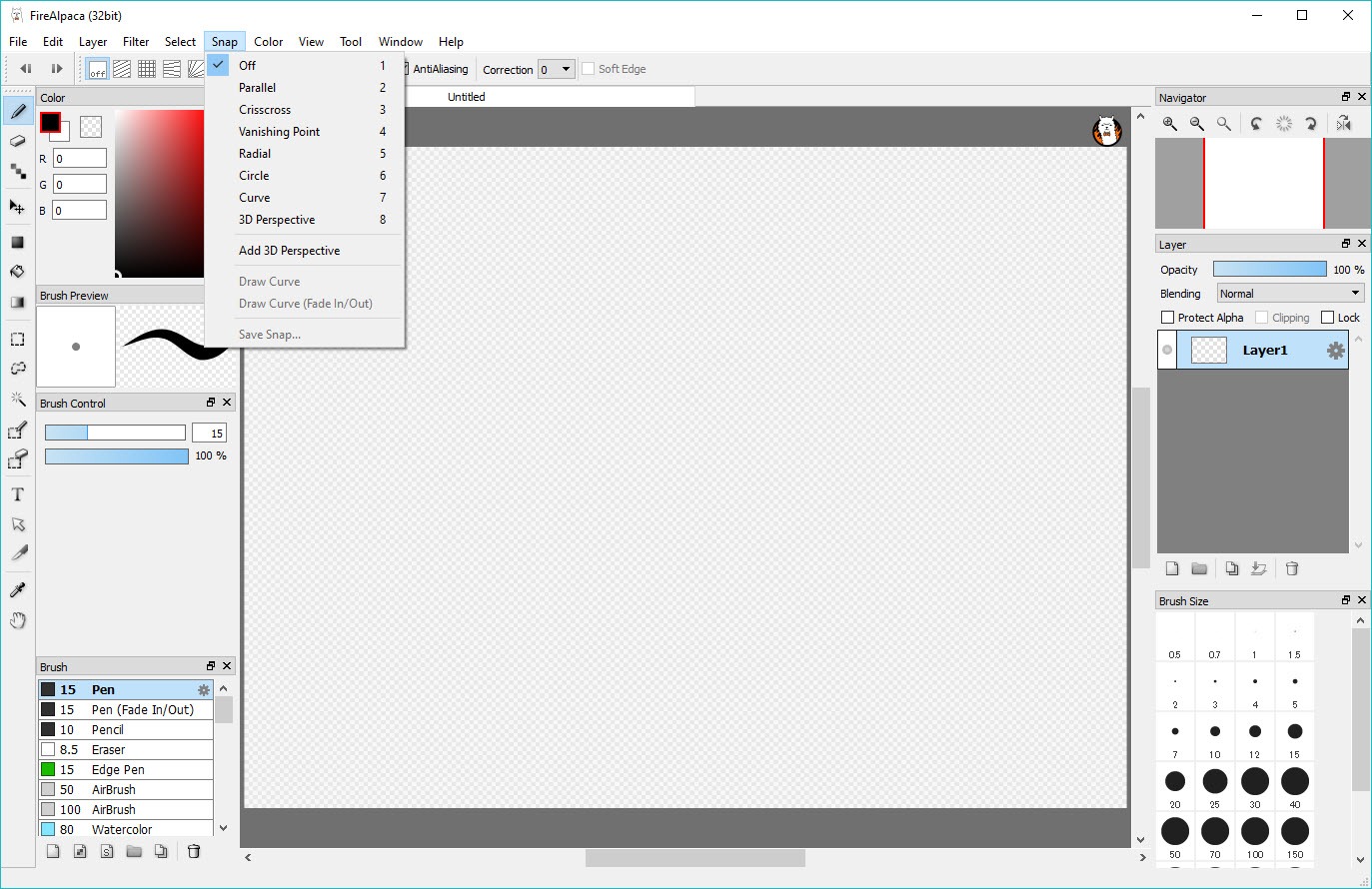
The snap tools solve it. Parallel line snapping constrains strokes to a single direction. Radial snapping makes every stroke converge on a chosen point, which is how motion lines and speed effects are drawn. Perspective snapping constrains strokes to vanishing points, so a building drawn by hand actually recedes correctly.
Those three cover a large proportion of what comic panels contain, and having them as snapping rather than as separate shape tools means the strokes remain yours, with your line weight and your pressure variation, simply constrained to the right geometry.
Nothing in a general painting program makes that as direct, which is the whole argument for FireAlpaca over a more capable alternative.
The panel divider
The other specific FireAlpaca tool divides a canvas into comic panels, with gutters, and lets those divisions be adjusted afterwards.
That sounds minor and saves a great deal of tedium. Drawing panel borders by hand means measuring, aligning, redrawing whenever the layout changes, and a divider that treats panels as objects removes all of it.
Anyone laying out sequential pages will find this the second reason to be here. Anyone not doing that will never open it.
Brushes, and where they fall short
The FireAlpaca brush engine is customisable and accepts imported brush definitions, with pressure sensitivity handled properly on a tablet.
Being honest about the comparison matters though. For painting, meaning blending, texture, colour mixing and the behaviour of a brush that imitates real media, Krita is a considerably deeper program with an engine built for exactly that, and the gap is not small.
This one is better at inking than at painting. Clean lines, flat colour, controlled edges, all of it comfortable. Soft blended rendering is possible and it is not where the tool wants to go.
Selection, fills and the practical tools
Two everyday tools deserve a mention because they are better implemented here than the small download suggests.
The bucket fill offers tolerance and anti-aliasing control along with the option to reference a different layer while filling. That last setting is what makes colouring line art practical, since the fill reads the line layer while depositing colour on a separate one underneath.
Selection tools cover the usual shapes along with a magic wand honouring the same layer reference, and selections convert into their own layers, which is how a flat colour region becomes something shadable separately.
Animation, in the simplest sense
Onion skin frames are supported, letting you see the previous and next drawings faintly while working on the current one, which is the fundamental requirement for hand-drawn animation.
Set expectations accordingly. This is frame-by-frame drawing with visibility of neighbouring frames, not a timeline with easing, interpolation or audio. Short loops and simple cycles are what it handles.
For finishing or compositing the exported frames, GIMP handles the image work and a video editor handles the assembly.
What it does not do
Two structural limitations deserve checking before committing a project to it.
There are no vector layers, so everything is pixels at the resolution you chose, and enlarging afterwards degrades the work. Deciding the canvas size correctly at the start therefore matters more than it would elsewhere. For truly resolution-independent line work, Inkscape draws vectors that scale to any size.
Colour management is basic, with no print-oriented colour handling, so anything destined for professional printing needs converting elsewhere and checking before it goes.
The interface also carries a small advertising panel, which is how the program is funded and which people either ignore entirely or find irritating out of proportion to its size.
Conclusion
FireAlpaca is the right choice for a specific kind of work rather than a general one. Snapping that handles parallel, radial and perspective constraints, plus a panel divider that treats layout as objects, make comic and illustration work markedly quicker than in a program that treats every line as freehand.
Choose it knowing the boundaries. Painting depth belongs elsewhere, there are no vectors so the canvas size is a decision you cannot revisit, and print colour needs handling in another program. Within those limits it is fast, light, properly built for the job it targets, which is more than most free drawing software can claim.
Pros & Cons
- Parallel, radial, perspective snapping constrains strokes to the right geometry
- Panel divider treats comic panels as adjustable objects rather than drawn borders
- Small, quick to open and comfortable on modest hardware
- Layers, blending modes and folders behave as expected with no surprises
- Pressure sensitivity handled properly, with importable brush definitions
- Onion skin frames for simple hand-drawn animation
- Painting and blending are shallow beside programs built for that
- No vector layers, so resolution is fixed at the start
- Colour management is basic, with nothing aimed at print production
- Animation is onion skin frames rather than a real timeline
- The interface carries an advertising panel
Frequently asked questions
The snapping tools and the panel divider. Constraining strokes to parallel, radial or perspective geometry covers most of what panel art requires, and treating panels as adjustable objects removes the tedium of drawing and redrawing borders.
Less so. It handles clean lines, flat colour and controlled edges comfortably, and programs built around brush behaviour, blending, texture go considerably deeper. Inking is where this one is strongest.
In the simplest sense, with onion skin frames showing the drawings either side of the one you are working on. There is no timeline, no interpolation and no audio, so short loops rather than anything sustained.
Yes, with pressure sensitivity handled properly, which matters because the snapping tools are only useful if your own line weight comes through while the geometry is constrained.
It is how the program is funded. The panel is small and permanent, and reactions to it vary from complete indifference to disproportionate irritation.


