

Epic Privacy Browser
About Epic Privacy Browser
Most browsers offer a private window you have to remember to open. Epic Privacy Browser removes the choice by running that way permanently, so nothing is written down whether you thought about it or not.
The Epic Privacy Browser engine is the mainstream one every major browser now uses, which settles the compatibility question immediately. Sites render as they do everywhere else, because they are being rendered by the same code.
What changes is everything built around that engine. The parts of a browser that remember, report and suggest have been removed rather than made optional.
Nothing is written down, and that has a daily cost
Being clear about the Epic Privacy Browser trade first prevents disappointment, because the headline feature is also the thing people find hardest to live with.
There is no history. No list of pages you visited yesterday, no address bar completing a site you go to weekly from memory, no session restore after a crash, and no autofill remembering what you typed into a form last month.
Those absences are the point rather than a limitation, and they are also how most people find their way around. Anybody who reaches a frequently used site by typing three letters and pressing enter will find that habit gone entirely, replaced by bookmarks or by typing the whole address.
Deciding whether that trade suits you is the whole decision. For a mainstream browser with strong privacy settings you configure yourself rather than have imposed, Firefox remains the usual answer and keeps the conveniences.
The blocking layer
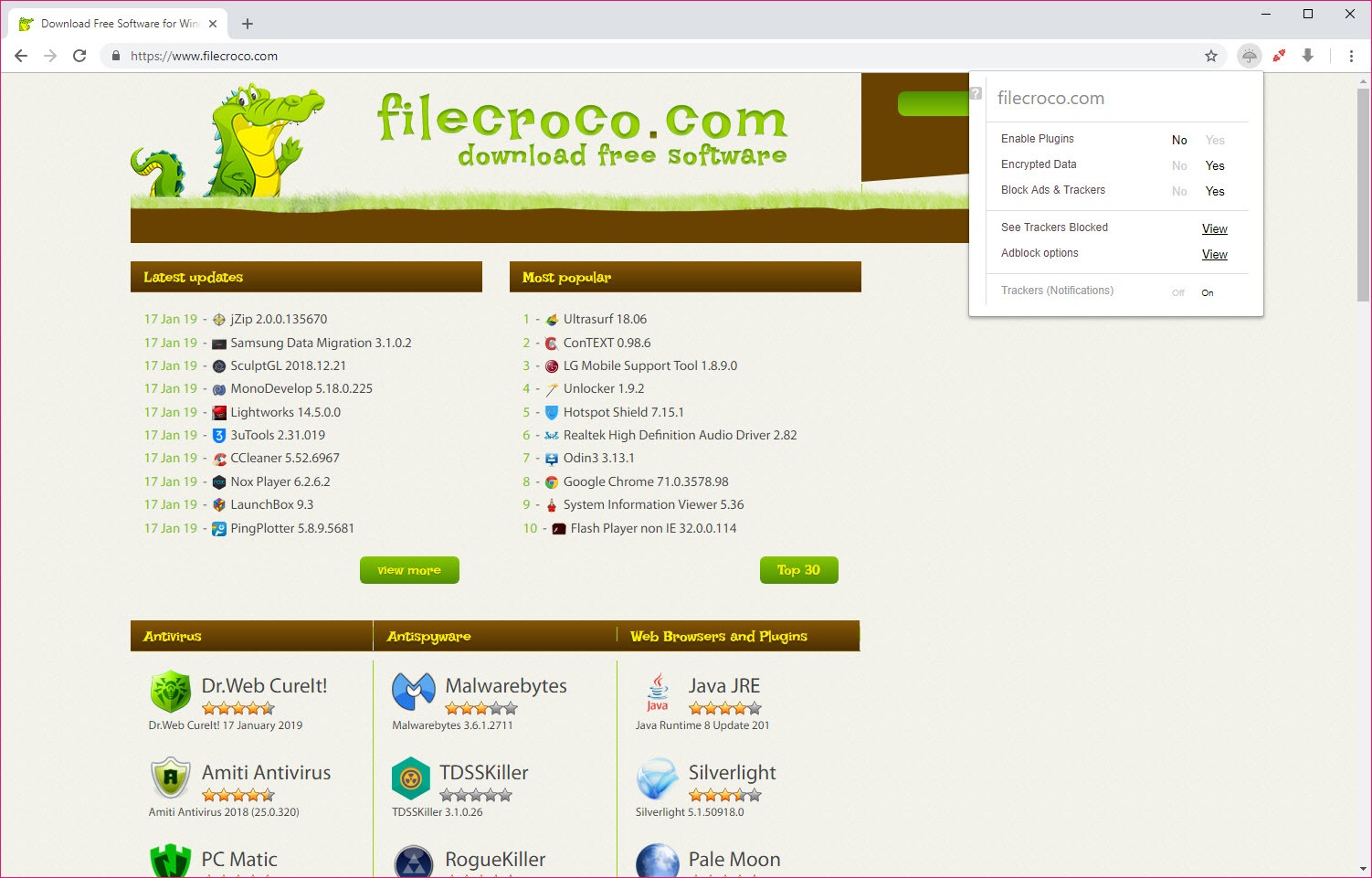
Epic Privacy Browser blocks advertising, trackers, cryptocurrency mining scripts and fingerprinting attempts by default rather than by extension.
Fingerprinting deserves separate mention because it is the one people underestimate. Rather than storing something on your machine, a site measures characteristics of your browser and system, then combines them into an identifier that follows you without any cookie involved. Interfering with that is harder than blocking a script and matters more.
The browser’s own reporting is absent too. Mainstream browsers send usage information, suggestion queries and various signals back to whoever makes them, and those paths have been removed rather than switched off in a settings panel.
Filtering outside the browser, for every application rather than one, is a related approach, and Privoxy handles that as a local proxy.
The built-in proxy, and what it is not
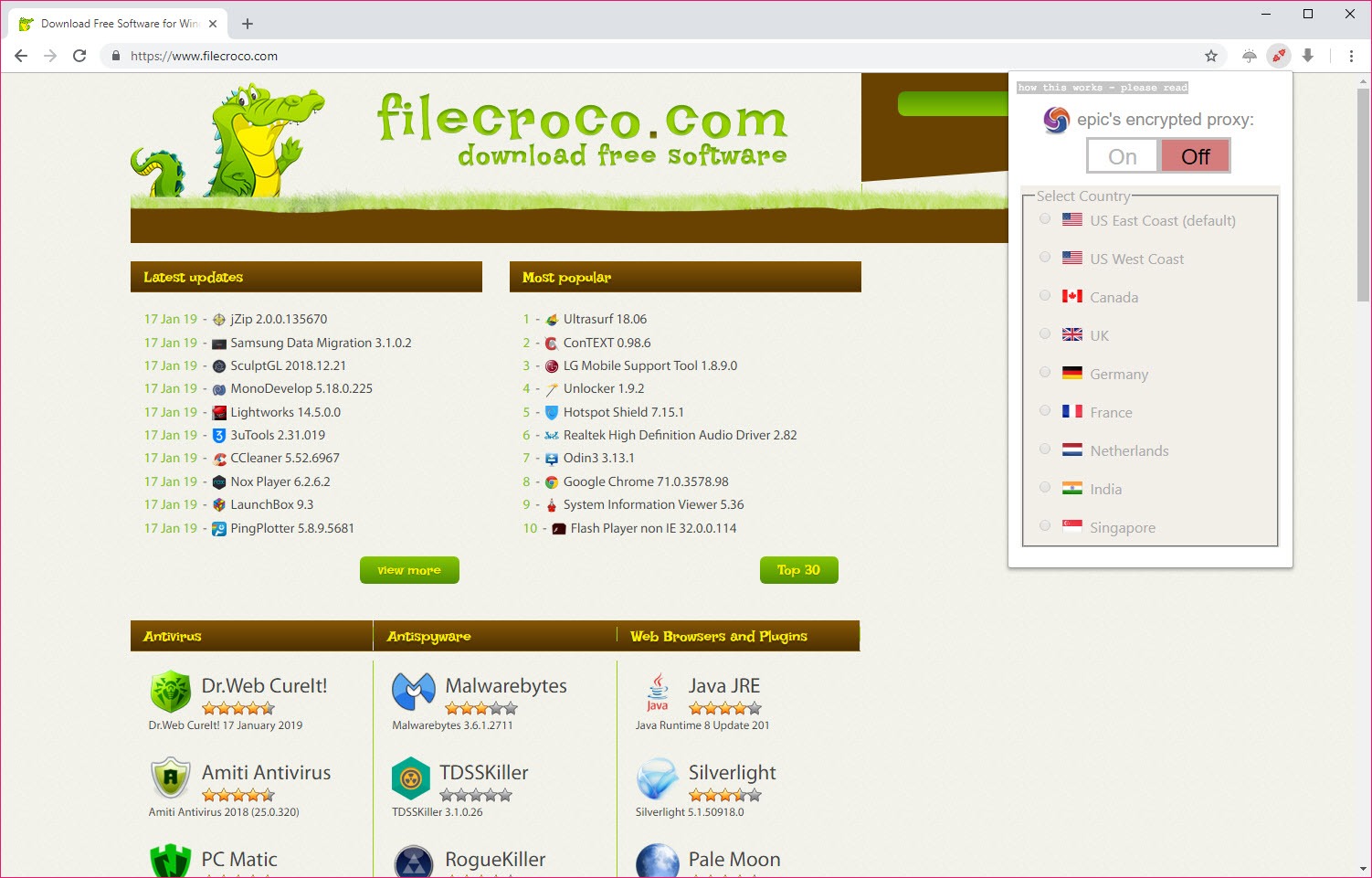
Epic Privacy Browser includes an encrypted proxy, enabled per tab or across the browser, with a small selection of countries.
That is a useful inclusion and it needs describing accurately. It is a proxy covering browser traffic, not a tunnel covering the machine, so anything outside the browser continues to use the ordinary connection unchanged.
It also relocates trust in exactly the way any such service does. Your connection provider stops seeing which sites you visit and the proxy operator starts, and whether that is an improvement depends on which of the two you would rather have watching.
For a tunnel covering everything the machine sends, with an audited logging position behind it, Mullvad is a different class of arrangement built for that job specifically.
Extensions, and the trade there
Epic Privacy Browser supports extensions narrowly and deliberately, which is consistent rather than arbitrary.
The reasoning is sound. Extensions are code running inside your browser with access to what you do, and a browser built around not being observed has an obvious problem with installing arbitrary third-party code. The response is a curated selection rather than an open catalogue.
The cost is equally clear. Anybody depending on a particular extension for work, accessibility or a specific workflow may simply not find it, and no setting changes that.
Where customisation matters more than the imposed defaults, Vivaldi sits at the opposite extreme with an enormous amount of configuration and the same underlying engine.
The other tools included
Epic Privacy Browser includes a media downloader, which appears when video is detected on a page. What you are entitled to download from a given site is determined by that site’s terms and by the material’s licensing rather than by the browser, and the feature makes no judgements on your behalf.
Beyond that sit the smaller conveniences, including an encrypted proxy toggle in easy reach and blocking counts visible per site so you can see what a page attempted.
Conclusion
Epic Privacy Browser takes a position rather than offering settings. Private browsing permanently, tracking blocked by default, the browser’s own reporting removed and a proxy within reach add up to a coherent argument about what a browser should not do.
The cost is convenience, and it is larger than the feature list suggests. No history, no completion from past visits, no session restore and a narrow extension selection change how browsing feels every day, not just occasionally. Try it for a week before deciding, because the blocking is easy to appreciate immediately and the absences take a few days to reveal themselves.
Pros & Cons
- Runs in private mode permanently, so nothing depends on remembering to enable it
- Uses the mainstream engine, so site compatibility matches other major browsers
- Advertising, trackers, mining scripts and fingerprinting all blocked by default
- The browser's own reporting paths are removed rather than made optional
- Encrypted proxy included, selectable per tab, with a choice of countries
- Blocking counts visible per site, showing what a page tried to do
- No history, no session restore and no address bar completion from past visits
- Autofill and stored form data are absent, which affects daily use considerably
- The included proxy covers browser traffic only, not the whole machine
- Extension support is deliberately narrow, so a needed extension may be missing
- Trust moves from your connection provider to the proxy operator rather than disappearing
Frequently asked questions
No, and this is its defining characteristic rather than a setting. Nothing is written down, so there is no history, no session restore and no address completion based on where you have been before.
Yes. It uses the same engine as the mainstream browsers, so rendering and compatibility match what you would get elsewhere. The differences are in what surrounds the engine rather than in how pages are drawn.
No. It covers traffic from the browser and leaves everything else on the machine using the ordinary connection. A service covering the whole machine is a different arrangement with different guarantees.
Because extensions run code inside the browser with access to what you do, which sits awkwardly with a browser built around not being observed. The selection is curated rather than open, and that is a deliberate trade.
No. It removes local traces and blocks a great deal of tracking, and the proxy changes who observes your traffic rather than removing observation. Anonymity is a harder problem needing tools designed for it.


