

Driver Genius
About Driver Genius
Driver Genius is a driver manager whose most useful trick is not updating drivers at all. It backs them up. Scan the machine, and every installed driver can be saved to a folder, a compressed archive or a single self-extracting executable that reinstalls the whole set on a fresh system with one click. Anyone who has reinstalled an operating system and then spent an evening hunting for a network driver on a machine with no network will understand why that is the feature to install it for.
Around that core sits the rest of a modern driver suite. A scan compares installed drivers against a database of about five million device entries and offers newer ones, with a rollback design that keeps the previous driver reachable if the new one misbehaves. A cleanup removes drivers and device entries for hardware no longer present.
And a set of toolkit modules covers hardware information, temperature monitoring, an SSD tuning page, a system booster with around ninety switches and a junk cleaner. The suite is broad, and the driver half is the strong half.
Backup and restore, the reason to install it
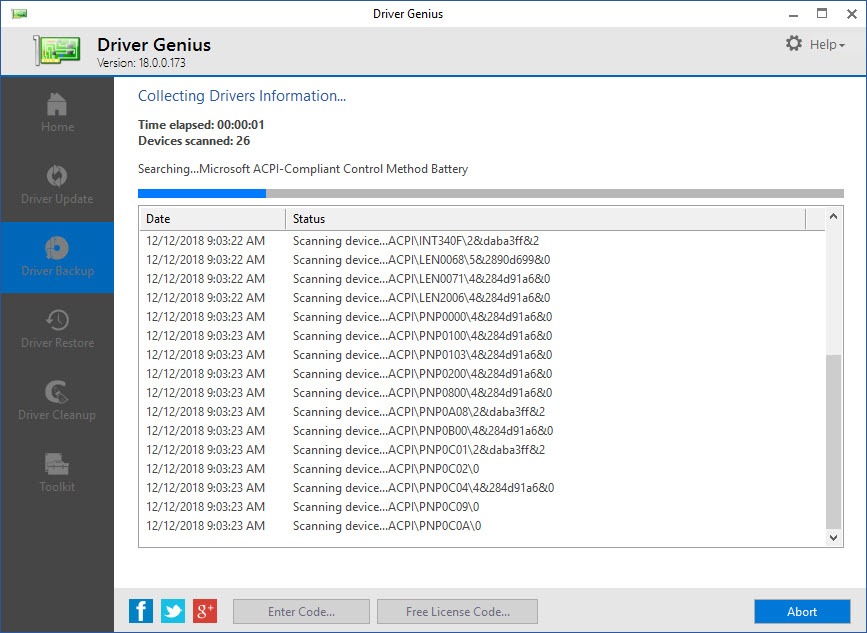
The backup dialog lists every driver with its device name, installed release and date, grouped so that the ones the system installed itself can be skipped and only the third-party ones kept. Backup goes to a folder of files, a zip archive or the auto-installer executable. That last format is the one to choose. Copy it to a USB stick before wiping a machine, run it afterwards, and the network adapter and graphics card, the chipset, audio and printer all come back in one pass with no downloads.
Restore from a folder or archive works selectively, so a single misbehaving driver can be pulled from last month’s backup without touching the rest. A command-line backup mode lets technicians script the process across many machines.
This part of the application is complete and dependable, and it is the piece that distinguishes Driver Genius from updaters that treat backup as an afterthought.
Scanning and updating, with a way back
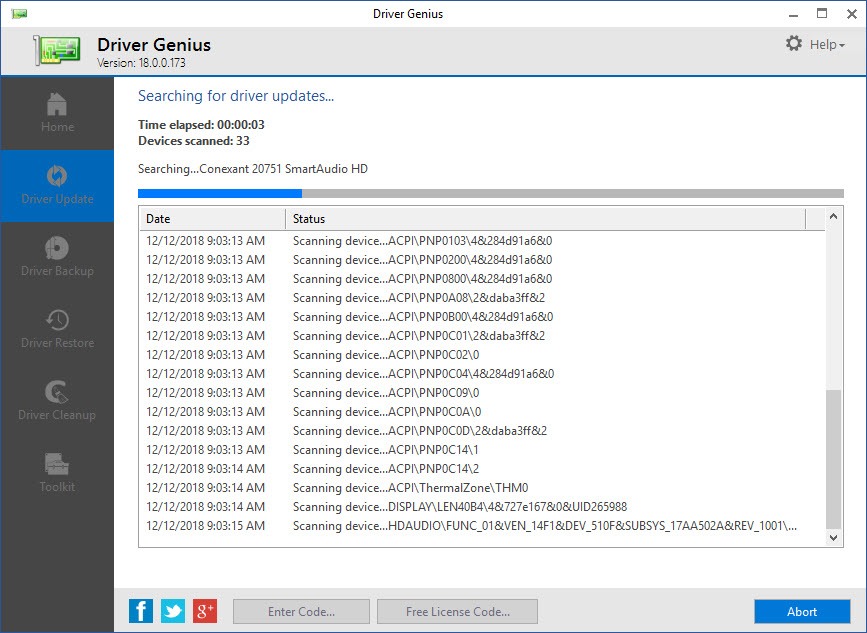
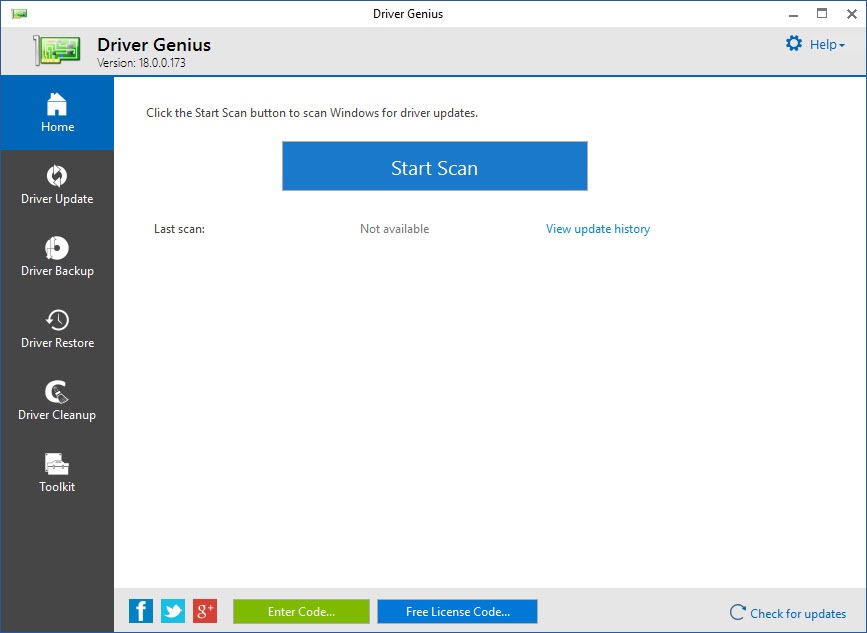
The Driver Genius scan finishes in under a minute and lists outdated drivers with the installed and available releases side by side. Updates download and install in an order the application manages, chipset before devices that depend on it. Before each install a restore point and a driver backup are taken, and the rollback screen lists previous drivers so a bad update is reversed in two clicks rather than through the device manager.
Detection now sits close to the leading updaters in independent tests. It still misses some hardware, particularly laptop components where the maker’s tuned driver differs from the generic one, and it will occasionally offer a generic driver over a maker-specific one that works better. Treat the update list as suggestions. Update the network and graphics drivers, or the chipset, when a problem exists, and leave a working machine alone.
Driver Booster approaches the same job with a larger emphasis on game components, and the two are closer than their marketing suggests.
Driver cleanup and invalid devices
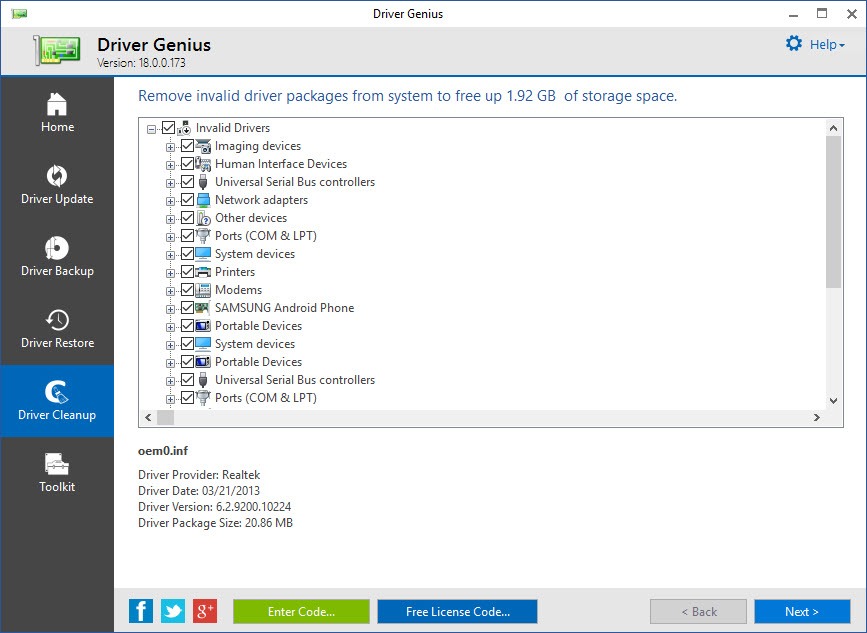
Every device ever connected leaves a driver and a registry entry behind, and an older machine carries dozens of them. The Driver Genius Driver Cleanup lists drivers for hardware that is no longer present and removes them, with an exclusion list for anything you want kept. Clean Invalid Device does the same for orphaned device entries in the hardware tree.
The gain is mostly tidiness. Reclaimed space is small and speed gains are hard to measure, but a clean device list makes troubleshooting easier and removes the odd conflict from a driver that should have left with its hardware. Review the list before confirming, since a docking station or an external drive used occasionally looks absent when it is only unplugged.
Hardware information and monitoring
The Driver Genius hardware page produces a detailed inventory from processor and memory through storage and graphics to network adapters and peripherals, with model numbers and identifiers that help when hunting a driver by hand. A monitoring panel shows temperatures for the processor, graphics card and drives with configurable alerts, and it sits in the tray if you want it there.
It is a reasonable substitute for a dedicated hardware monitor on a machine where you would rather not install another tool.
The toolkit modules, and what to skip
Driver Genius System Transfer Assistant prepares drivers for a move to a different system release, which pairs with the backup for anyone changing installations. SSD Speeder adjusts settings for a solid state drive, including enabling the native NVMe driver, and the settings are sensible if unremarkable. System Booster exposes around ninety optimisation switches and System Cleanup removes temporary and cache files.
Those last two are where scepticism belongs. Optimisation switches of this sort rarely make a measurable difference on a current machine, and a few change behaviour you may not want changed. The cleaner is adequate and no better than the built-in tool.
Neither is a reason to choose this suite, and the application would lose nothing without them. For a machine that needs a proper clean, a purpose-built cleaner does more with clearer explanations.
Conclusion
Driver Genius suits technicians who reinstall systems regularly and anyone about to wipe a machine, because the self-extracting driver backup turns the worst part of that job into a single run. The rollback design and the cleanup tools are solid companions, and the hardware inventory saves a trip to a separate utility.
As an updater it is competent and no more, and the booster and cleaner modules are filler. Install it for the backup, use the scan with judgement, and ignore the switches that promise a faster computer.
Pros & Cons
- Backs up every driver to a single self-extracting installer for fresh systems
- Selective restore and a command-line backup mode
- Rollback screen reverses a bad driver update in two clicks
- Cleanup removes drivers and device entries for absent hardware
- Hardware inventory with identifiers and temperature monitoring
- Update detection misses some laptop-specific drivers and prefers generic ones
- System Booster and System Cleanup add little over built-in tools
- Driver updating is limited until the application is registered
- Some optimisation switches change behaviour without clear explanation
Frequently asked questions
Yes. Choose the auto-installer format and it packages every driver into one executable that restores them all on the new installation.
Open the rollback screen and select the previous driver. A restore point and a backup are taken before each update.
Yes. Driver Cleanup and Clean Invalid Device list drivers and entries for hardware no longer present, with an exclusion list for anything to keep.
No. Update the ones tied to a problem, and leave working drivers alone, particularly on laptops where the maker's build may be tuned for the hardware.


