

AxCrypt
About AxCrypt
AxCrypt encrypts individual files and then gets out of the way, which is a rarer virtue in encryption software than it should be. Right-click a document and it becomes an unreadable .axx file protected with AES. Double-click that file, type your password once per session, and it opens in its normal program, then re-encrypts itself automatically the moment you save and close. That loop, edit-and-forget, is the entire philosophy, encryption that behaves like a file property instead of a ritual.
The design contrasts sharply with the vault school of thought. A container tool like VeraCrypt builds an encrypted volume you mount and unmount, strong and self-contained but ceremonial. AxCrypt works file by file, right where the files already live, which suits people whose secrets are a dozen documents rather than a drive.
One architectural decision colors everything else. The program ties encryption to an account, signed in with an email address and a master password, and that choice buys convenient features while costing some independence. More on both sides of that trade below.
The edit-and-forget loop
Daily use is nearly invisible. Encrypted files open through their normal applications after the session password, edits happen as usual, and closing the document seals it again without any prompt. Nothing about the workflow reminds you the file is protected, and that absence of friction is why the protection actually stays on, since security tools people bypass out of annoyance protect nothing.
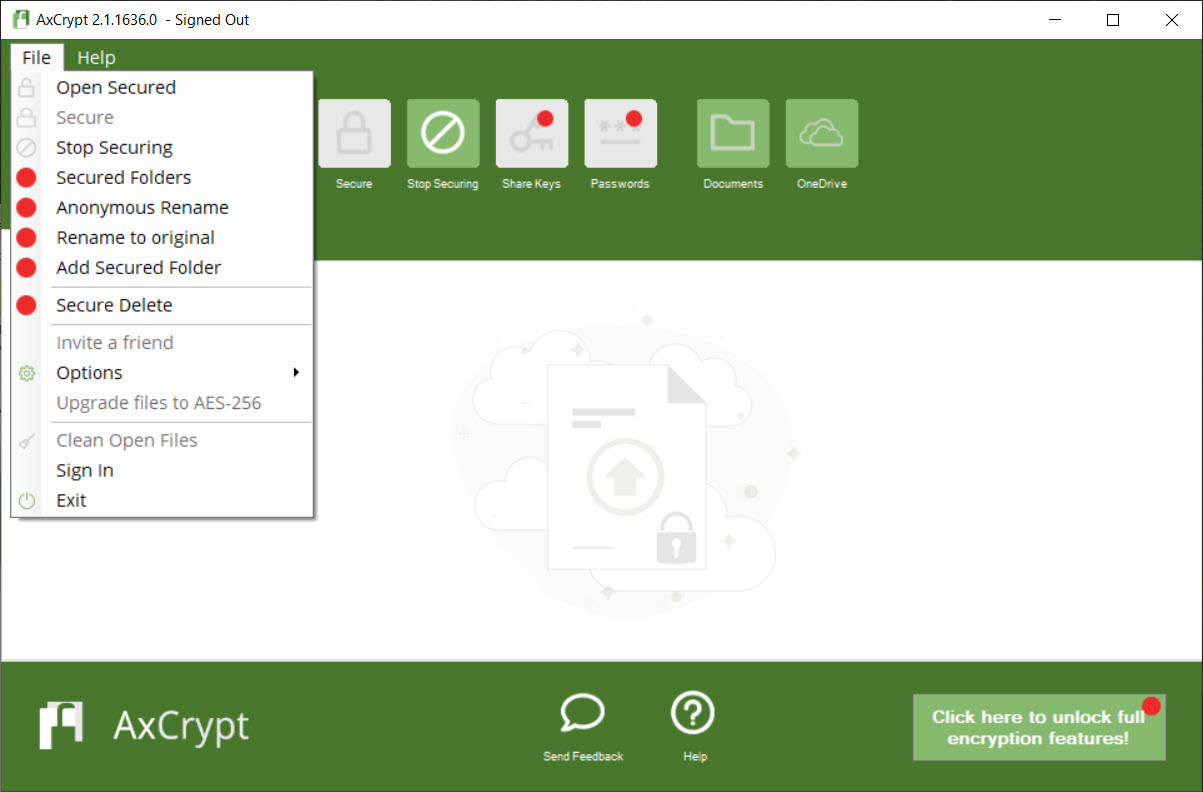
Secured folders extend the loop. Mark a folder, and files placed inside encrypt automatically, with a cleanup sweep catching strays. Pointed at a cloud sync folder, this produces the useful arrangement where documents encrypt locally before syncing, so the storage provider holds only ciphertext.
A file shredder rounds out the basics, overwriting deleted originals so the plaintext doesn’t linger in recoverable form, and for archives of many files at once, classic password-protected compression in 7-Zip still covers the send-a-bundle case this per-file design handles less naturally.
Sharing without sharing passwords
The account model pays its way in the key sharing feature. To give a colleague access to an encrypted file, you add their email address to it, and they open the file with their own AxCrypt password. No password travels over chat, no shared secret circulates through a team, and revoking access means removing the address rather than re-encrypting everything under a new password everyone must learn.
For the file-exchange-between-regulars scenario, small firms trading contracts, accountants receiving client records, this beats every password-in-a-separate-email routine it replaces. The recipients do need accounts of their own, which is friction on first contact and painless afterward.
The password manager and the password problem
A simple password manager comes along in the package, storing logins under the same master password. It’s serviceable for light use, though a dedicated manager like KeePass runs deeper in every direction, and people already keeping a proper vault will ignore this one.
The password that matters is the master one, and here the honest warning belongs in bold type. Resetting a forgotten master password restores access to the account, not to files encrypted under the old password, which remain sealed forever.
Encryption that could be bypassed through a friendly reset would be theater, so this is the design working correctly, but it means the master password deserves a backup arrangement in a safe place, made on the day you start.
The account question, and session habits
Requiring a sign-in for local file encryption strikes some people as backwards, and they have a point worth hearing. The account enables the sharing machinery and syncs settings, yet it also means the software phones home and that offline-forever use sits outside the intended pattern. Privacy purists who want encryption with zero account surface will prefer the container tools and archive encryption, and they won’t be wrong for it.
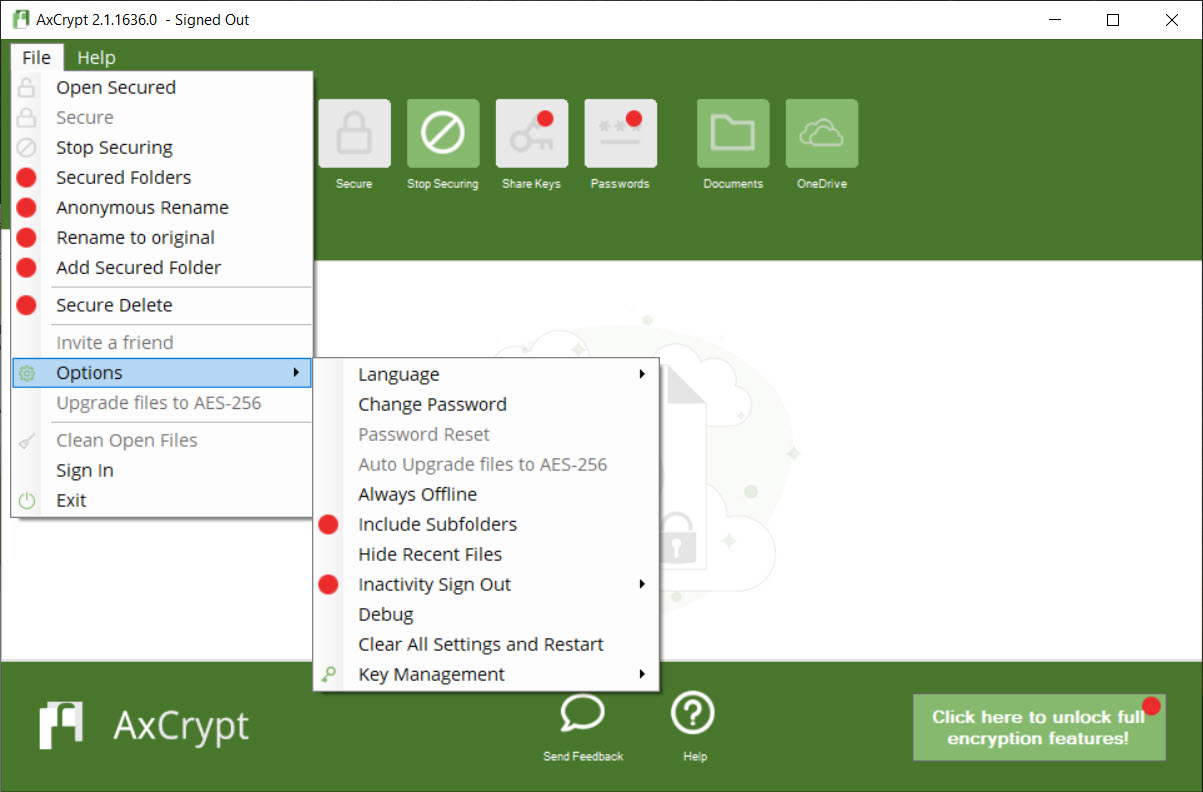
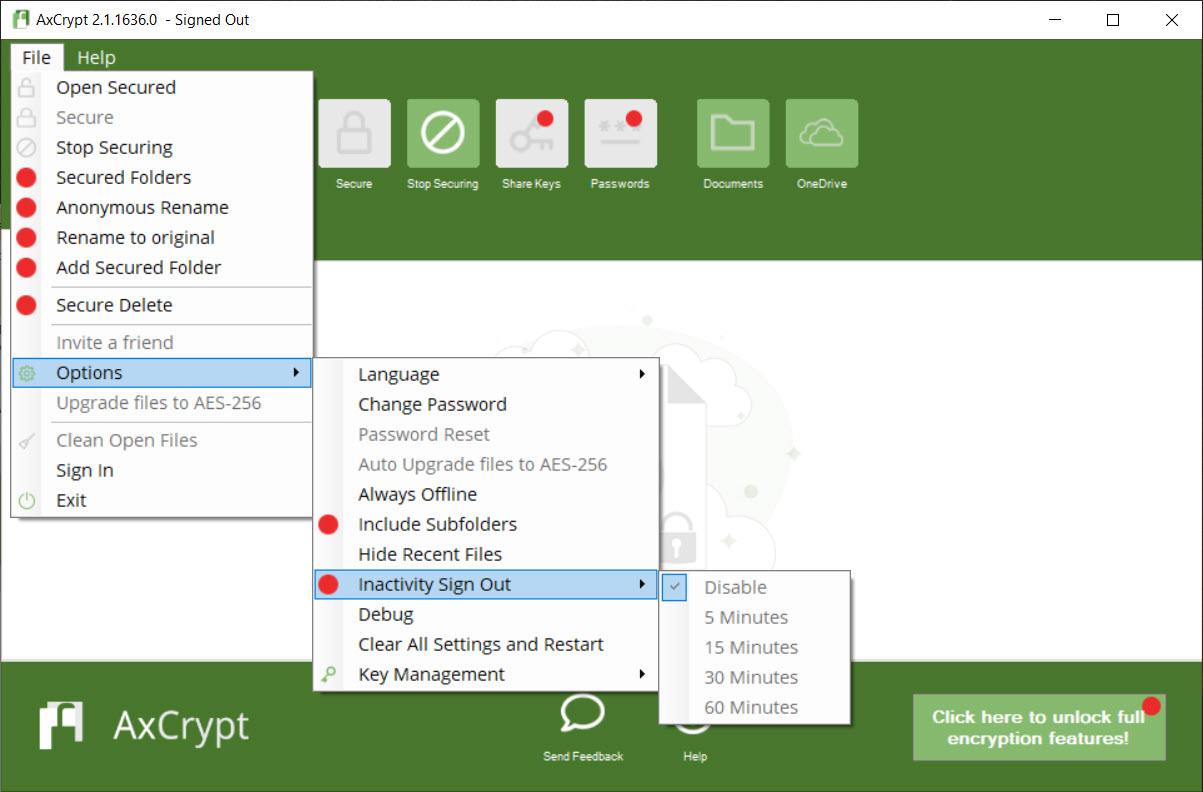
The session model needs one habit adjusted. After the first password entry, files open freely until you sign out, which is exactly right on a private machine and exactly wrong on a shared one. On any computer other people touch, sign out when stepping away, or the convenience becomes an open door. The timeout settings help, and the habit helps more.
Conclusion
AxCrypt fits people whose sensitive material is a set of living documents, contracts being revised, spreadsheets of client data, records that open weekly, and who will actually keep encryption running only if it never interrupts. The edit-and-forget loop and the email-based sharing are the standout reasons to choose it over heavier machinery.
Whole-drive protectors, account skeptics, and archivists of static files have better-shaped tools available. For working documents that must stay sealed without slowing anyone down, this remains the most livable answer in its class.
Features & benefits
Pros & Cons
- Files re-encrypt automatically after editing, with zero workflow friction
- Key sharing grants and revokes access by email, without passing passwords
- Secured folders encrypt everything placed in them, including cloud sync folders
- Integrated shredder overwrites plaintext originals after encryption
- Strong AES encryption behind an unusually simple interface
- Requires an account and sign-in even for purely local encryption
- A forgotten master password leaves previously encrypted files sealed permanently
- Signed-in sessions open all files freely until you sign out
- Encrypts file by file, with no container or full-drive option
Frequently asked questions
The account can be reset, but files encrypted under the old password stay unreadable forever. Write the master password down and store it somewhere physically safe from day one.
You add the recipient's email address to the file's allowed list, and they open it using their own account password. Access is revoked by removing the address again.
Yes, mark the local sync folder as a secured folder and files encrypt before they upload. The storage service then holds only the encrypted versions.
You're inside a signed-in session, where files open freely for convenience. Sign out on shared computers, since the session is effectively a master key while active.
No, the software must be installed to decrypt, and you sign in with the account that has access. For sending protected files to people who won't install anything, an encrypted archive is the practical route.


Great encryption! I am very happy with this software. It is precisely what I want it to be: safe encryption that is easy to handle.