

Ares

About Ares
Ares is a peer-to-peer file sharing client with its own network. Type a search term, choose a category, and results arrive from other people running the same program, each result showing how many users hold the file and how complete their copies are. Pick one and it downloads from several of them at once, joining pieces from each.
That is the everyday routine, and around it sit a built-in audio and video player with playlists, a library that sorts everything you share by type, chat rooms you can join or host, a BitTorrent engine for .torrent files and a tuner for SHOUTcast internet radio stations.
The network is the distinguishing part. Rather than depending on trackers or a central index, Ares connects through a supernode arrangement where a portion of well-connected users relay searches for the rest. That makes it work from behind home routers without any port configuration, and it means there is nobody’s server to shut down.
It also means the catalogue is exactly what the people online at that moment are sharing, no more, and that shapes what the tool is good for.
Searching the network and downloading
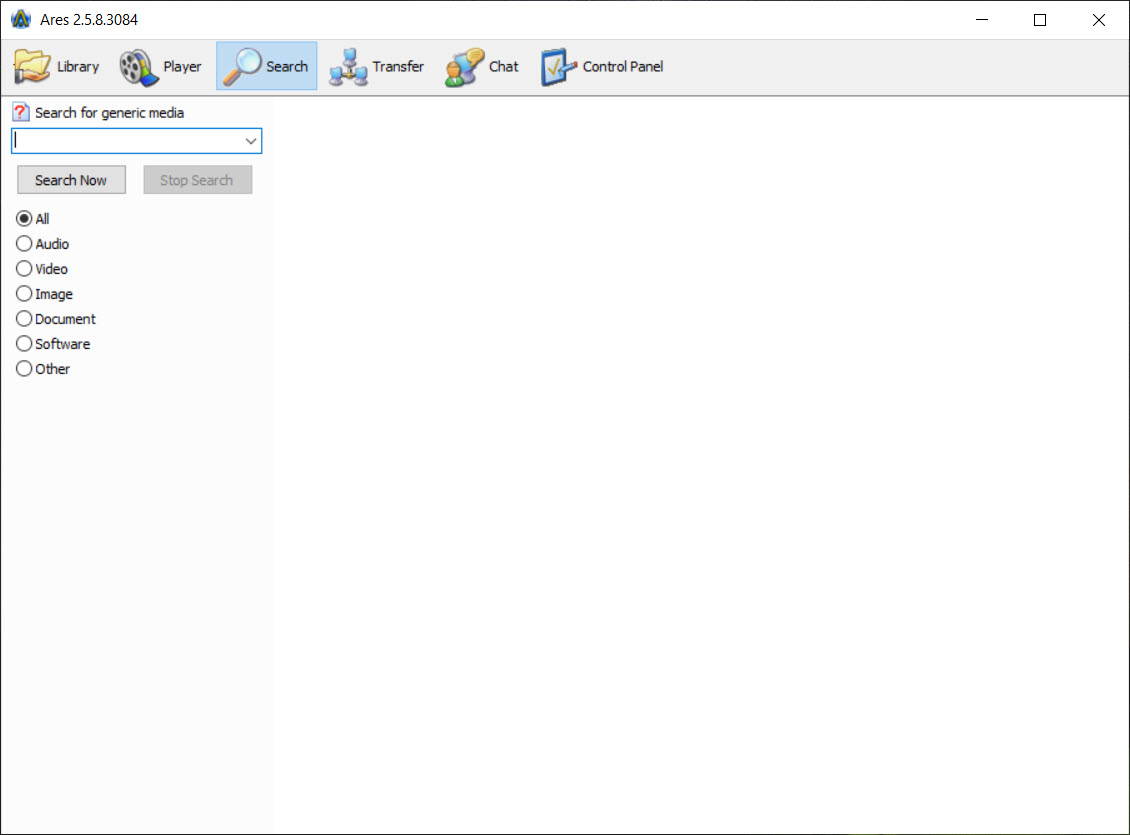
The Ares search tab filters by audio, video, image, software, document or all types, with a further filter on the audio side for artist, album and title tags read from the files themselves. Results list the number of sources, the file size and, for audio, the bitrate and duration, so a low-quality encode is visible before it downloads. Sorting by sources is the habit to form, since a file held by fifty users arrives in minutes and one held by two may never finish.
Downloads pull from every source simultaneously and resume across sessions, and the transfer tab shows each piece arriving with pause, resume and cancel per file.
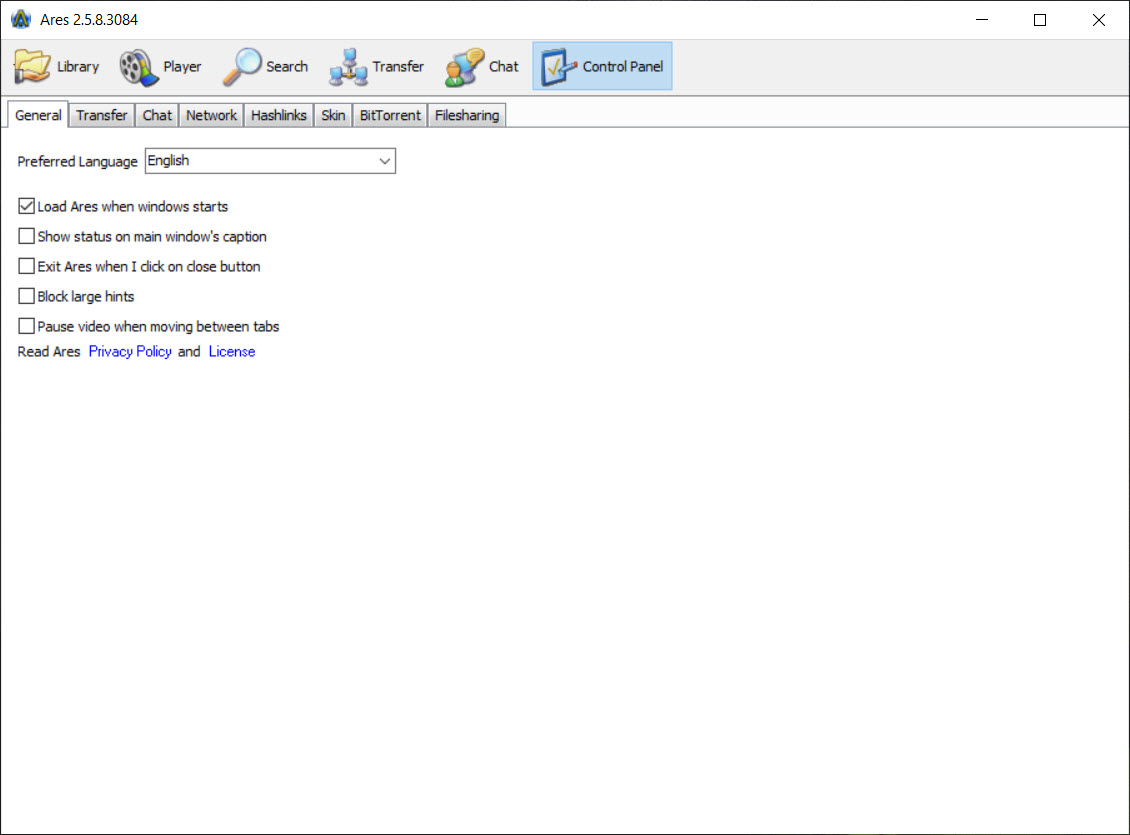
Uploads run at the same time, because the network works only if people share, and the upload bandwidth cap in the settings is the control to set on a slow connection so downloads and browsing keep moving.
The player, the library and the radio tuner
Anything downloaded through Ares lands in the library, grouped by category and searchable, and doubles as the list of what you share. Moving a file out of the shared folder removes it from the network, which is the way to keep a download for yourself.
The built-in player handles the common audio and video formats with playlists and a preview of partial downloads, so a file can be checked a third of the way through rather than after the wait. It is a convenience rather than a media player of note, and anyone with a dedicated player already installed will keep using that.
The SHOUTcast tuner lists hundreds of internet radio stations by genre and plays them in the same window, which is the feature people forget the program has and the one that uses no shared bandwidth at all.
Chat rooms on the network
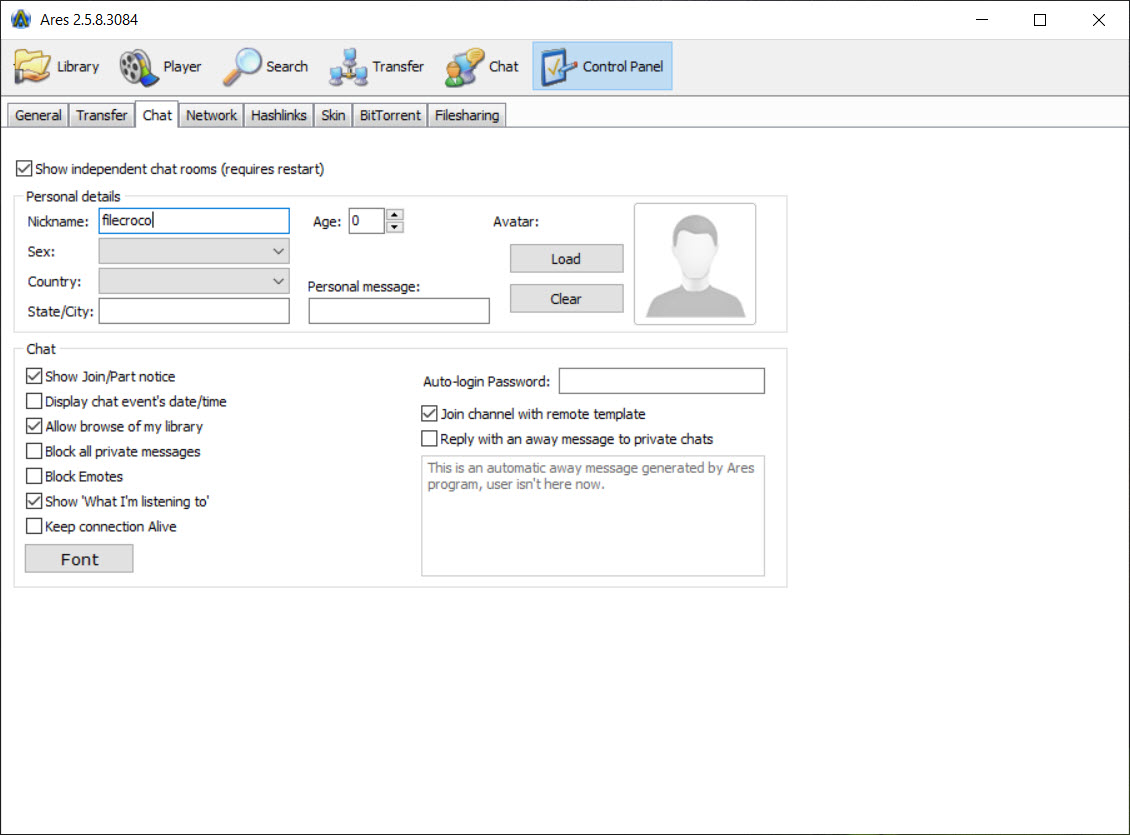
Chat rooms are part of the Ares network rather than an add-on. Join a public room or host your own with a name and a topic, and other users find it from the room list. It is plain text chat with a user list, and the rooms are where communities around particular kinds of content gather, which matters both as a way to find things and as a reason to be careful about what gets offered there.
The BitTorrent engine
The BitTorrent engine opens .torrent files alongside the native network, so one program covers both. It is a basic implementation, with none of the sequential download, RSS feeds or scheduling that a dedicated torrent client provides, and anyone serious about torrents will run one of those beside it rather than instead of it.
What to know before relying on it
The network’s population has fallen a long way from its peak, so search results thin out quickly outside popular music and older files, and rare items may show one source that is offline.
What arrives is whatever another user chose to share under whatever name they gave it, so file names lie, bitrates vary and an executable from an anonymous stranger deserves a scan before it runs. Sharing back is automatic, which on some connections means the upload side is busy whenever the program is open.
The bigger trap sits outside the program. The name has been borrowed by countless fake clones that wrap adware around an old build or charge for what is open source, and the genuine client installs nothing beside itself. Anyone who prefers a network with a curated, music-focused community will find Soulseek a very different experience on the same idea.
Conclusion
Ares suits people who want one uncomplicated window for searching a peer network, listening to what arrives and tuning into internet radio, and who value a program that works the moment it is installed without touching a router. For music from the network’s long tail and for the chat communities, it still does what it always did.
It is not the tool for rare files, for anyone who needs a serious torrent client, or for anyone who will not scan what strangers send. Set an upload cap, keep the shared folder deliberate, and check every download with an antivirus before opening it, because on this network the program is honest and the files are whatever someone said they were.
Pros & Cons
- Own decentralized network that works behind routers with no configuration
- Multi-source downloads with resume, and bitrate shown before downloading
- Built-in player previews partial downloads
- Library organiser doubles as the shared folder view
- Chat rooms, BitTorrent support and SHOUTcast radio in one window
- Network population is small, so results thin out beyond popular files
- File names and quality depend entirely on what strangers shared
- Uploads run whenever the program is open
- BitTorrent implementation is basic
- Fake clones of the program circulate widely
Frequently asked questions
No. The supernode network relays searches and transfers through well-connected peers, so it works behind a home router without any router changes.
Move it out of the shared folder. The library reflects the shared folder, so anything removed from that folder leaves the network.
Yes. A built-in BitTorrent engine handles .torrent files alongside the native network, though with fewer features than a dedicated client.
The catalogue is only what users currently online are sharing. Popular music and older files are well covered, and anything rare depends on a single user being connected.


