
ACG Player
FREE 100% SAFE

ACG Player

(8 votes, average: 4.13 out of 5)
4.1 (8 votes)
Updated May 10, 2026
01 — Overview

About ACG Player

CG Player is the modern media player you find in the Microsoft Store rather than through the traditional download-and-install path that older media players use. The application is built as a UWP (Universal Windows Platform) app, which means it follows the design conventions and sandboxing rules that current-generation apps use. The visual style fits within the modern Fluent design language with sensible touch targets, dark mode support, and an interface that scales reasonably across different screen sizes and input methods.

Drop a video file onto it, double-click an MP4 from your file browser to open it through the application, or use it as the default handler for media types you want it to manage. The result is a media player that handles the common video and audio formats most users encounter without requiring codec packs, configuration sessions, or the various other friction that traditional media players sometimes introduce.

The format support covers what most users actually deal with. Video formats including MP4, MKV, MOV, AVI, WMV, FLV, M4V, 3GP, WebM, and TS handle essentially every video file you’re likely to download or receive from various sources. Audio formats include MP3, FLAC, M4A, AAC, WAV, OGG, and WMA, which covers both lossy and lossless audio comprehensively. Subtitle support handles SRT, ASS, SSA, and various other subtitle formats with adjustable timing, font size, and positioning.

Picture-in-picture mode floats the video in a small window above other applications, useful for watching content while doing other work. Cast functionality sends video and audio to DLNA-compatible devices on your network including smart TVs, network media players, and various other receivers. Light editing capabilities including trimming and basic format conversion handle simple workflows that don’t require dedicated editing applications.

For users wanting a media player that follows current design conventions rather than the desktop application aesthetic from a decade ago, this software covers ground that traditional media players don’t quite match.

The UWP design and what it actually means

The UWP foundation matters because it defines essentially every aspect of how the application behaves compared to traditional media players. UWP applications run in a sandboxed environment that limits what they can access on your computer. The application can only read files you explicitly grant access to or that you open through the application’s file dialog. The sandboxing produces real benefits for security and stability, with the application being unable to interfere with system files or access content beyond what you’ve authorized.

The trade-off is that some workflows that work seamlessly in traditional desktop applications produce friction in UWP applications. Network paths sometimes require explicit access permissions. Certain folder structures don’t appear in file dialogs without permission grants.

External storage access sometimes requires extra steps. For users primarily playing files from their Documents, Music, Videos, and Downloads folders, the limitations rarely matter. For users with elaborate file organization across network drives, custom locations, or various other unusual scenarios, the UWP approach occasionally produces issues that desktop applications wouldn’t.

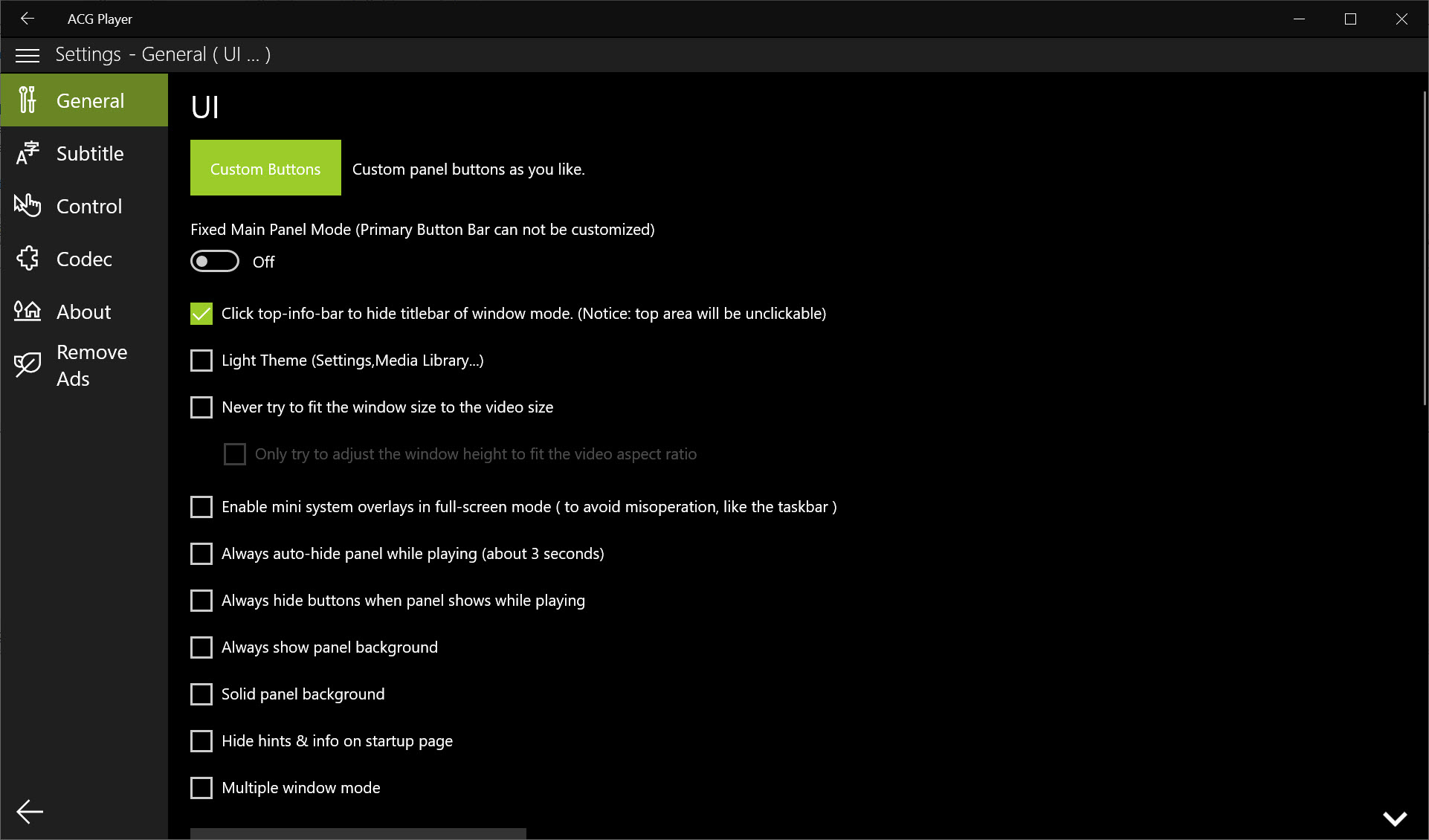
The visual design follows current platform conventions rather than the desktop application aesthetic that traditional media players inherited from older eras. Touch targets are sized appropriately for tablet use without being awkward for mouse interaction. The dark mode integrates with system theme settings automatically.

The application scales correctly across different screen sizes and resolutions, which produces consistent appearance across various display configurations. For users who appreciate visual consistency with current platform applications, this matters more than the equivalent capabilities in older-style media players.

Format support and the codec story

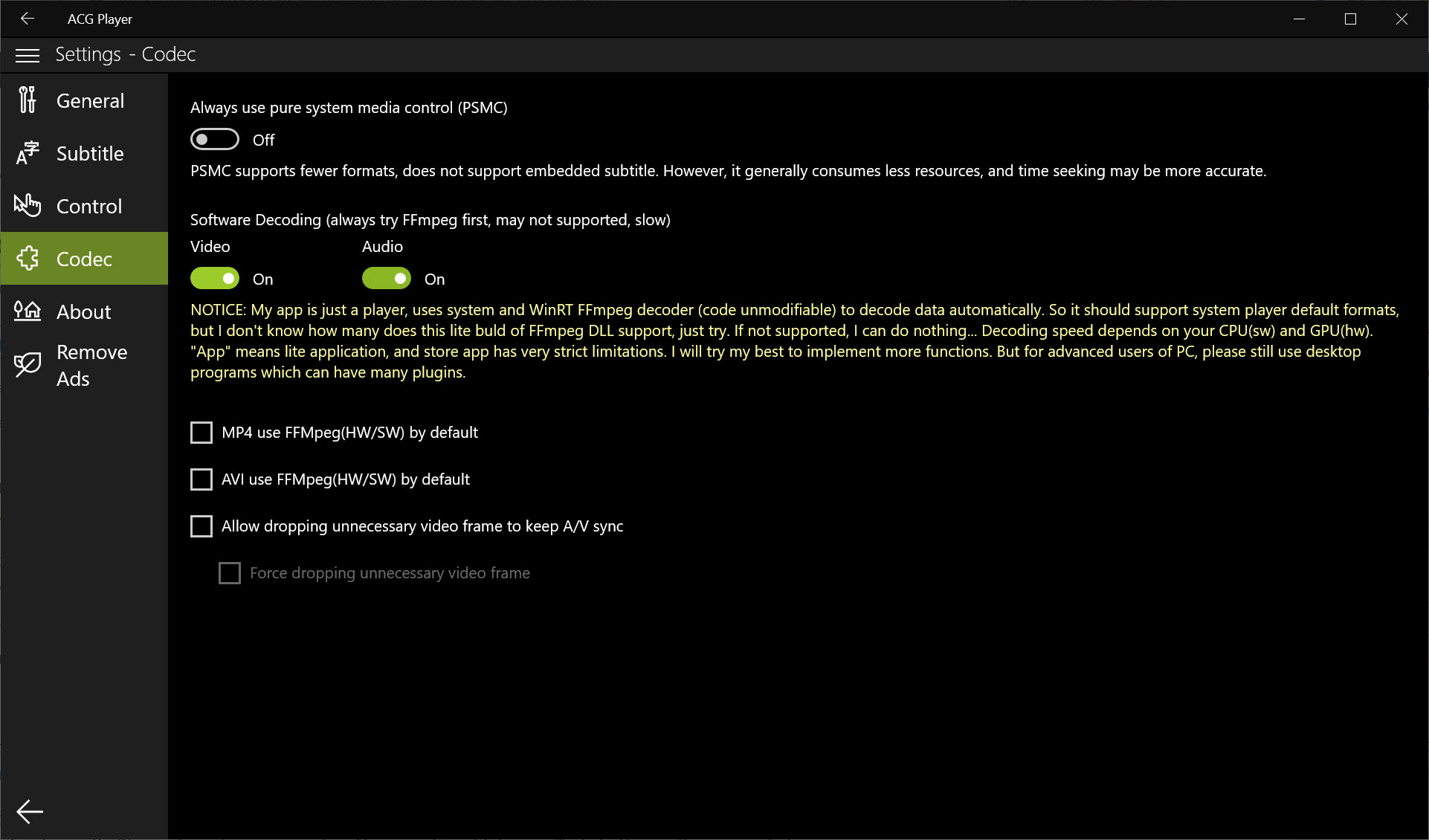
The format support comes through the platform’s built-in media engines rather than requiring users to install codec packs separately. The platform includes hardware-accelerated decoding for H.264, HEVC (H.265), VP9, and various other widely-used video codecs, with the application using these accelerators automatically when available.

Hardware acceleration produces dramatically lower CPU usage during playback compared to software decoding, with the practical effect being longer battery life on laptops and reduced fan noise during extended playback.

For codecs not included in the base platform (some specific HEVC scenarios, AV1 in older platform versions, various other less-common formats), Microsoft distributes optional codec extensions through the Microsoft Store. The extensions install separately but integrate transparently with the application, with the result being that codec support extends as needed without requiring users to find and install random codec packs from third-party sources.

The audio format support handles essentially every format users encounter for music libraries. FLAC support is genuinely lossless rather than being lossy compression with a misleading name. WAV files play without re-encoding. MP3 handles both VBR and CBR encodings reliably. AAC, M4A, OGG, and various other formats all work without configuration. For users who care about audio quality, the bit-perfect playback for lossless formats matches what audiophile-focused players provide while still being available within a general-purpose media player.

For users wanting more comprehensive media management beyond just playback, complementary tools handle the broader scenarios. Multimedia players with broader feature scopes cover video downloading and various other capabilities. The choice between minimalist playback-focused players and comprehensive multimedia suites depends on what you actually need from your media software.

Subtitle handling and the streaming workflow

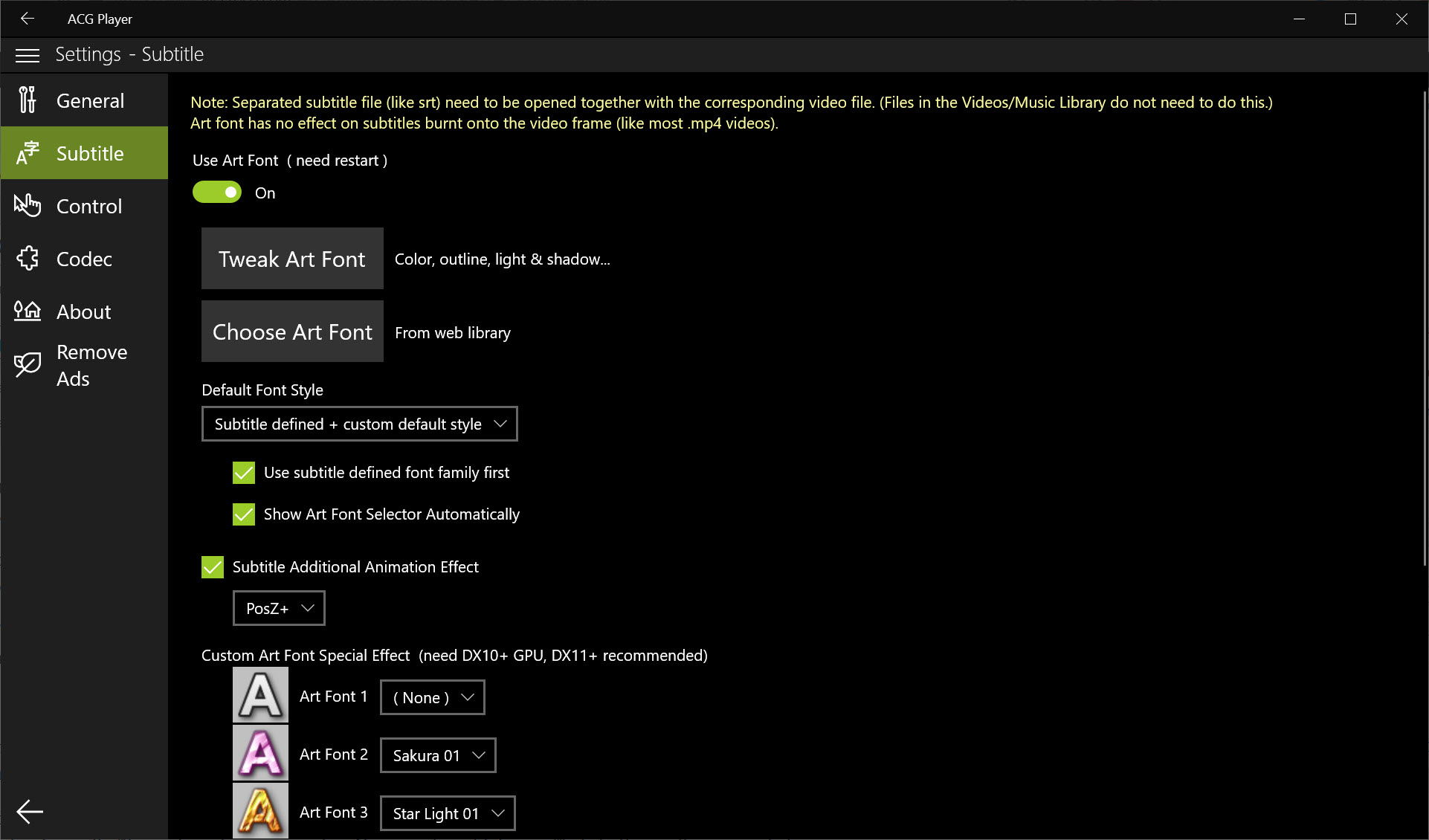
Subtitle support is one of the areas where this software handles things better than some alternatives. The application loads SRT, ASS, SSA, and various other subtitle formats automatically when subtitle files appear alongside video files with matching names. Manual subtitle loading lets you point at specific files when the automatic detection doesn’t find them or when you want different subtitles than the matching files provide.

The display configuration includes font size, color, position, and timing offset adjustments. For users with vision considerations, larger subtitle fonts produce better readability than the small defaults that some players use.

For users dealing with subtitle synchronization issues (where audio and subtitles drift apart due to encoding differences), the timing offset adjustment fixes the issue without requiring you to find new subtitle files. The granularity of the adjustment is fine enough to handle the millisecond-level offsets that perceivable lip-sync errors actually involve.

Multi-track support handles videos with embedded subtitle tracks (common in MKV files), with switching between tracks happening through the audio/subtitle menu during playback. For multilingual content where the same video includes multiple subtitle languages, switching between them during playback is straightforward without requiring playback to restart or the file to reload.

The styling support extends to ASS/SSA format features that go beyond basic subtitle text. Position effects, color changes within lines, animation effects, and various other styling that creators use in fan-translated anime and various other content displays correctly rather than being stripped or rendered incorrectly.

For users watching content where subtitle styling matters (typesetting matches what’s on screen, signs translate alongside dialogue), this fidelity matters substantially.

Picture-in-Picture and the multitasking workflow

The PiP mode floats the video in a small window that stays on top of other applications regardless of which application has focus. Click the PiP button during video playback, and the video pops out into a floating window that you can position anywhere on screen. The main application window can be minimized, closed, or used for other purposes while video continues playing in the floating window.

The use cases for PiP cover scenarios where you want video accompaniment to other work. Watching a tutorial while practicing the steps in another application. Following along with a presentation while taking notes. Catching up on news while doing other tasks. Various other scenarios where dedicating a full-screen video window doesn’t fit but completely ignoring video isn’t desired.

The floating window can be resized and repositioned freely, with the controls remaining accessible through hover. For users who want video at a specific size or position, the customization handles whatever placement works best for your screen layout. The window remembers its position and size between PiP sessions, which means returning to PiP mode produces the configuration you last used rather than resetting to defaults.

The PiP mode integrates with the platform’s compact overlay support, which means the floating behavior works correctly with multitasking features including virtual desktops and various other window management scenarios. The video window appears across virtual desktops by default if that’s how you’ve configured the platform, which keeps video accessible regardless of which desktop you’re working in.

DLNA casting and the network playback

The casting functionality sends video and audio to DLNA-compatible devices on your local network including smart TVs, network media players, gaming consoles with media features, and various other receivers. Click the cast button during playback, select the target device from the list of detected DLNA receivers, and playback continues on that device while controls remain on your computer.

The implementation uses the standard DLNA protocol that essentially every modern smart TV and network media player supports, with the practical result being that casting just works for most home networks without configuration beyond enabling DLNA support on the target device.

Some specific devices require enabling DLNA media reception in their settings before they appear in the cast target list, but most modern devices have this enabled by default.

The cast target’s capabilities determine what formats can be cast directly versus what requires transcoding. For formats the target device doesn’t support natively, the application handles transcoding through the platform’s media engines, with the result being playback that works even when the target device wouldn’t normally handle the source format. The transcoding does add CPU load to your computer during casting, which is why direct format support produces better experiences than transcoded playback for sustained sessions.

For users with media libraries on their computer who want network access to those libraries from various devices around their home, dedicated DLNA server applications handle that scenario more comprehensively than per-file casting. The casting from this application fits the use case where you have specific content you want to play on a different device for that specific session, rather than the use case of making your entire library accessible to network devices.

Light editing and the conversion workflow

The application includes basic editing capabilities that handle simple workflows without requiring dedicated editing software. Trimming videos to specific time ranges produces output files containing just the selected portions. Format conversion changes between supported formats (typical scenarios including FLV to MP4, MOV to MP4, AVI to MP4, and various other format-to-format conversions). The capabilities are intentionally basic rather than comprehensive, which fits a media player’s scope without trying to compete with dedicated editing applications.

The conversion workflow handles the common case where you want to change format without modifying content. Drop a video, choose the output format, set basic quality preferences, and produce the output file. The conversion uses the platform’s media engines for both decoding source content and encoding output, which means hardware acceleration applies where supported. For users who occasionally need format conversion without dedicated conversion software, this handles the scenario adequately.

The trimming feature handles the case of extracting specific clips from longer videos. Set start and end points on the timeline, and the export produces a file containing just that portion. The trim is non-destructive (the original file remains unchanged), with the new file being a separate output. For users who want to grab specific moments from longer recordings or extract clips from movies and shows, the trim handles this without needing video editor installations.

The limitations of the editing capabilities are real and worth understanding. The application doesn’t support multiple-clip editing, transitions between clips, audio mixing, color correction, or various other capabilities that dedicated video editors provide.

For users with editing needs beyond simple trim and format conversion, applications like the video editing tools in dedicated editor categories handle the comprehensive editing scenarios that this software’s basic capabilities don’t address.

Comparison with traditional media players

The comparison with traditional desktop media players matters because users typically choose between approaches rather than using both. Desktop media players like VLC have decades of accumulated features, comprehensive codec support, extensive customization, and various other capabilities that mature applications develop over long development periods. The trade-off is interfaces that reflect their development eras rather than current platform design conventions.

This software’s UWP approach produces a more visually consistent experience with current platform applications, with touch-friendly design and modern aesthetic conventions. The trade-off is less extensive feature accumulation compared to applications with longer development histories.

For users who value visual consistency and basic playback functionality, the UWP approach fits. For users who value comprehensive features and customization at the cost of older interface conventions, traditional desktop players fit better.

The Microsoft Store distribution produces specific advantages around updates and security. Updates install automatically through the Store rather than requiring users to download and run installers. The sandboxed installation produces less risk of system-wide issues from problematic updates. The trade-off is dependency on the Store infrastructure for installation and updates, which produces friction for users who specifically prefer traditional installer-based distribution.

For users wanting alternatives in the broader media player category, the catalog includes various options with different positioning. 5KPlayer handles broader multimedia needs including video downloading and streaming. 1gram Player covers media playback with YouTube streaming integration. The choice between these alternatives depends on whether your priorities favor minimalist playback or broader multimedia capabilities.

Considerations and limitations

The Microsoft Store distribution creates dependencies that traditional installer-based applications don’t have. Updates require Store connectivity. Account requirements affect some users who specifically don’t want to be signed into Store accounts. Various other Store-related considerations apply to UWP applications regardless of which specific application is being installed. For users who specifically prefer traditional installer-based distribution, the Store approach produces friction.

The feature scope is intentionally narrower than what mature desktop media players provide. Users coming from feature-rich players sometimes find capabilities they expected aren’t present, with the practical result being that the application fits some use cases better than others. For basic playback of common formats, the application handles things adequately. For elaborate playback scenarios involving unusual codecs, extensive customization, or various advanced features, alternatives may produce better results.

The development pace varies with Store update cadence rather than being driven by user demand directly. Some specific features that users request take time to appear because the development pipeline goes through Microsoft Store review and various other processes that traditional installer distribution doesn’t involve. For users wanting immediate response to feature requests, the institutional distribution mechanism produces longer feedback loops.

The casting functionality depends on local network configuration that users can’t always control. Networks with isolation between devices, complex routing configurations, or various other unusual setups sometimes produce situations where DLNA discovery doesn’t work as expected. The application handles standard home network configurations correctly, but unusual network setups may require troubleshooting that the application itself can’t resolve.

The basic editing capabilities mean users with serious editing needs have to use additional applications for those workflows. For users who occasionally need basic trim and format conversion, the integrated capabilities handle these adequately. For users with comprehensive editing requirements, the practical workflow involves using this software for playback and dedicated editors for editing rather than expecting one application to handle everything.

Conclusion

For users wanting a media player that follows current platform design conventions with touch-friendly interface and modern visual aesthetic, ACG Player delivers a focused tool that handles the common video and audio playback scenarios most users actually encounter.

The combination of comprehensive format support through hardware-accelerated decoding, picture-in-picture for multitasking workflows, DLNA casting for network playback, subtitle support with extensive customization, and basic editing capabilities for simple trim and conversion workflows produces a player that fits the use cases most users want without the complexity that more elaborate alternatives accumulate.

02 — Verdict

Pros & Cons

The good
  • UWP design follows current platform conventions with touch-friendly interface and dark mode support
  • Hardware-accelerated playback for H.264, HEVC, VP9, and various other widely-used codecs
  • Comprehensive format support including video, audio, and various subtitle formats
  • Picture-in-picture mode floats video over other applications for multitasking
  • DLNA casting sends content to smart TVs and network media players
  • Subtitle handling includes timing adjustment, font customization, and ASS/SSA styling
  • Light editing capabilities handle simple trim and format conversion workflows
  • Microsoft Store distribution produces automatic updates and sandboxed installation
  • Free without paid tiers for any of the included functionality
The not-so-good
  • UWP sandbox produces friction for some workflows that traditional applications handle seamlessly
  • Feature scope is narrower than mature desktop media players with longer development histories
  • Microsoft Store dependency adds requirements that installer-based applications don't have
  • Editing capabilities are intentionally basic rather than comprehensive
  • Some advanced media player features common in alternatives aren't included
  • DLNA casting depends on network configuration that the application can't always work around
03 — FAQ

Frequently asked questions

This software is a UWP-based media player distributed through the Microsoft Store that handles video and audio playback alongside subtitle support, picture-in-picture, DLNA casting, and basic editing capabilities. The application supports common video formats including MP4, MKV, MOV, AVI, WMV, FLV, and various others, plus audio formats including MP3, FLAC, M4A, AAC, and WAV. The UWP foundation produces a modern visual design and integrates with current platform conventions for theming and accessibility.

The application plays video and audio files through a touch-friendly modern interface, with hardware-accelerated decoding for widely-used codecs. Beyond basic playback, it includes subtitle support with extensive customization options, picture-in-picture mode for floating video over other applications, DLNA casting to network devices, and light editing capabilities for trimming and format conversion. The Microsoft Store distribution handles automatic updates and sandboxed installation.

The application doesn't include native Blu-ray disc playback because Blu-ray content protection (AACS) requires licensing that consumer media players typically don't include. For users wanting Blu-ray disc playback, dedicated Blu-ray player applications with the appropriate licensing handle physical disc playback. The application handles video files extracted from Blu-ray sources without issues, with the limitation being specifically about playing protected content directly from physical Blu-ray discs.

Yes, FLAC support is included with bit-perfect lossless playback. The application handles FLAC files correctly without re-encoding or quality loss, which produces playback identical to what dedicated audiophile-focused players provide. The metadata embedded in FLAC files (tags, embedded album art) displays correctly during playback. For users with lossless music libraries, this support means dedicated audio players aren't required just for FLAC playback.

Press F11 to toggle full screen mode, which removes the application interface and expands the video to fill the entire screen. Press F11 again or press Escape to exit full screen and return to the standard windowed interface. The double-click gesture on the video also toggles between full screen and windowed mode. Full screen works regardless of the original window size, with the video scaling to fill the display while maintaining aspect ratio.

Open the FLV file through the application, navigate to the conversion or export feature in the menu, choose MP4 as the output format, set quality preferences appropriate for your needs, and start the conversion. The application uses the platform's media engines for both decoding the source FLV and encoding the output MP4, with hardware acceleration applying where the platform supports it. The output file appears in the location you specify, with the original FLV remaining unchanged.

Set the start and end points on the timeline using the trim controls during playback. Use the export or save function in the menu to write the trimmed portion to a new file. The application produces a new file containing just the selected portion, with the original file remaining unchanged. The trim operation handles common video formats with appropriate output settings, though specific codec and container choices vary based on the source format and your selections.

Make sure your TV supports DLNA and that DLNA media reception is enabled in the TV's network settings. Both your computer and TV need to be on the same network. During video playback in the application, click the cast button and select your TV from the list of detected DLNA devices. The video begins playing on the TV while controls remain on your computer. For TVs that don't support DLNA, alternative casting protocols (Chromecast, AirPlay) may not work directly through this software.

For automatic loading, place subtitle files (SRT, ASS, SSA, or other supported formats) in the same folder as the video with matching filenames. The application loads them automatically when you open the video. For manual loading, use the subtitle menu during playback to browse for and load specific subtitle files. Multi-track subtitles embedded in the video file (common in MKV) appear in the subtitle track menu for selection during playback. Subtitle position, font size, and timing can be adjusted through the subtitle settings.

Open the platform's settings, navigate to Apps, then Default apps. Find the relevant file types (video files, music files, etc.) and set this software as the default for those types. After making the change, double-clicking media files of those types opens them through this application instead of whichever player was previously the default. The change can be reversed through the same settings if you decide to switch back to a different default player.

Specifications

Technical details

Latest version1.15.17606.0
File nameACGMEDIAPLAYER_1.15.17606.0.AppxBundle
MD5 checksumD5C16C1682F16A5ECA25D1E15EDC1470
File size 31.16 MB
LicenseFree
Supported OSWindows 10
Author Axilesoft
Alternatives

Similar software

Community

User reviews

guest
0 Comments
Oldest
Newest Most Voted
Inline Feedbacks
View all comments