

Argus Monitor
About Argus Monitor
Argus Monitor controls the fans in a computer from software, and it does so with more control logic than the firmware on most motherboards offers. Every fan header the monitoring chip exposes, every graphics card fan and the pumps and fans of the common liquid coolers can be given a curve that ties speed to any temperature the system reports, or to several at once. Case fans that follow the graphics card under load and the processor during a render, then fall silent at the desk, are the result, and that result is the reason people choose a paid tool in a category full of read-only monitors.
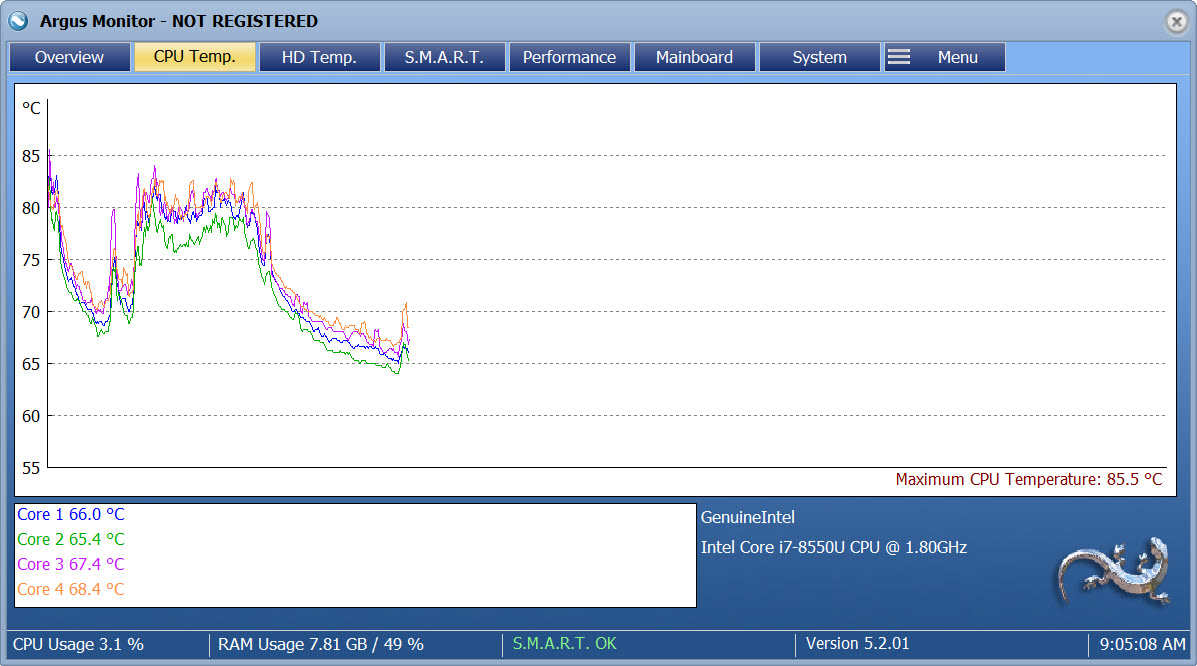
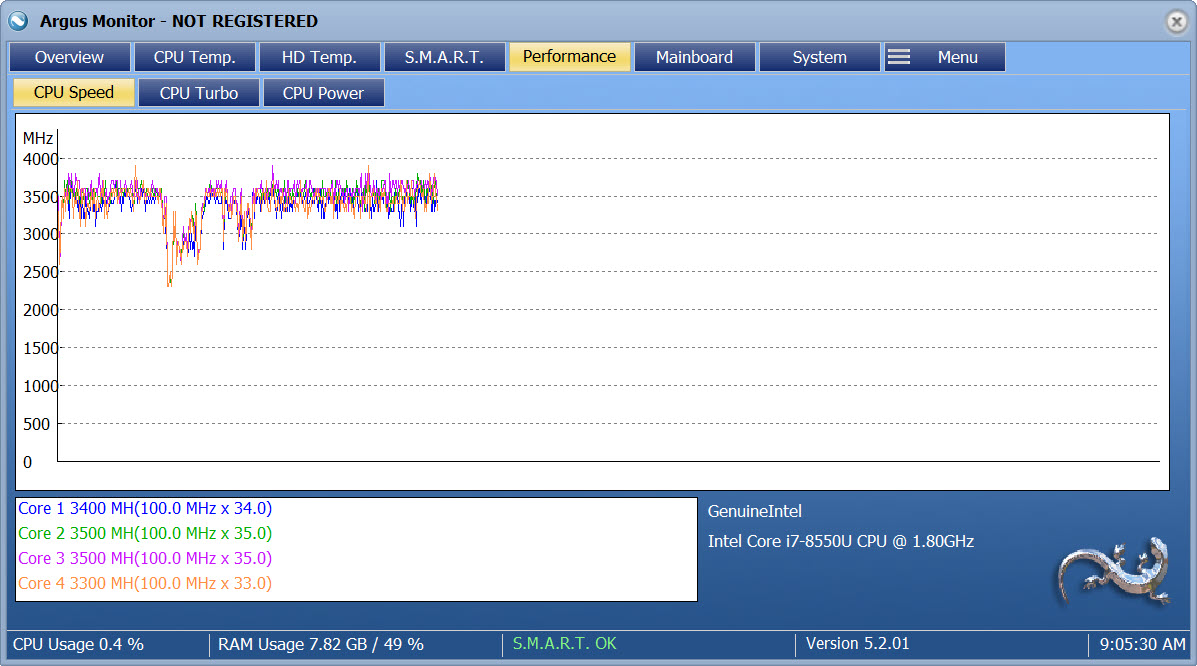
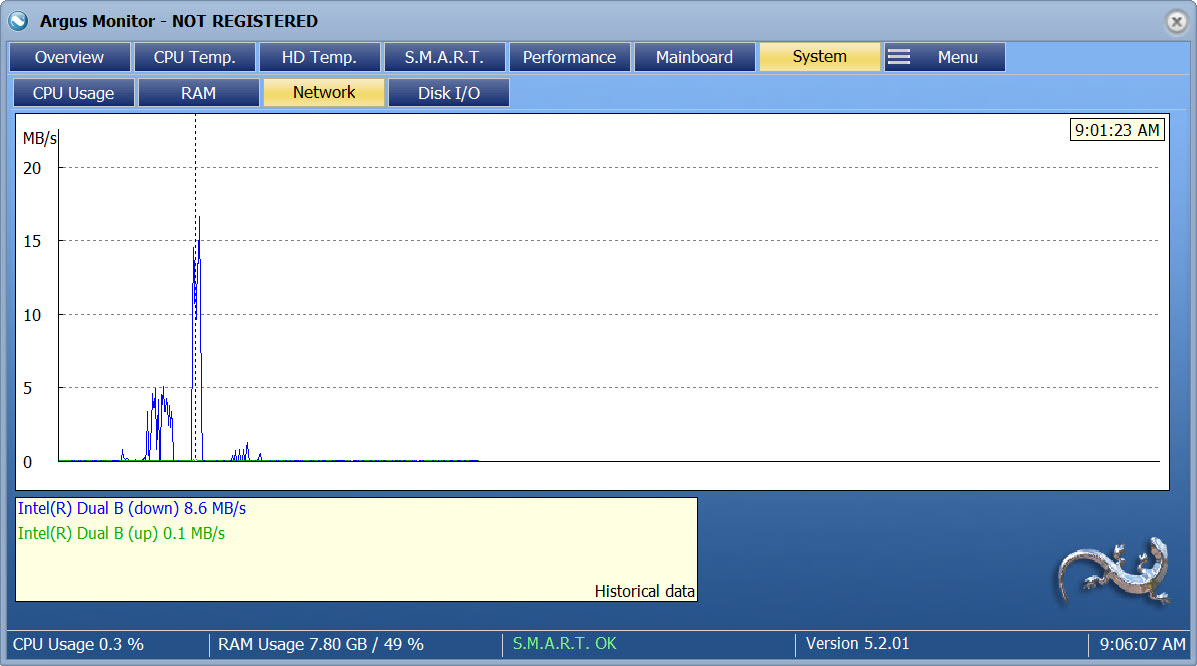
Alongside the fan control sits a full monitoring layer. Processor temperature per core with frequencies and power draw, graphics card temperature with clocks and load, and drive temperatures, all drawn as live graphs with tray icons showing the values you care about.
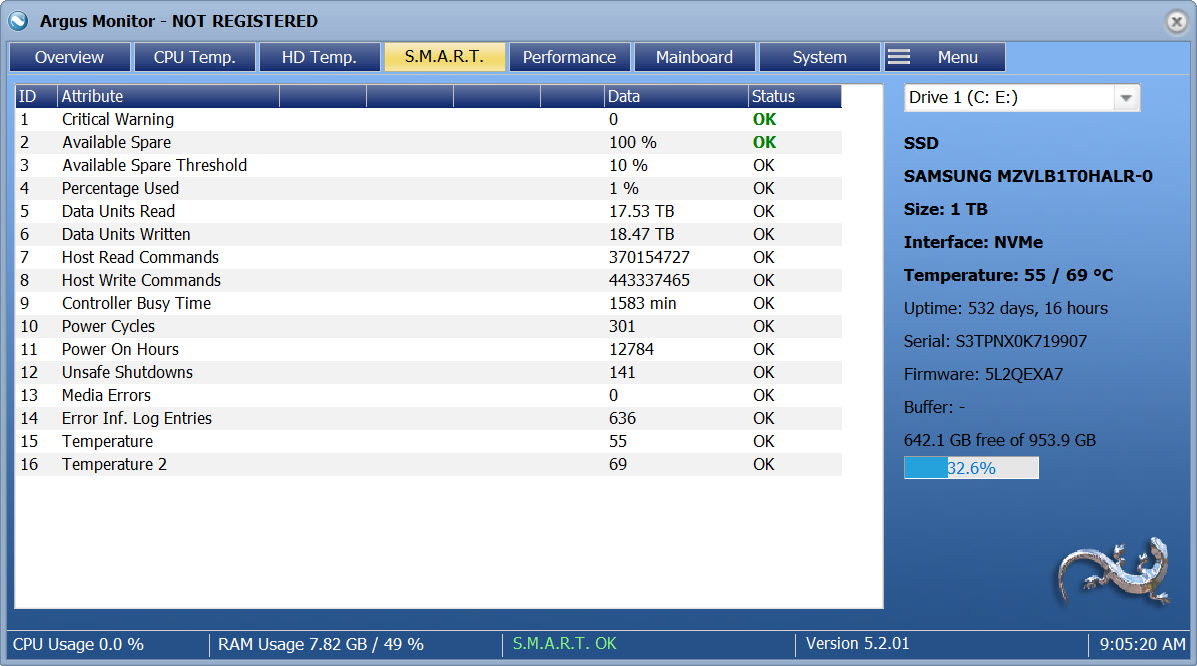
The drive side goes further than most, watching S.M.A.R.T. attributes over time and raising a warning when the trend suggests a failure is coming rather than waiting for the drive to fail its own threshold.
Fan curves, and the sources that drive them
The Argus Monitor fan control tab lists every controllable fan with its current speed. Each can be pinned at a fixed percentage or given a curve, drawn as points on a graph of temperature against speed. The temperature source is the interesting part. Any sensor on the system qualifies, the processor package or a single core, the graphics card, a specific drive, a motherboard sensor, the coolant temperature reported by a liquid cooler, or the reading from an external fan controller.
A single fan can carry up to four controllers at once, each with its own source and curve, and the fan runs at whichever demands the most. That is how a front intake follows both the processor and the graphics card without a compromise curve that serves neither.
Hysteresis, averaging over a chosen window and rate limits stop fans hunting up and down with every brief spike, which is the difference between a system that is quiet and one that is merely quieter.
Profiles and hotkeys
Argus Monitor saves fan configurations as profiles and switch from the interface or a hotkey. A silent profile for browsing, a performance profile for gaming and a full-speed profile for a long render are the usual three. Profiles apply at startup if you choose, and the application can hold the last settings through a reboot. There is no automatic profile switching by running program, so the change is yours to make, which is one thing the open-source fan control alternative does not do either.
Liquid coolers and fan hubs
Argus Monitor controls most Corsair and NZXT liquid coolers directly, with coolant temperature as a source and pump speed under the same curve system as any fan. Fan controller boards compatible with the Corsair Commander family are supported too, which extends control to fans the motherboard has no headers for. Lighting on those devices is not controlled, so the maker’s own software stays installed for that if you care about it. Two programs fighting over the same device is the classic cause of fans doing something strange, and only one should be in charge.
Hardware compatibility is the constraint to check before anything else. Fan control works through the monitoring chip on the motherboard, and the common ones from the major chip makers on boards from the mainstream board makers are covered. A board with an unusual chip shows its sensors but exposes no control, and a laptop almost never exposes fan headers at all.
Live graphs and tray readouts
Each component Argus Monitor watches gets a tab with live graphs. The processor page shows temperature per core alongside frequency and power, which is the quickest way to confirm that power management is actually stepping the clocks down at idle.
The graphics page adds core and memory clocks and load. Drives show temperature history. Any value can be pinned to the tray as a numeric icon, so a glance at the corner of the screen gives processor and graphics temperatures without opening anything.
For a read-only overview with no control at all, Open Hardware Monitor covers similar sensors with nothing to configure.
Drive health and the failure warning
The Argus Monitor S.M.A.R.T. page lists every attribute per drive with its current and worst values, and the application tracks the critical ones over time. Reallocated sectors, pending sectors and similar counters climbing across days trigger a warning even when the drive still passes its own health check, and the makers cite a warning rate approaching seventy percent of failures in advance. That is the window in which a backup gets made, which is the whole point.
A benchmark measures transfer rate, seek time and random access for each drive, useful for confirming a new SSD performs as expected or for spotting a drive that has slowed as it degrades. Anyone who only wants the drive side should look at CrystalDiskInfo, which does the S.M.A.R.T. monitoring and nothing else.
What it is not
There is no overclocking, no voltage control and no lighting, and the graphics card tuning that MSI Afterburner offers alongside its fan curve is out of scope here. The interface is functional and plain, with tabs and graphs rather than dashboards, and it has not chased the look of the gaming utilities.
Setup takes an evening of watching temperatures under load and adjusting curves, and a curve that looks right at idle can prove wrong after twenty minutes of a game, so validation under real load is not optional.
The open-source alternative, FanControl, covers much of the same curve logic with a more modern look, and it lacks the drive health prediction and the benchmark.
Conclusion
Argus Monitor suits people who want a quiet computer without giving up cooling, and who are prepared to spend an evening drawing curves and testing them under load. Builders, anyone with a liquid cooler and a case full of fans, and those who have lost a drive without warning will get the most from the multi-source control and the failure prediction.
It is unnecessary on a laptop and on a desktop whose firmware curves already satisfy you, and the plain interface will not impress anyone who expects a dashboard. Where it fits, it is the most complete fan control available, and the drive warning alone has justified it more than once.
Pros & Cons
- Fan curves driven by any sensor, including coolant and drive temperatures
- Up to four controllers per fan with the highest demand winning
- Hysteresis and averaging, plus rate limits, keep fans steady
- Direct control of common liquid coolers and fan hubs
- S.M.A.R.T. trend analysis warns before a drive fails its own threshold
- Per-core processor graphs with frequency and power for checking power management
- Fan control depends on a supported monitoring chip and almost never works on laptops
- No lighting control, so maker software stays installed for that
- No automatic profile switching by application
- Plain interface compared with gaming utilities
- Curves need validation under load before they can be trusted
Frequently asked questions
Yes. Any fan can follow any sensor, including the graphics card, and several controllers on one fan let it follow the processor and the card at once.
The motherboard's monitoring chip is not among the supported ones, or the board is a laptop. Sensors read fine in that case, but no control is exposed.
Yes, most Corsair and NZXT coolers and Commander-compatible hubs, with coolant temperature as a source and pump speed under curve control. Lighting is not controlled.
It tracks critical S.M.A.R.T. attributes over time and warns when they trend towards failure, before the drive's own threshold trips.


